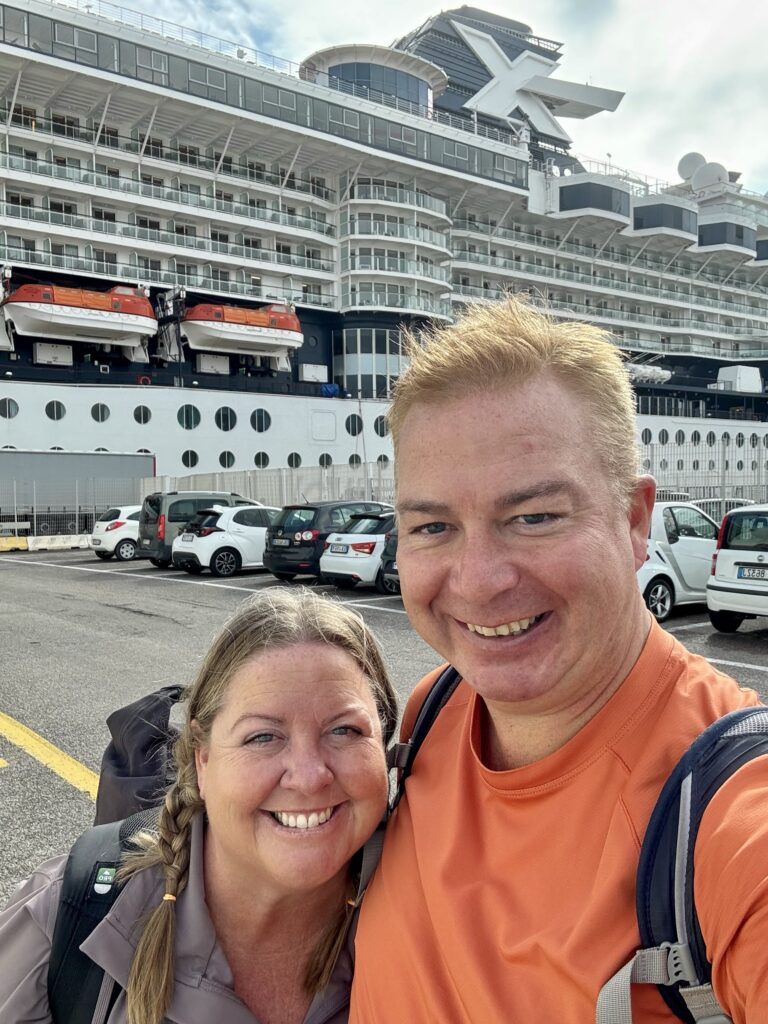
Fall 2025
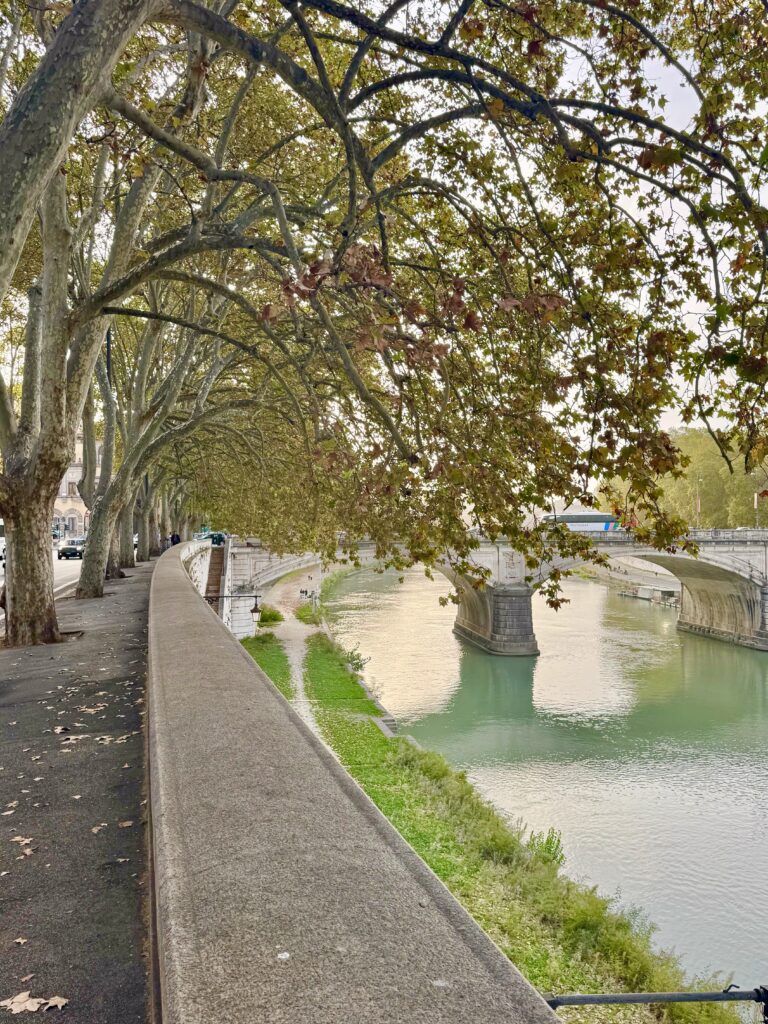
This was my third time visiting the Eternal City and Corey’s second time. It was a wonderful week exploring underground ruins, dazzling churches, and exquisite art. Rome is one of those cities where a traveler can always find something new to experience. We enjoyed some of the big ticket attractions last summer on a whirlwind trip with my parents, yet there were still incredible things that we hadn’t seen yet. Six nights gave us a lot more time to explore and we booked some things in advance while giving us lots of time to sprinkle in spontaneous activities. Here’s our great (almost) week:
Sunday: St. Peter’s Basilica
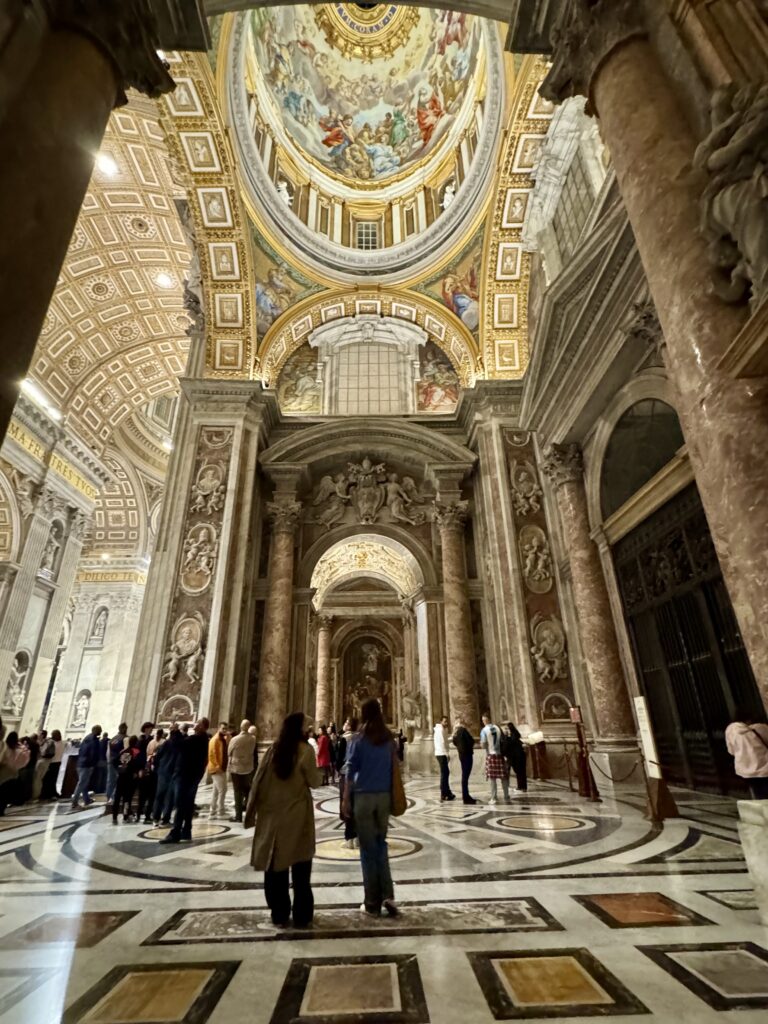
We picked an Airbnb on the northwestern outskirts of town, but reasonably connected on the bus lines. After spending the earlier part of the day getting settled into our new space, we walked over to the Vatican to finally step inside of St Peter’s Basilica.
We had heard that late afternoon and evening is a better time as there will be less people. The crowds thinned out after 6 PM but before that there were still crowds.
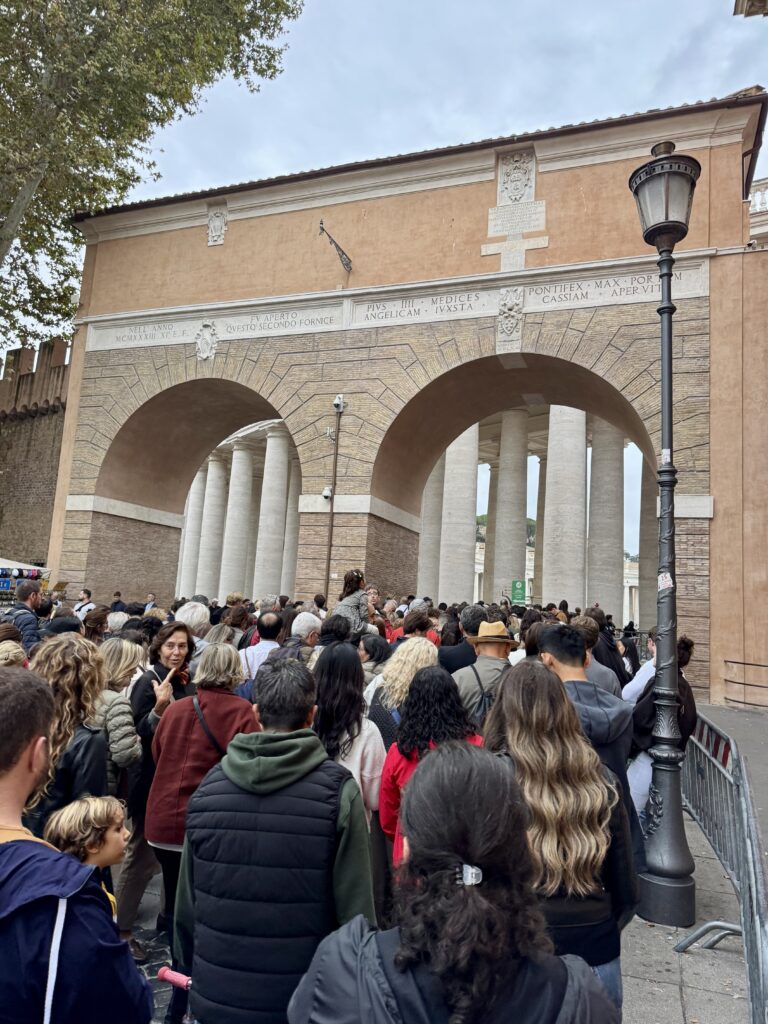
Large tour groups pushed through the crowds as we all waited in the security line that converges from 25-feet-across into a single-file bottleneck. It was like being in Times Square on New Year’s Eve.
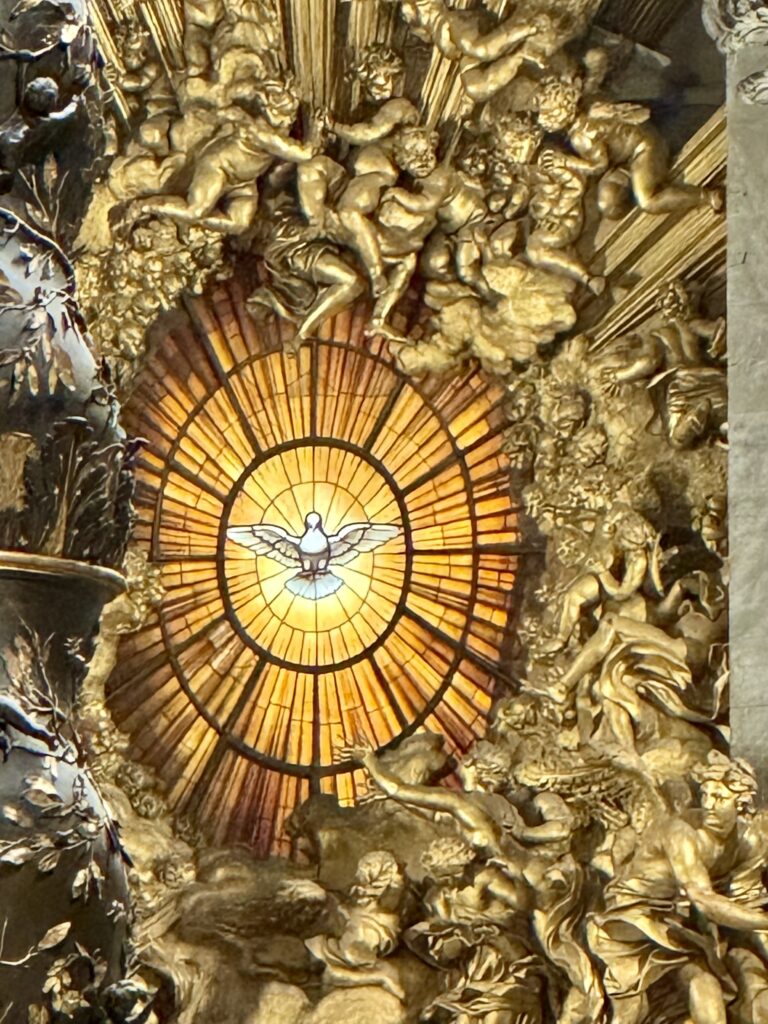
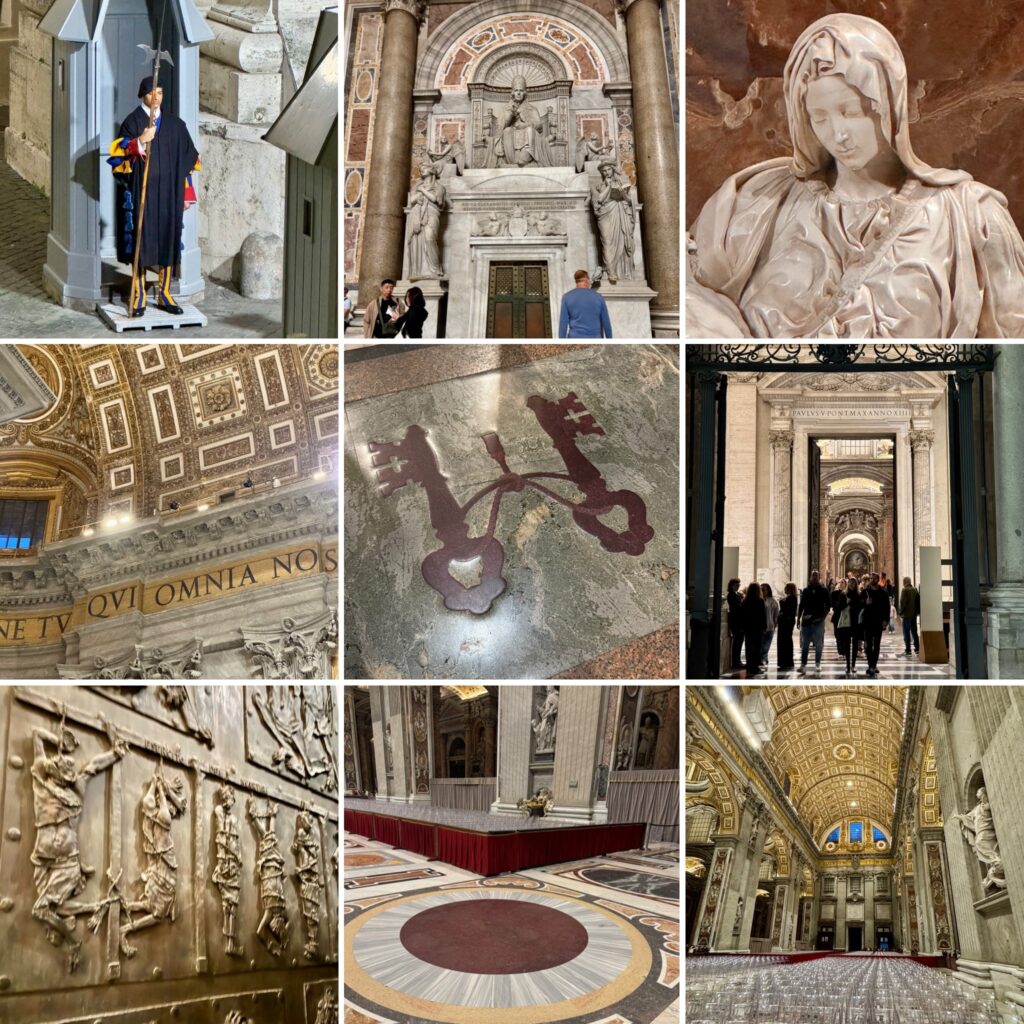
Once inside St. Peter’s, there was more space but even though there was a mass taking place, the crowd was filled with phones being lifted in the air and lots of selfies in front of the beautiful marble statues. But even with certain areas of the cathedral roped off for crowd control (and the mass that was taking place), it was still a beautiful sight. We modified the Rick Steves audio tour and spent about an hour inside.
Monday: four churches
The sun was shining brightly but the air was crisp, reminding us that autumn had arrived. Our morning started with a bus ride into the tourist chaos to visit a popular church, Basilica San Clemente.
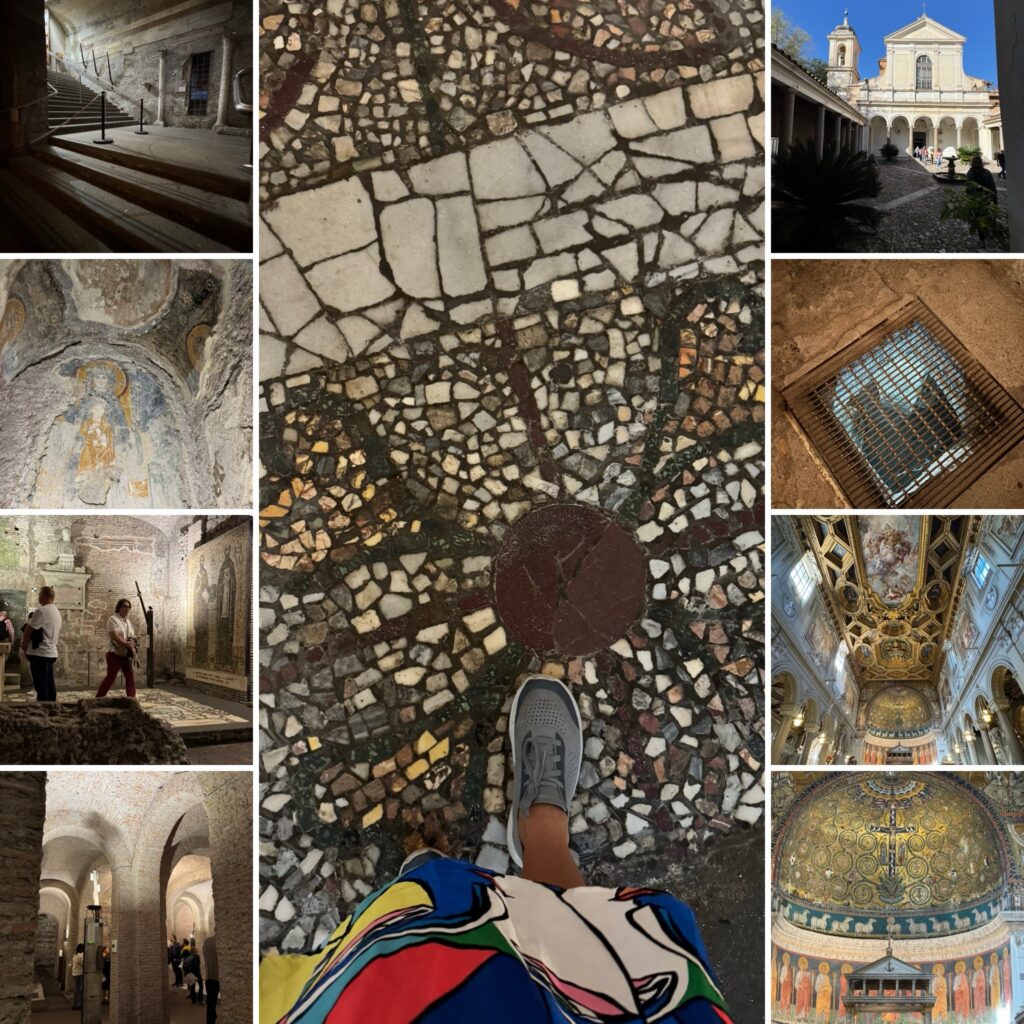
Rome’s history is on display there – even if you have to go underground to see it. Over the centuries the city has been built on top of itself. In this case, San Clemente is actually built on top of two other churches!
Going down under the current church, you enter a fourth-century church that contains some of the most beautiful medieval frescoes in the world, dating from the eighth to the eleventh century. Going down even lower, you enter the first century area with its temple dedicated to the worship of Mithras, an Iranian god with a Roman cult involving worship in cave-like buildings. Across a narrow alley is a large public building, though to be an ancient Roman mint. And around the foundations of this building flow an ancient stream, the same one that fed the thirst of ancient Rome.
Above these two excavation area is the current Basilica of the twelfth century, with its magnificent mosaic, the frescoes of the early Renaissance, the marble choir of the sixth century from the previous church, and a lovely geometric stone floor in a style called Cosmatesque. The tour was self-guided with a provided English-language pamphlet, and it was a nice way to explore part of “underground” Rome.
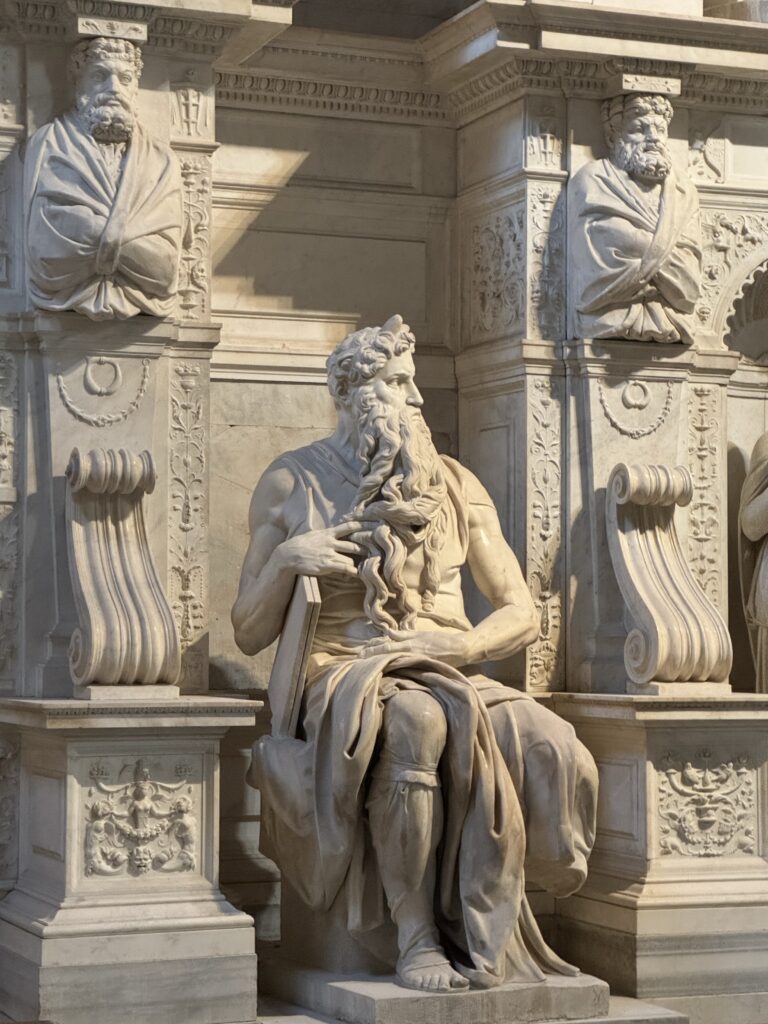
The Basilica of San Pietro in Vincoli was our next stop. Every church in Rome seems to have something amazing in which to lure tourists in. This church has Moses, a large and expressive marble statue by Michelangelo. Restoration was happening but it did not obstruct the viewing area of the statue. There are other things to see in the church like a large ceiling fresco, and a supposed portion of the chains that held Peter captive in Jerusalem.
We walked out of that church and on a whim visited another church just a few blocks away. As the joke goes there just as many churches in Rome as there banks in Milan! Chiesa di Santa Maria ai Monti was impressive from the moment we stepped in. Colorful paintings adorned the walls but the focal point is an old fresco that was taken from the convent that was on the site prior to the construction of the church, which is now the centerpiece of the altar. We took a few moments of quiet reflection before heading back out to the mayhem.
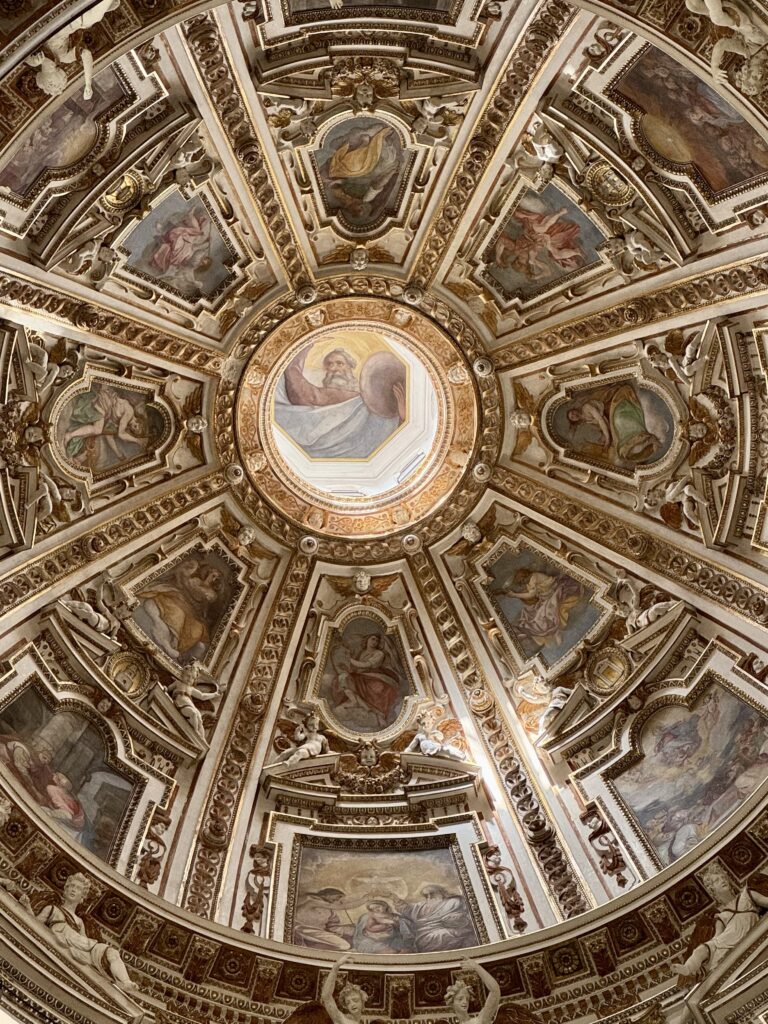
Lunch was at a spot we found by chance on a buzzy street in a residential neighborhood. We sat at a small table outside and I think we were the only tourists there. It was a delicious meal of lamb chops and pasta cacio e pepe.
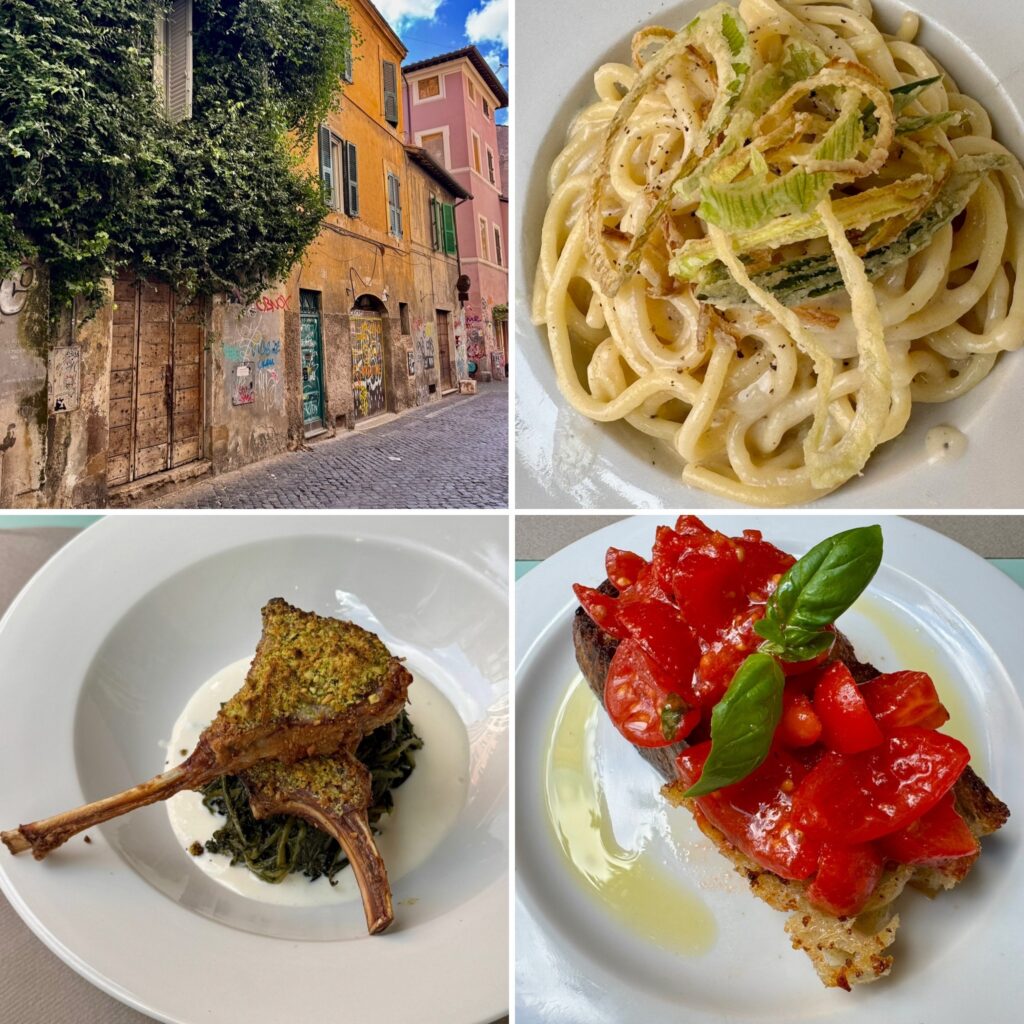
We then walked northward through the heart of Rome. Throngs of people and tour groups hogged the sidewalks. As we have seen before, there is no more shoulder season, and Rome was crowded for the end of October. We weaved our way through smaller lanes and stumbled upon the Saint Ignazio di Loyola church. The church, just around the corner from the Pantheon, was quite busy but was not on our radar at all. It had a gorgeous painted ceiling and a fake dome! When the church was constructed it did not have money to build an actual dome, they instead had expert painters create the illusion of a domed ceiling. There was a long line to take a selfie with a mirror but it is easy to sidestep this line and enjoy the church.
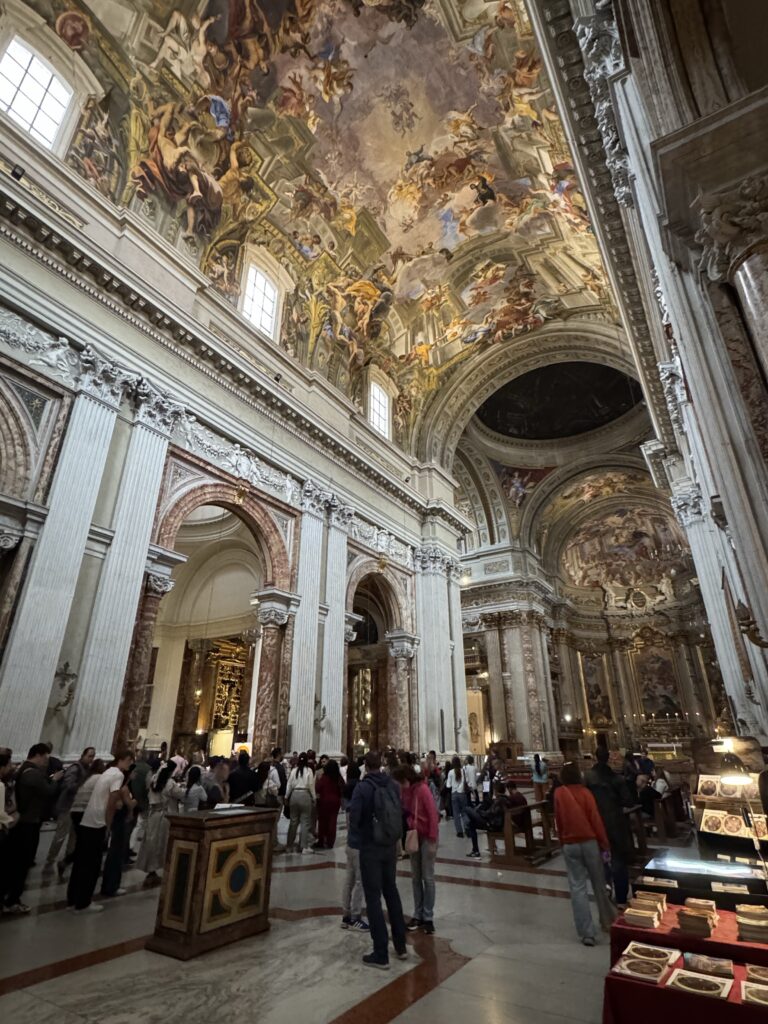
We continued walking northward trying to take avenues we had not previously explored. Often we turned to each other and said “oh, we’ve been here before.” Eventually we reached the Tiber River and followed the gentle river curves. It was mostly peaceful on this route as there weren’t many people except the pushy tour groups hogging the sidewalks at each bridge crossing the river.
We took a bus “home” just before 5 PM, ate leftover food and went to bed early. We just hit 23,000 steps.
Tuesday: Sistine Chapel and Vatican Gardens
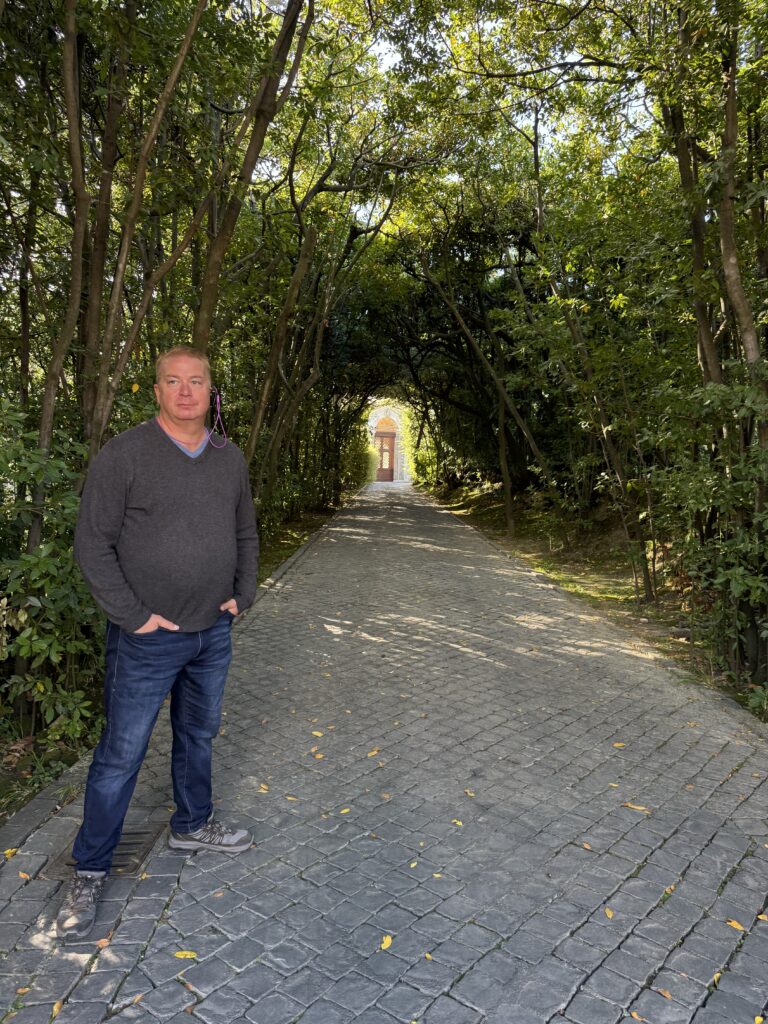
I finally got to see the Sistine Chapel! We booked our tickets in advance and chose to combine the guided tour of the chapel with a tour of the garden as well.
We arrived with plenty of time. In fact, a little too early which gave us time to observe and understand the organized chaos at the entrance.
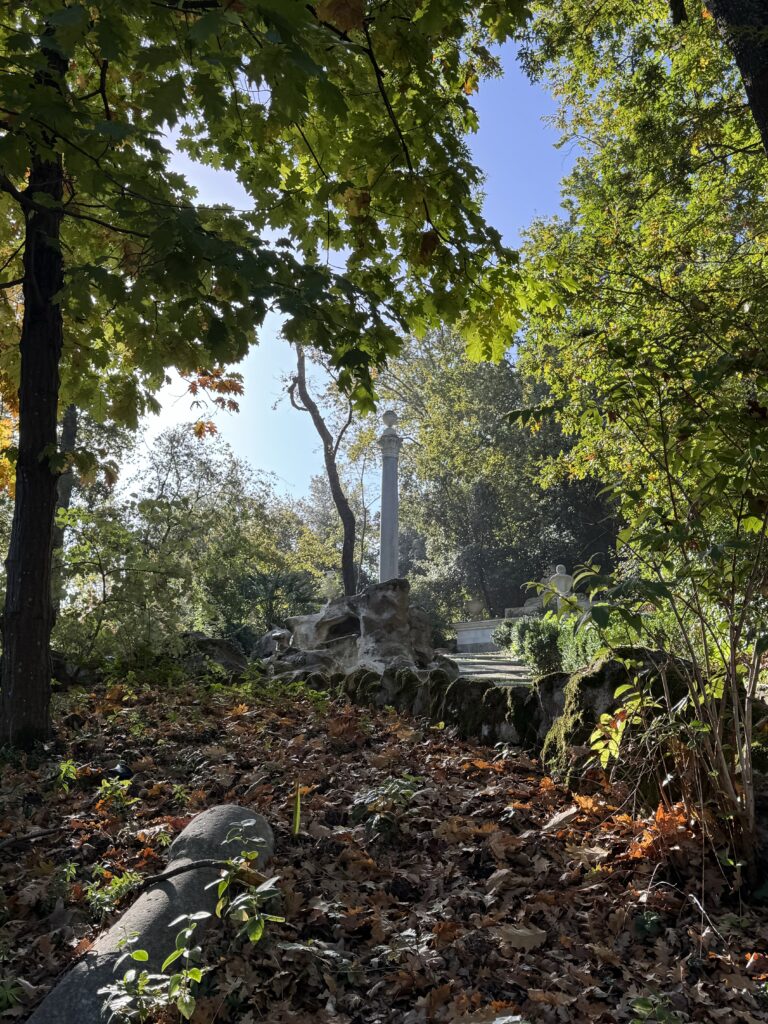
Our tour actually began in the Vatican Garden. We learned that these tours are only offered in the morning. The gardens close to the public in the afternoon, allowing the pope to walk the grounds in private. We did not see any popes while walking around but we did see a chair that he likes to sit in, carved out of a tree trunk. There were plants and flowers from all over the world. The most surprising thing was the amount of parrots! This gave the gardens an almost-tropical vibe. The parrots came from northern Africa and they fluttered about the walls and trees.
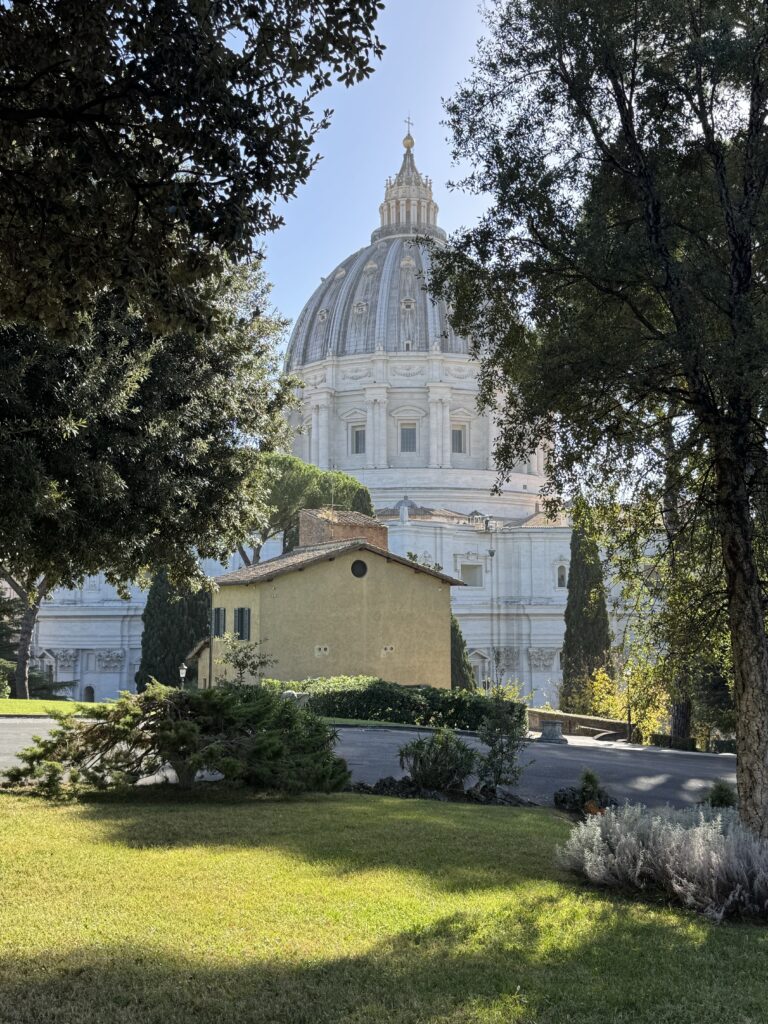
Vatican City has less than 1,000 residents, but many more enter daily to work. The head gardener lives in this house.
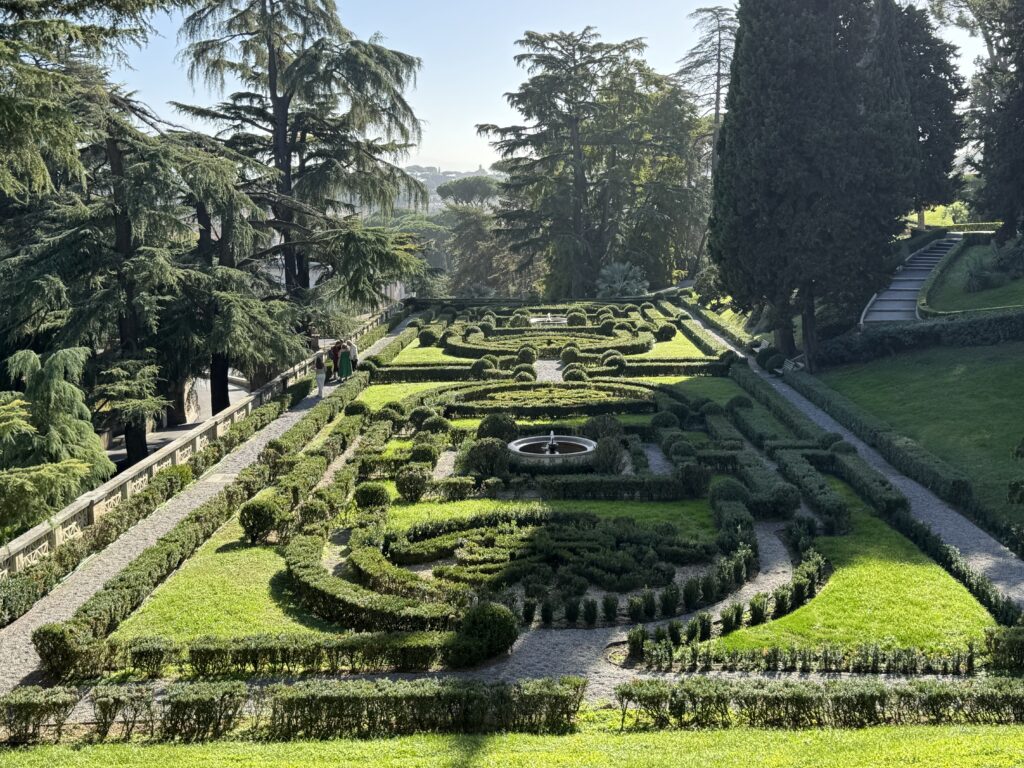
The garden had various sections like English, French and Italian plus several nice fountains.
The last fountain on the tour was most impressive and the water is piped in from one of the old Roman aqueducts.
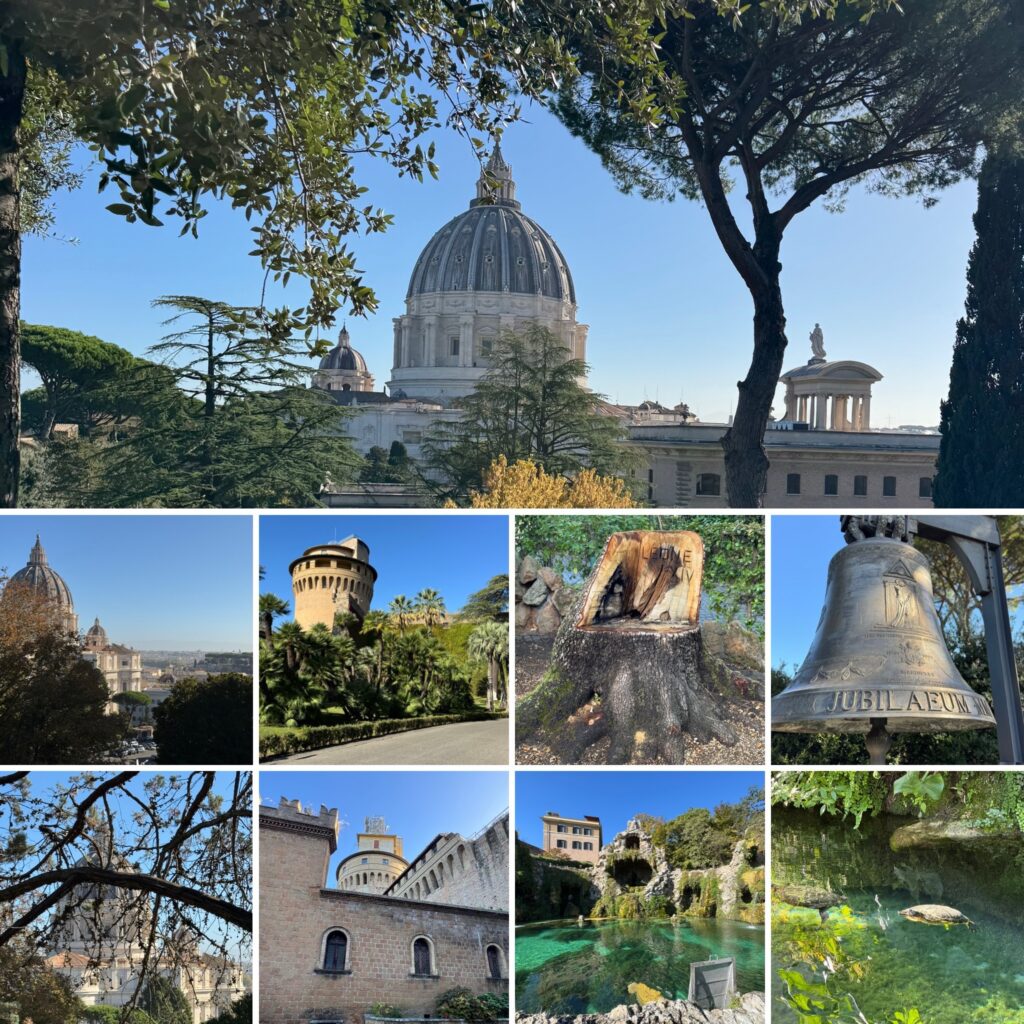
Finally, we re-entered the inside of the Vatican Museum, received information about the Sistine Chapel ceiling, and made our way to the famous room. But before entering we weaved down very long and fully adorned corridors. The anticipation was palpable and built with every step.
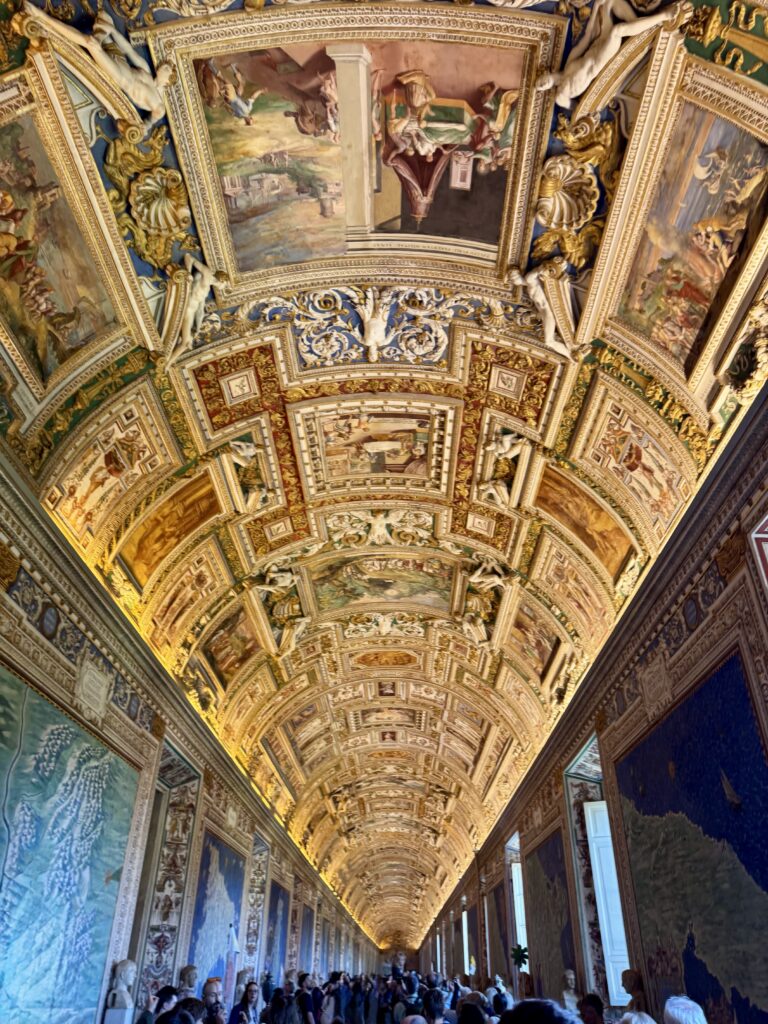
Finally we entered the Sistine Chapel and admired the art for about 40 minutes. The tour information and Rick Steves’ audio guide were extremely helpful. In fact, this time, we listened to the audio tour in advance, and again while we were inside, so we would not miss anything. We stood and sat in multiple places to gain the best views. It was a tour totally worth taking and loved that we combined it with the Vatican Garden tour.
Wednesday: Galleria Borghese and Hadrian’s Temple
Our morning started at the Borghese Gallery, one of the best art galleries in Rome. Tickets must be booked in advance as admission is timed.
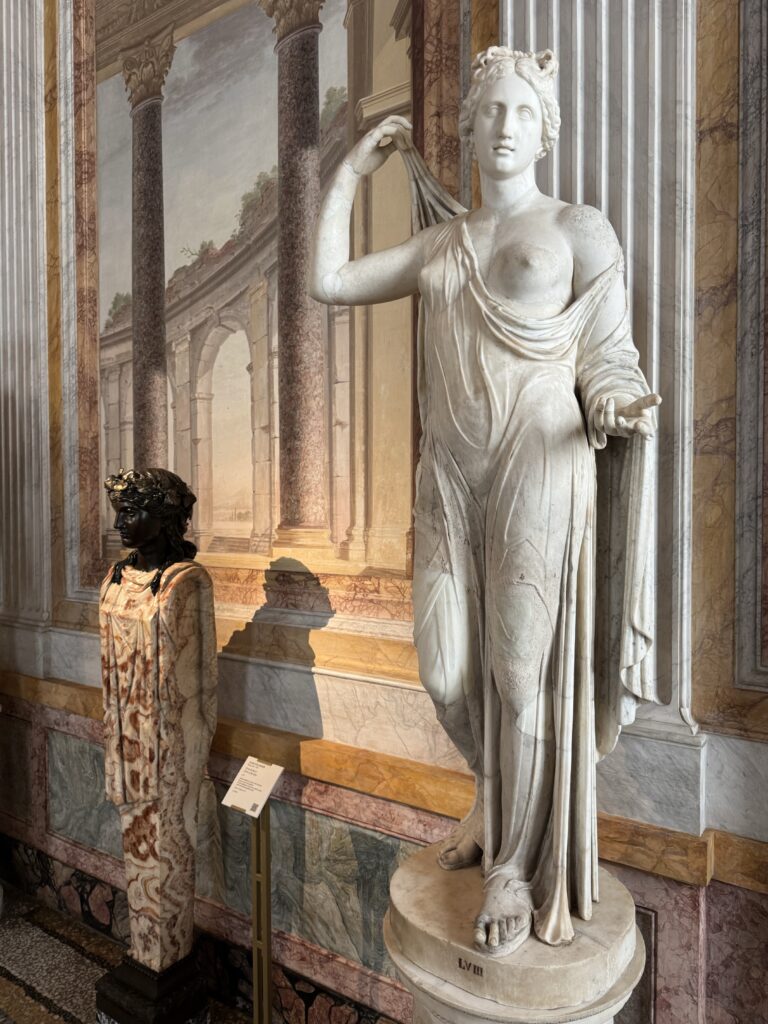
The Borghese house was a country villa and the richness was apparent right as we started our tour. The collection was established by Cardinal Borghese, nephew of the Pope Paul V, the pope that completed St. Peter’s Basilica. The power of the papacy allowed the Borghese family to commission and accumulate tremendous art.
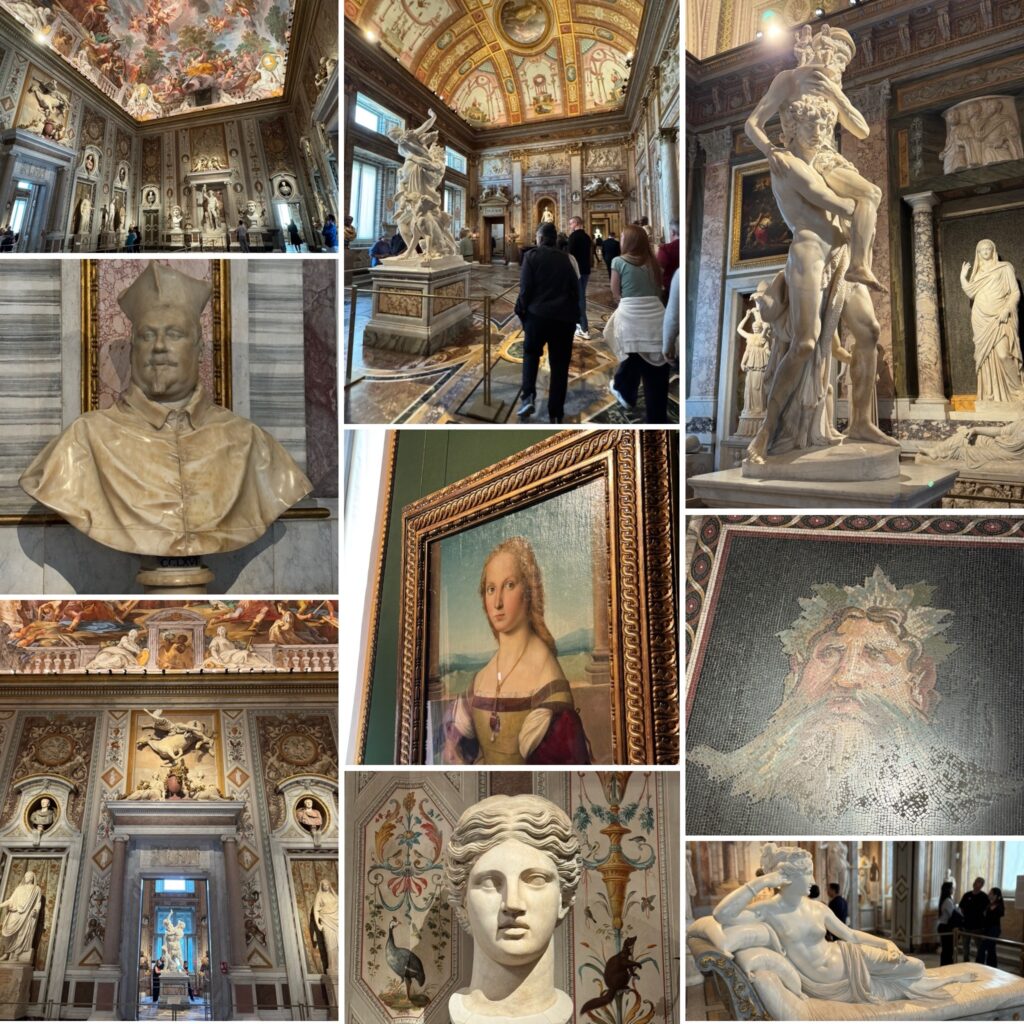
If you love art, you must visit the Borghese. Bernini statues, Caravaggio paintings, and ancient Roman mosaics. We enjoyed the guided tour which only cost a handful of dollars more than a standard admission ticket.
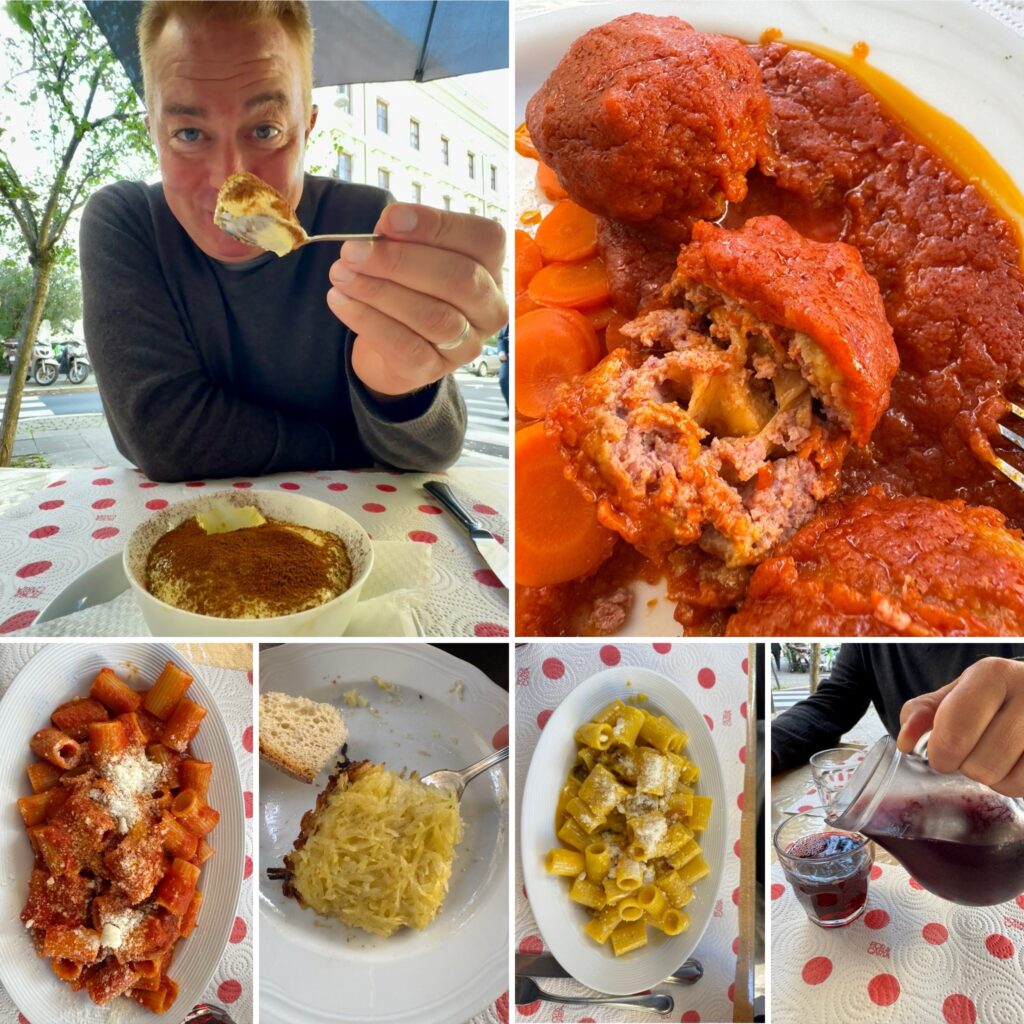
Looking at all that art got us hungry so we walked into the Parioli neighborhood and enjoyed an affordable and tasty lunch at Osteria da Paolina, where Roman classic dishes are listed on a chalkboard menu. The vibe around there was bright, airy and livable. We’d look to rent in this neighborhood on our next trip to Rome.
With gorgeous sunny weather, we decided to make this another walking day and enjoy strolling down Rome’s streets, taking a passeggiata as the Italians do.
We also hit a few stops that were on our saved to-do list. We finally sat down at the ruins of Hadrian’s Temple to enjoy a 20-minute immersive film. This is located right in the heart of Ancient Rome, around the corner from the Pantheon. The columns from the temple are still visible and have been incorporated into the modern building behind it. A stop at the this old temple is definitely worth it and the film was only €5 per person. Plus if you’ve been walking 20,000 steps a day, your feet will thank you for the respite.
Our afternoon walk brought us back to Piazza Novena to enjoy the fountains, which were being refurbished during our last visit.
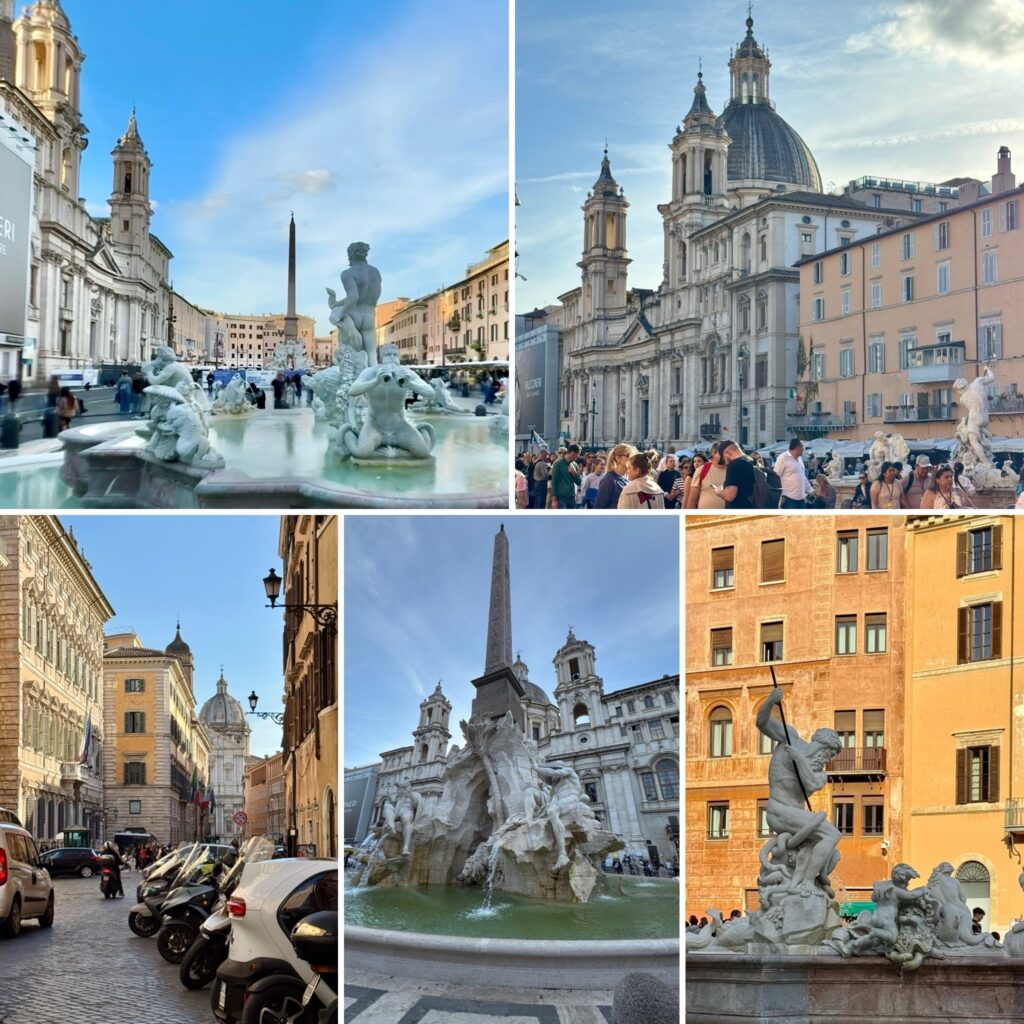
After some time people watching, we walked around some more and needed a restroom. In countries where public restrooms are not readily available, we often end up stopping at bars or cafes for a pit stop combined with a refreshment. After all, in most European countries a great espresso costs just over one euro! Here, we ended up at Open Baladin, an outstanding beer bar that serves beers from the Italian microbrewery Baladin. With most Italian beers being inoffensive lagers, Corey was excited to find dozens of exciting taps, including a pumpkin beer.
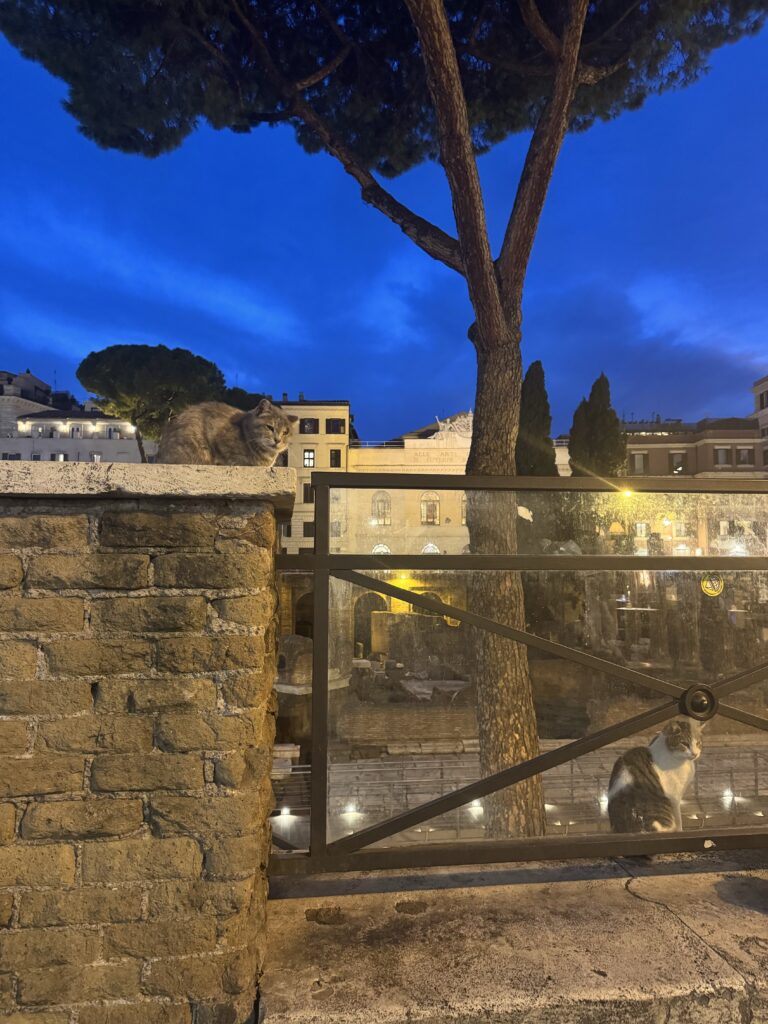
We stopped by the Largo di Torre Argentina archeological area, home of the Torre Argentina Cat Sanctuary. The complex is a set of ruined ancient temples, one of which is home to a colony of feral cats. It is a fun stop to watch the cats run around the ancient columns and artifacts. There is free entry to the archaeological complex on the first Sunday of the month, so we plan to explore it more on a future trip.
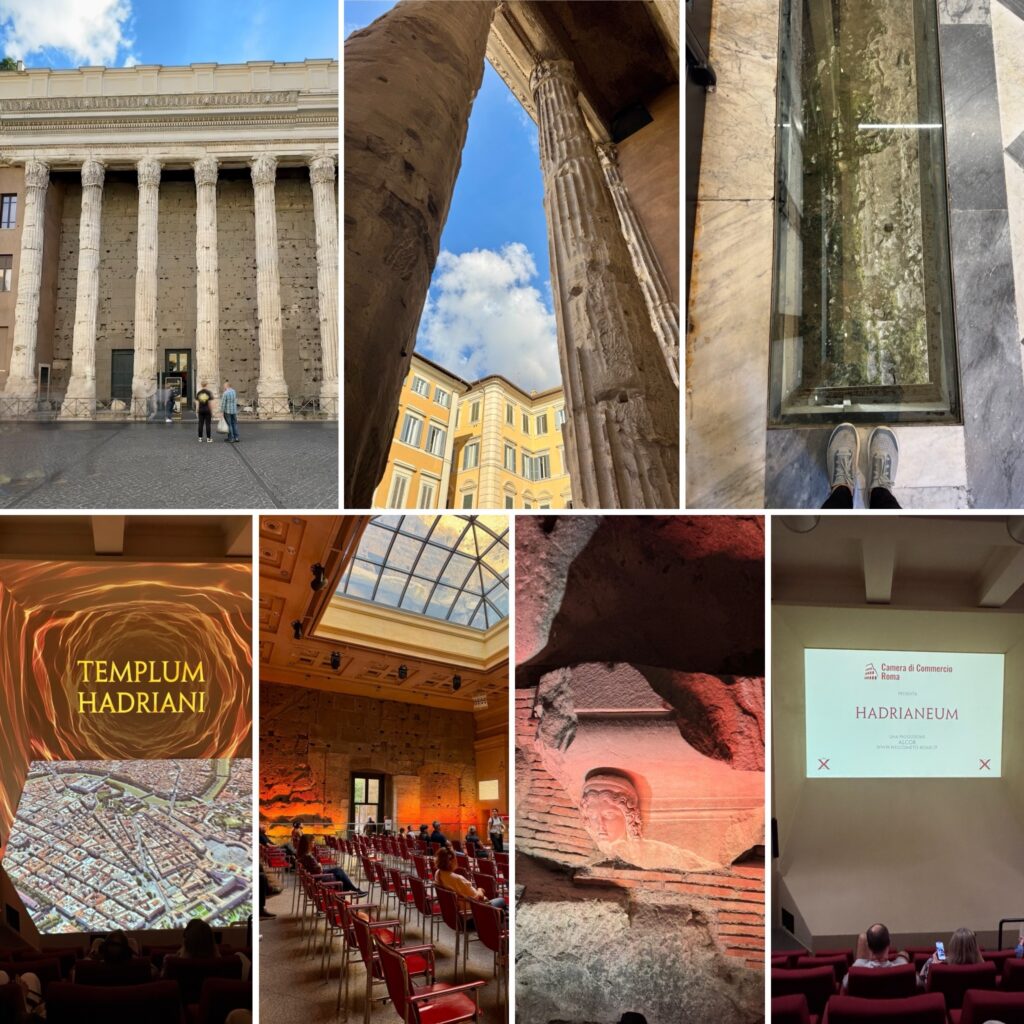
Our day ended with a walk up Via Del Corso with a brief stop to watch the projection show back at Hadrian’s Temple. The show starts at some point after sunset, but even the folks inside could not tell us exactly when it would start. It covered much of the same material as the film we saw inside earlier in the day. It was cool to watch the projections on the actual columns, showing how the building looked through the years, accompanied with music and sound.
Thursday: the Jewish Ghetto
We had anticipated rain and it arrived just on time but since we planned for it, our day went as scheduled. We actually slept in a little and did laundry and headed out in the late morning to do the Rick Steves walk through the Jewish Ghetto.
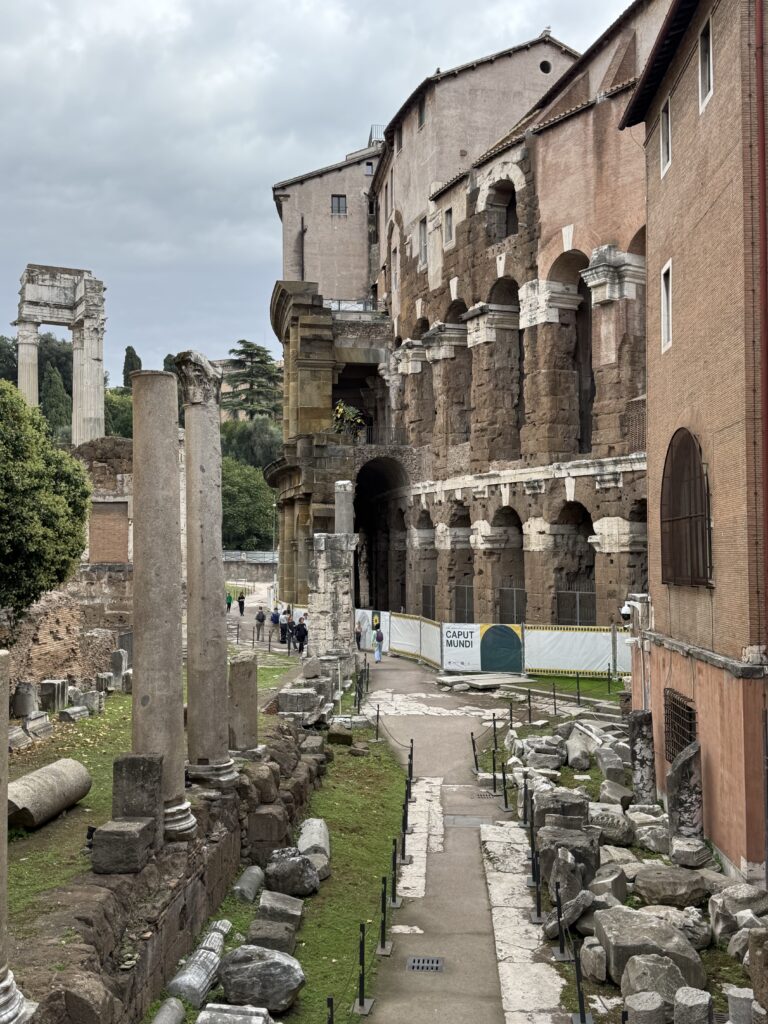
Just around the corner from every piazza in Rome is something grand and old and just beneath that there is something older. It’s one of the things that makes this city so wonderful. The Jewish neighborhood is small, 7 acres, but the streets showcase a lot of history. For example the Marcelo theater, which is older than the Coliseum, is tucked behind some apartments and nestled next to an old temple. And the old stones are just sitting there for pedestrians to shuffle past.
The walk lasted about an hour and weaved through some small lanes and piazzas. We window-shopped and enjoyed an espresso along the way. The line for the bakery was out the door but the sweet treats looked fantastic!
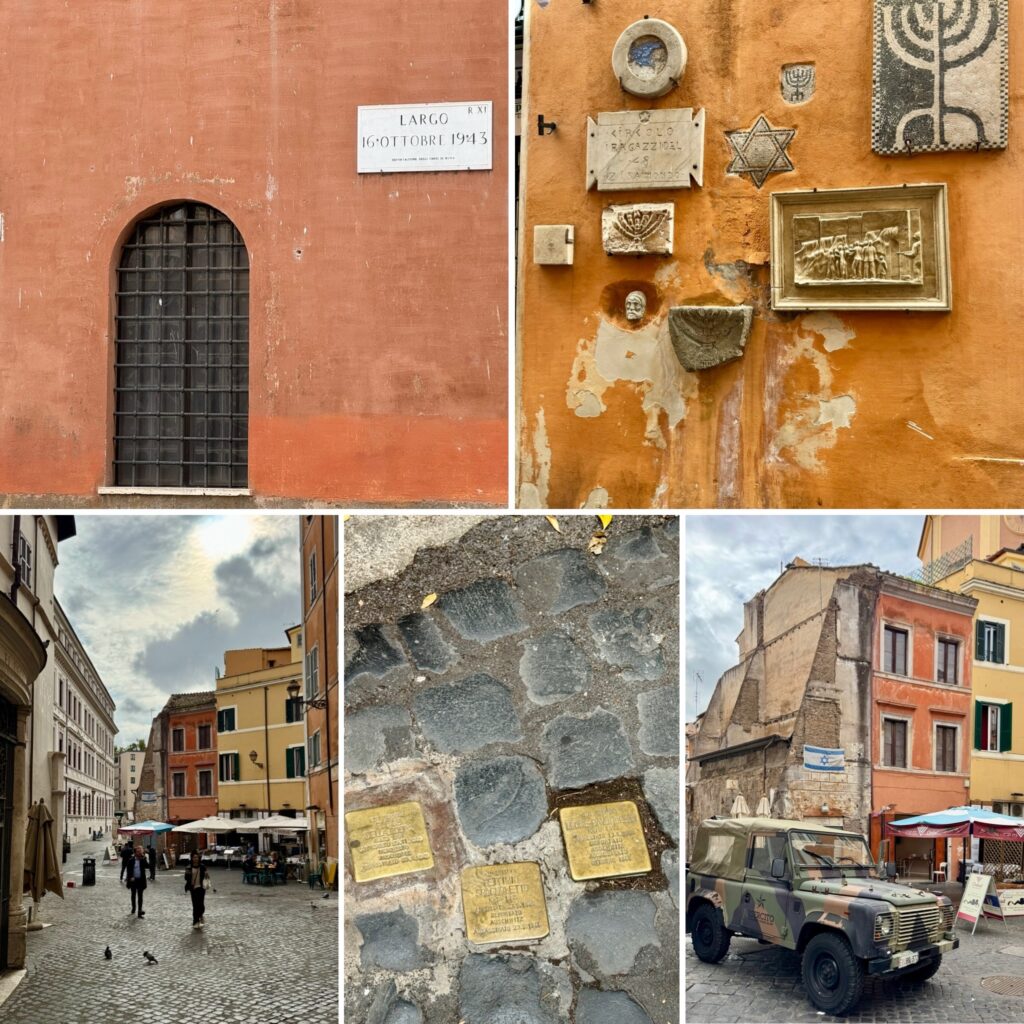
The most important part of the tour talked about the history and how the Roman Jewish community was endeared, then discriminated against in Roman times, then found in favor again until around 1500. In 1555, all Roman Jews were moved into a walled, confined area, eventually known as the Ghetto. Persecuted by the Papal States and the outer community for 300 years, it was actually Napoleon’s invasion that pulled down the Ghetto walls and began the slow process of Jewish emancipation. Eventually Jews were given full citizenship in the late 1800s. But things took a sad turn after the Nazis occupied Italy in 1943. At least 1,000 Jewish Romans were sent to Auschwitz, with only a few surviving. There are small bronze squares in front of homes to commemorate residents that were victims of the Holocaust. This was a more solemn tour, but it is an important history to continue teaching so that we can ensure fascism does not take power again.
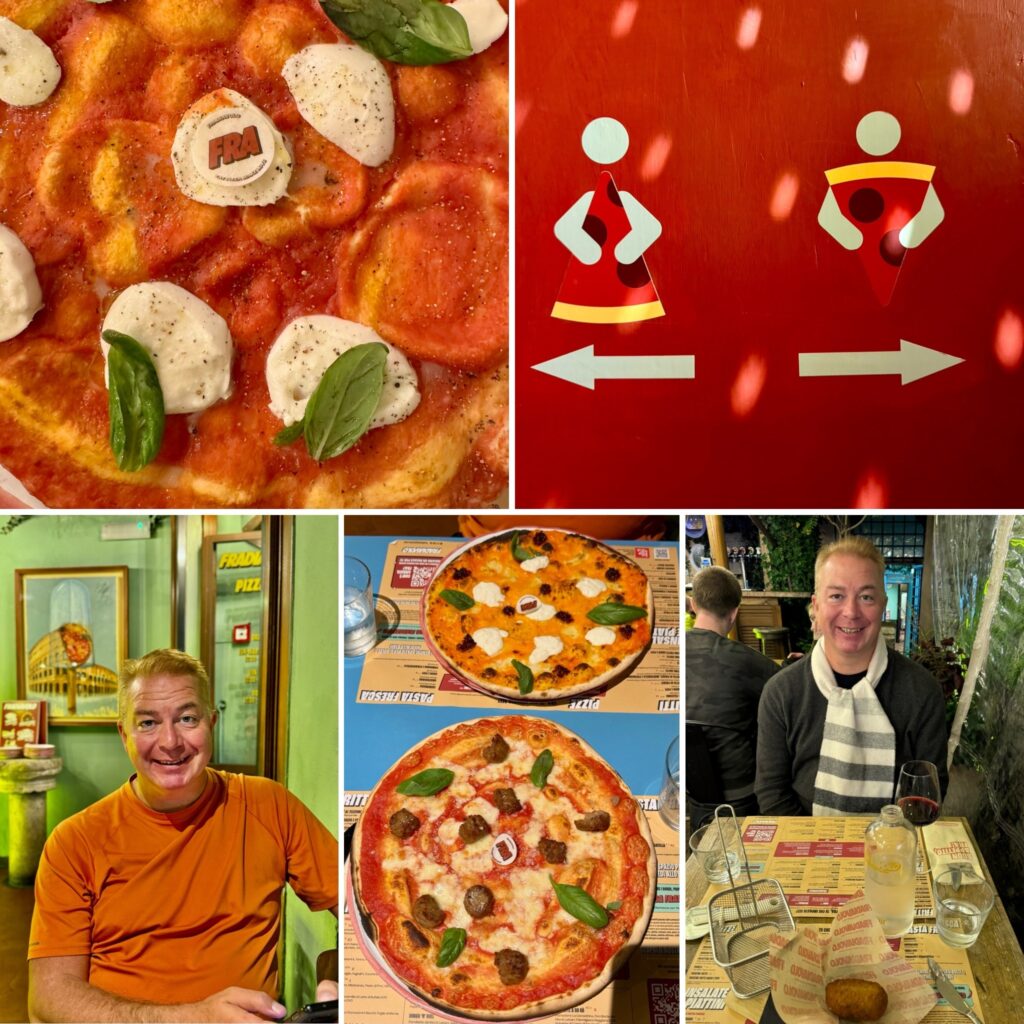
After our tour we crossed back in Trastevere and dined at Fra Diavolo, a pizza chain that we had enjoyed a couple days prior. As we left the rain started to fall so it was a good time to follow the plan to go home.
Friday: time to take a cruise
Our final day was spent getting to, and hanging out, at the port of Civitavecchia, where we would be boarding the Celebrity Constellation on the way back to the United States.
We shared a van with a two other nomad couples that were also in Rome and heading to the ship. Once at the port, we checked in our luggage. But it was early in the day, and we hate standing in line to board ships. Instead we left the port, grabbed some beer and Italian goodies from a supermarket, and sat around Civitavecchia watching the world go by.
We will be on the Celebrity Constellation for 51 days! After we cross the Atlantic to Tampa, Florida, we will be on board for six additional cruises. Many of the ports will repeat, so we will get well reacquainted with Cozumel, Mexico and a few other cities.