After a restful summer in Montenegro, we flew across Europe for a few weeks in Iberia.
Cascais, Portugal
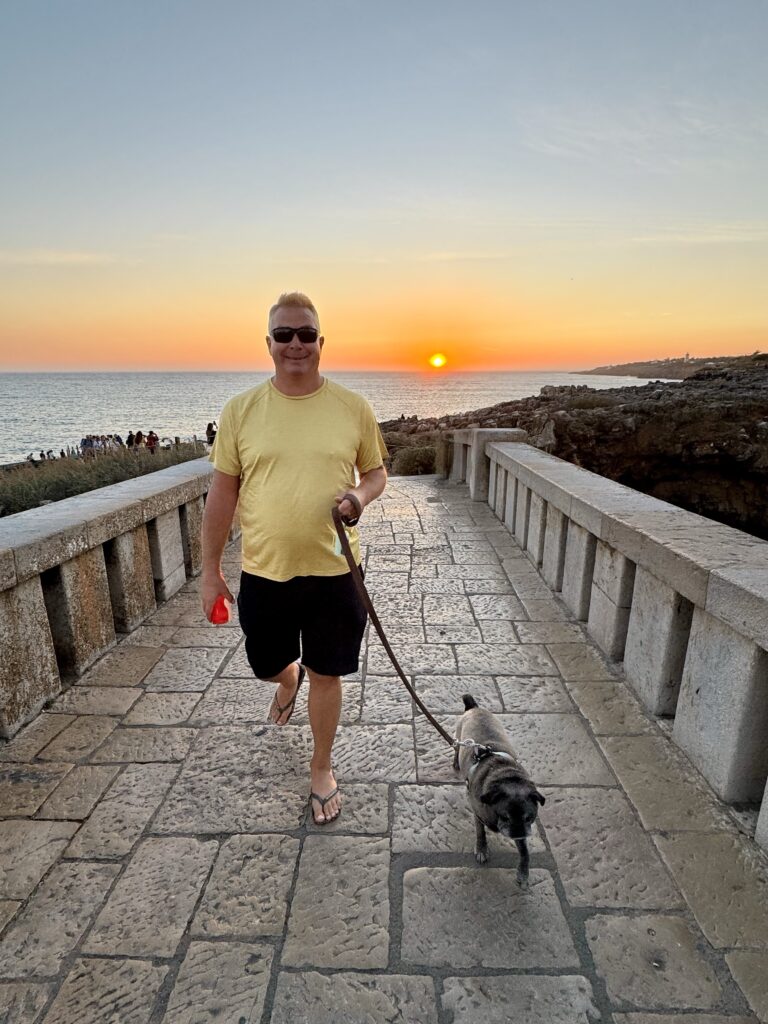
A friend had connected us with a nice American couple, who needed a dog sitter for Rocco, their seven-year-old cuddly pug. It worked well with our schedule and we were able to stay with Rocco for about two weeks.
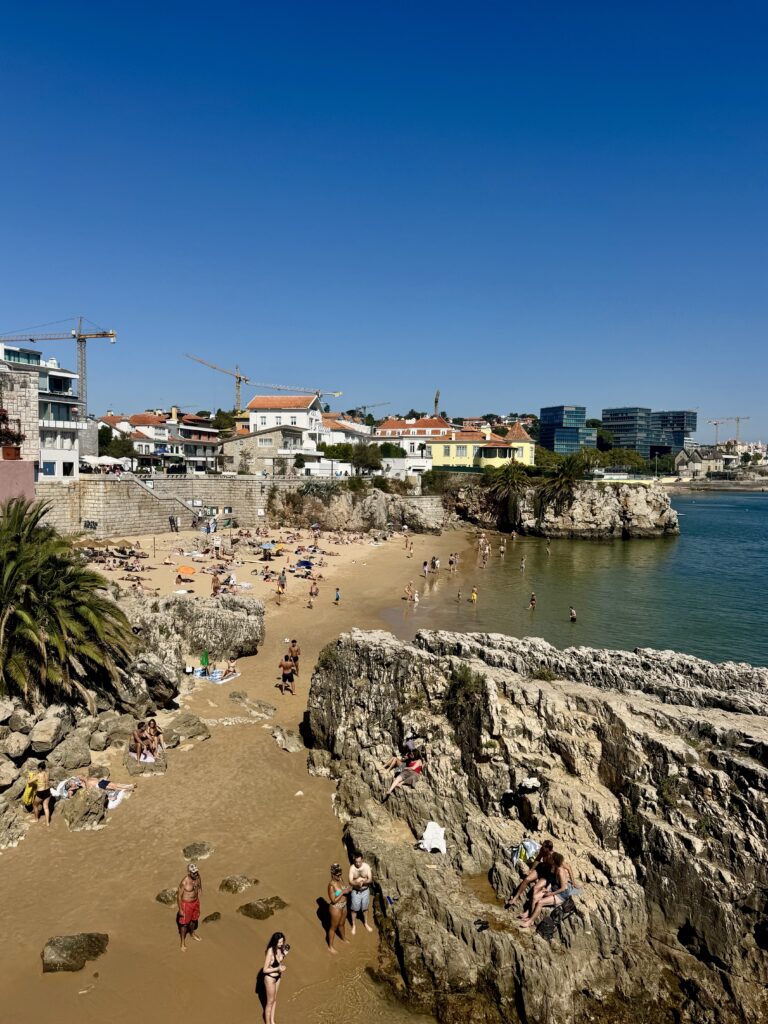
Cascais is a high-end beach town near Lisbon. It reminded me a lot of Santa Barbara or La Jolla in California.
We enjoyed coastal walks near the cliffs and laying out on the beach on warmer days. For October, the weather was quite pleasant and we mostly had sunny days with highs around 75 F.
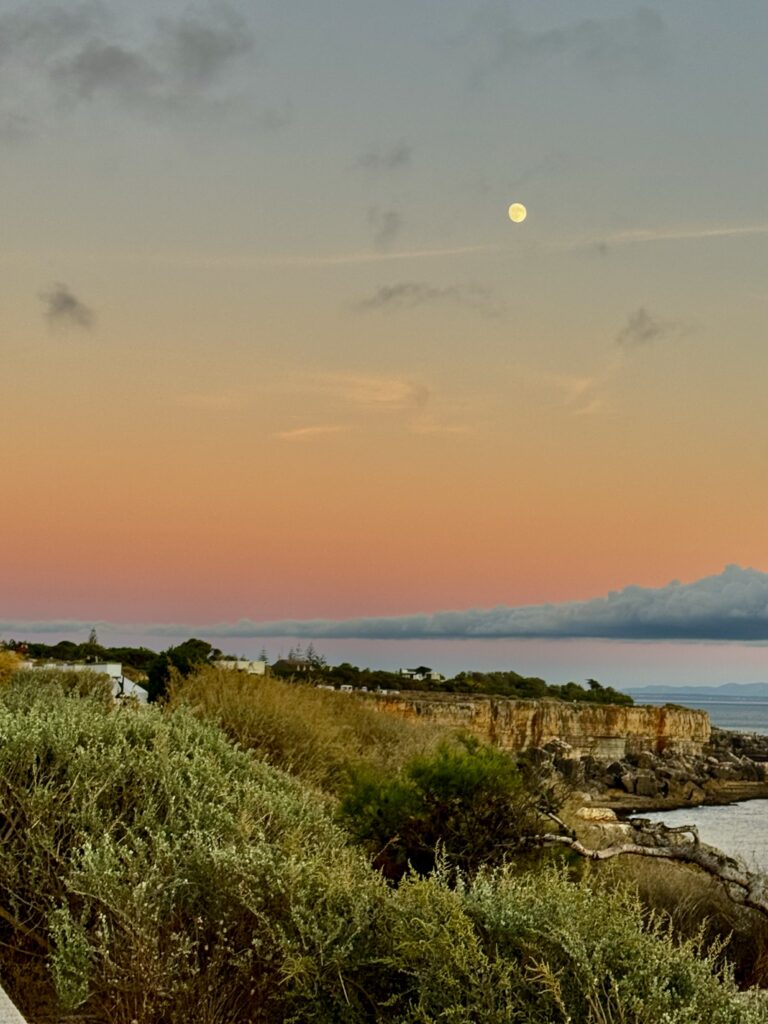
The sunrises and sunsets in Portugal dazzle the senses. Astute readers may wonder if I actually know what the sunrise looks like, but yes, I woke up early enough to see one sunrise, and it was bright and beautiful!
Cascais is quite popular with foreigners and we met up with a handful of friends.
One of our first days in Cascais we met up with three other nomadic couples for a lively lunch and drinks by the beach. Some of those folks we had met before and others we had just been introduced to.
PJ and Chris, who we originally met in Thailand, and also saw recently in Montenegro, joined us for an Arabic lunch and scenic drive to the beaches just northwest of Cascais. The swells were big and it was fun to watch the waves crash while sipping on a cocktail. Thanks for driving us around!
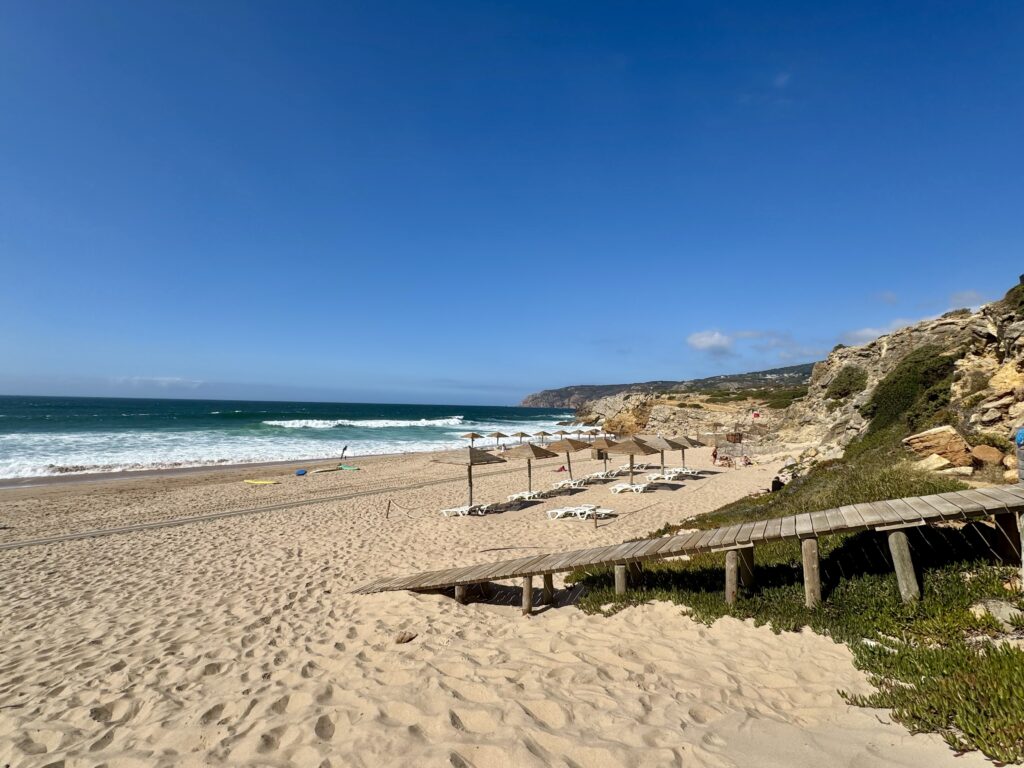
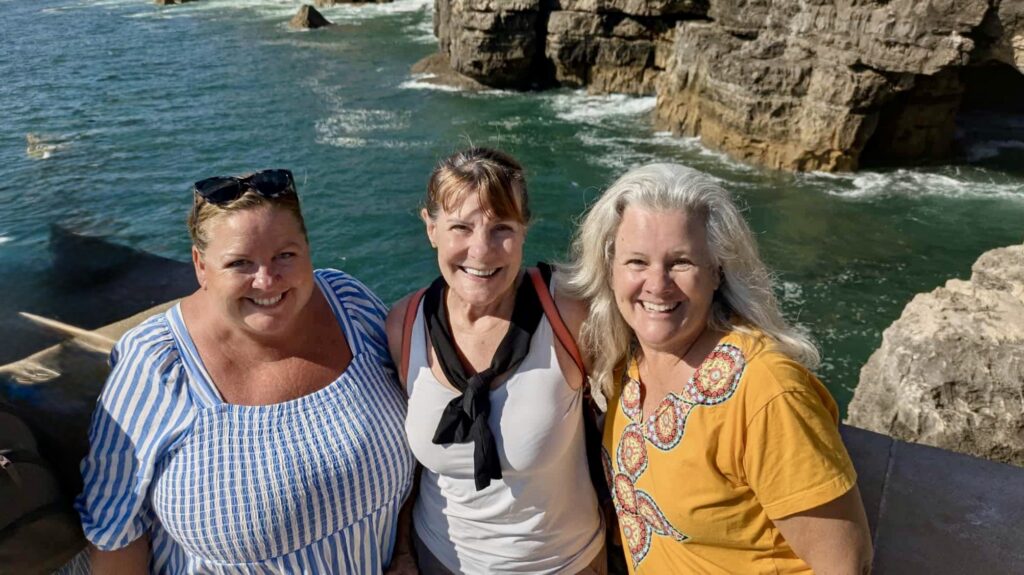
One day we managed to organize a PortuGAL day for Thai massages, brunch, and a beach walk. It was so fun to socialize with other women, leaving Corey at home to nap with the dog.
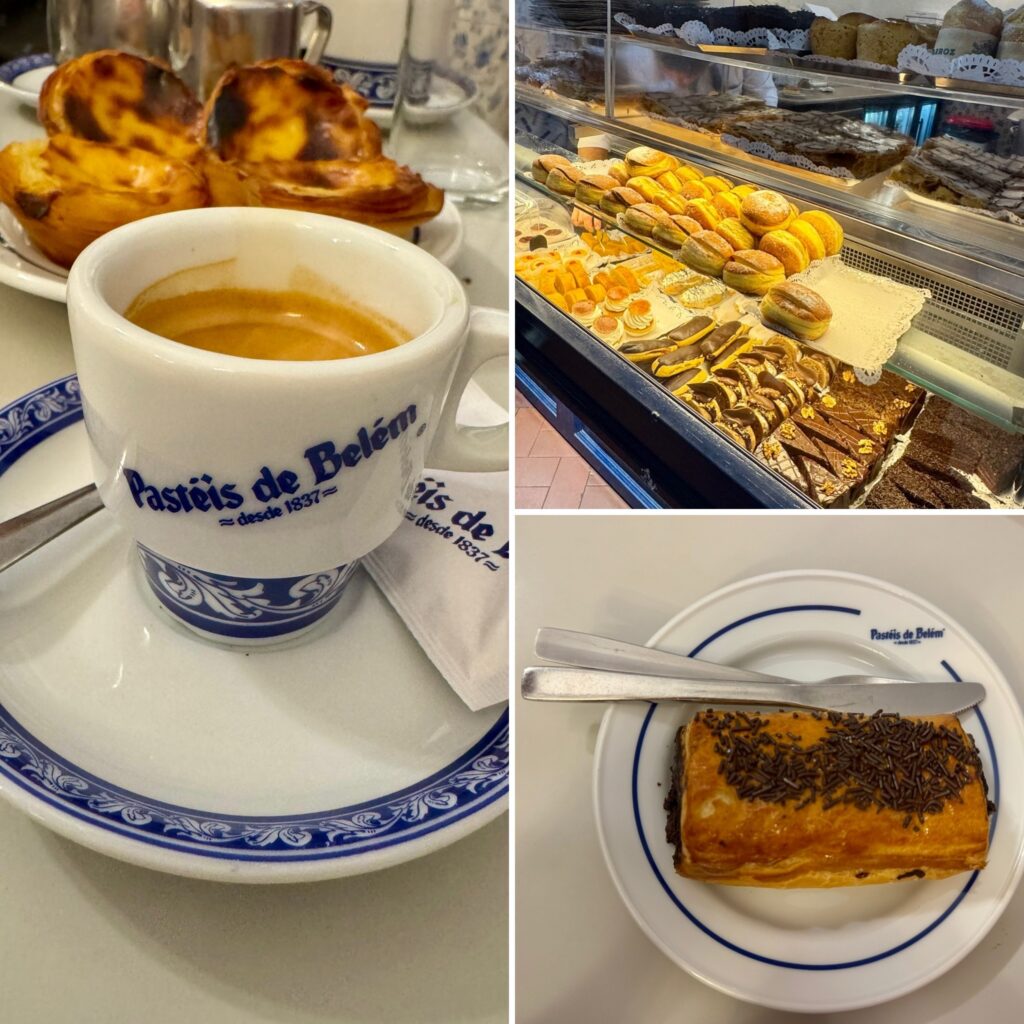
Another day we spent in Belem with Chris and Steve. We have met up with them before in Dublin and Seattle. Belem is a suburb of Lisbon known for a tower, some museums, and a special version of the custard tart known as pastel de nata. We caught up with Chris and Steve over coffee and sweet treats. Pastels de nata are not my thing, so thankfully there were lots of other pastries to choose from!
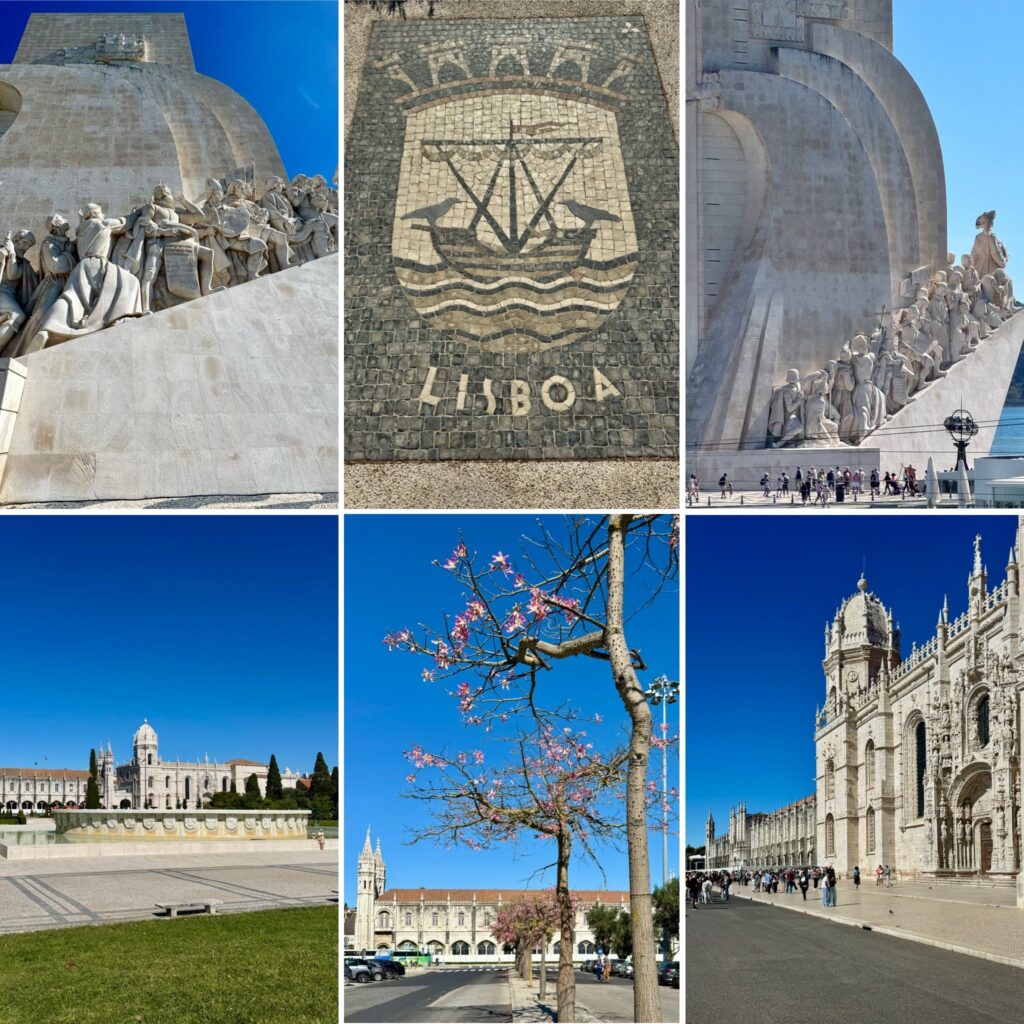
Belem is cute and easy to get to via train. While around we also walked down by the waterfront and admired this grand Portuguese artistry.
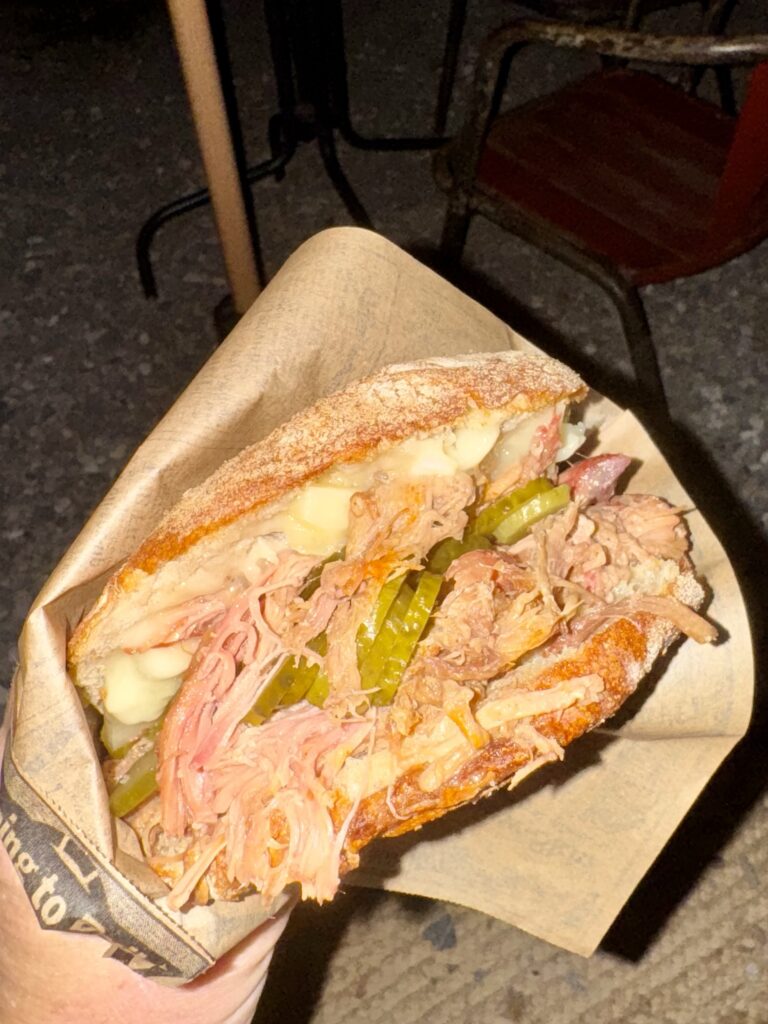
We cooked most of our meals at home as we had a fantastic grocery store a few blocks down the road (Pingo Doce, a Portuguese chain) and a nicely stocked kitchen. When we housesit it is great to find the fabulous kitchens and sharp knives which Airbnbs seem to never have! One of the culinary highlights from eating out in Cascais was Sandocas, a small kiosk on the grounds of the scenic Casa da Guia complex. The owner was great and served juicy, scrumptious sandwiches of smoked pork or beef, layered with Serra da Estrela, a funky soft cheese that we liked enough to buy a loaf at the store. And the sandwiches were so good that we went back for a second helping before leaving!
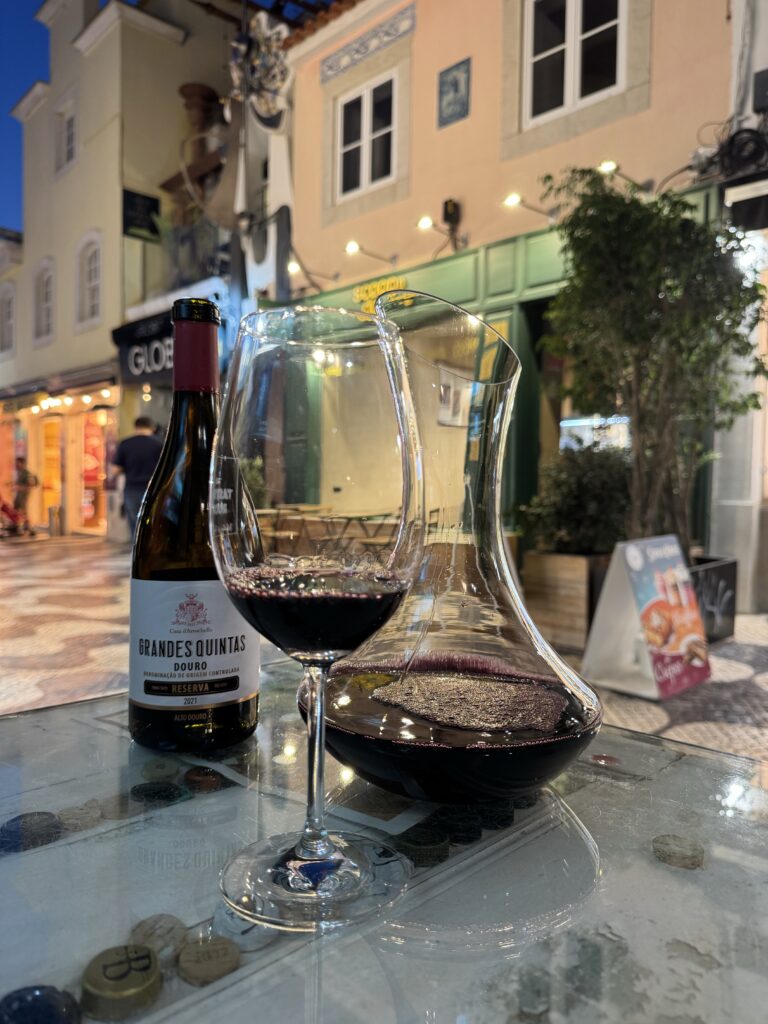
Our last night in town we had a date night which included spicy Thai food and a bottle of silky Portuguese red wine from a cute little wine bar. It reminded me of our third date and it is always nice to have romantic nights like that around the world.
Portuguese Road Trip!
Rocco’s pet parents returned and we headed north for another pet sit that was going to be totally different from a sleepy pug in buzzy Cascais. More on that later!
Nazare, Portugal
We exited the large highway and made our way through tall thin pine forests.
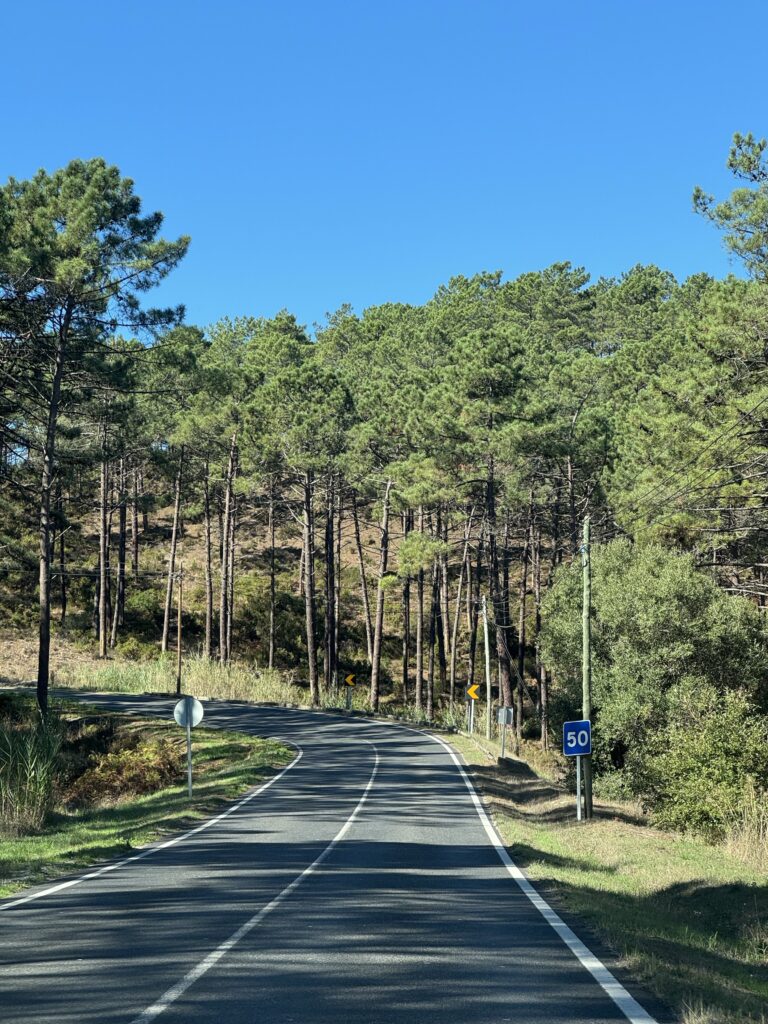
The road weaved until we reached the touristy village of Nazare, which is famous for the ginormous waves that surfers take on. If you’ve seen a video of 80-foot surfing waves, it was likely from Nazare! The north side of town has these beautiful cliffs that divide the beach. In fact, the sandy beach on the southern end does not have the massive swells that the northern beach gets. The town is a little past-its-prime but does have a large beach area with a long and busy promenade.
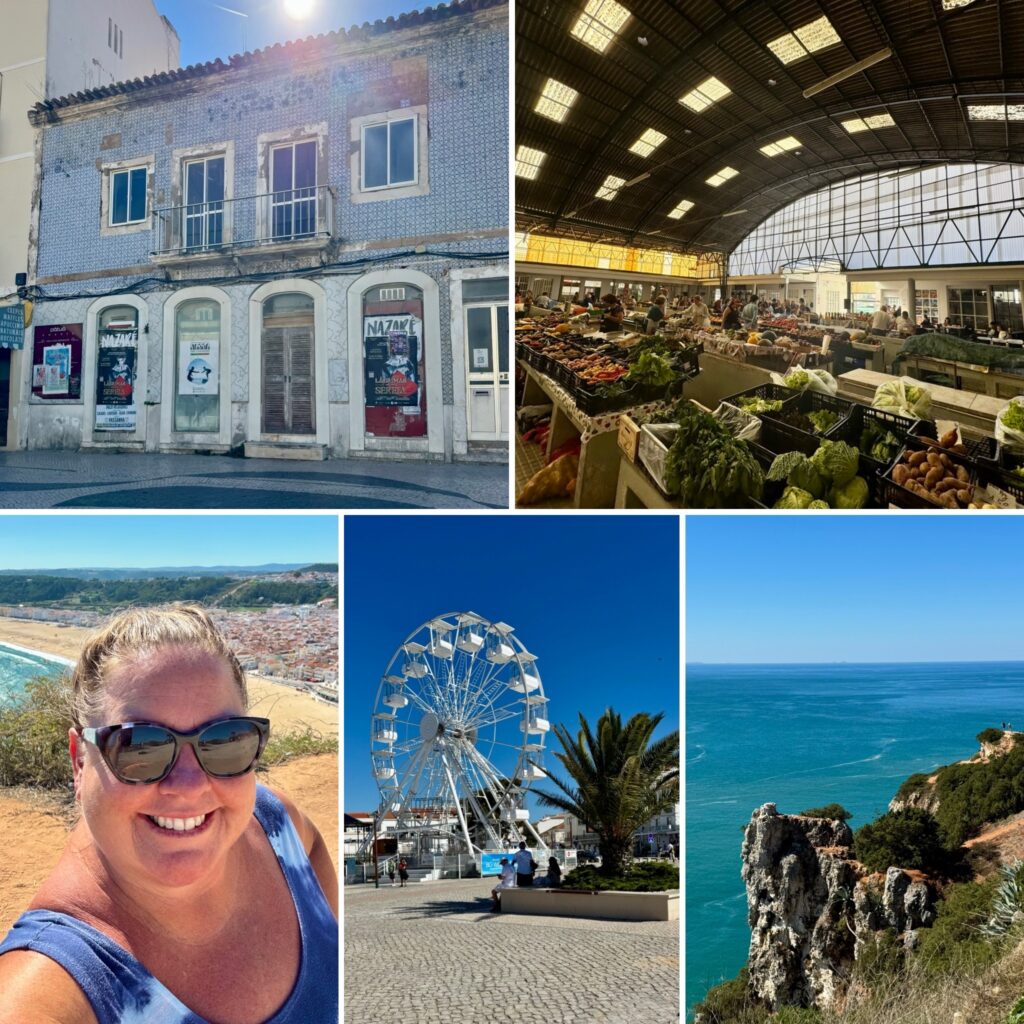
There is a breathtaking viewpoint overlooking the beach and surroundings, with a funicular that takes people up the hill. Thankfully we had our car and avoided the walk.
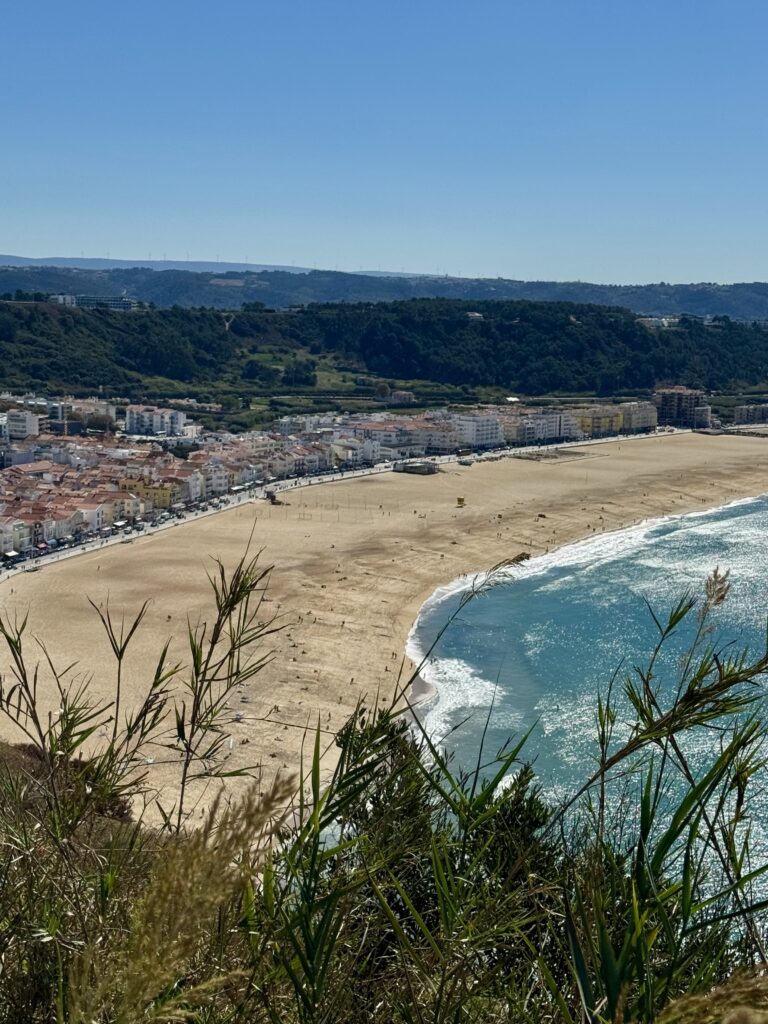
At the top of the busy hill were viewpoints, restaurants, a large church, and a ton of people. It was a Saturday in October but still crowded and felt hectic on the narrow roads. The sun was warm and the breeze felt salty.
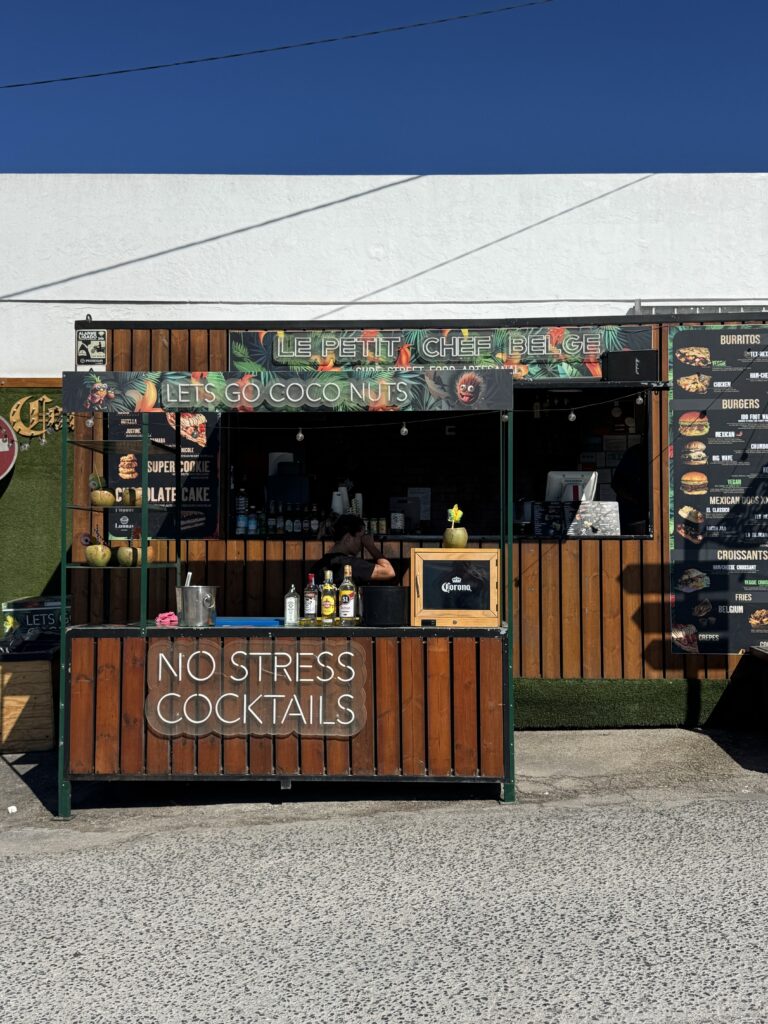
With all of our stuff in the car, we could not park and explore, so we instead drove around a couple times. I jumped out and snapped some photos as Corey circled around the narrow lanes and overcrowded parking area. The views over the town and sea were spectacular! Navare is definitely worth the stop for a night or two for anyone roadtripping Portugal. We did not have a lot of time as a new family was waiting to meet us.
Galicia, Spain
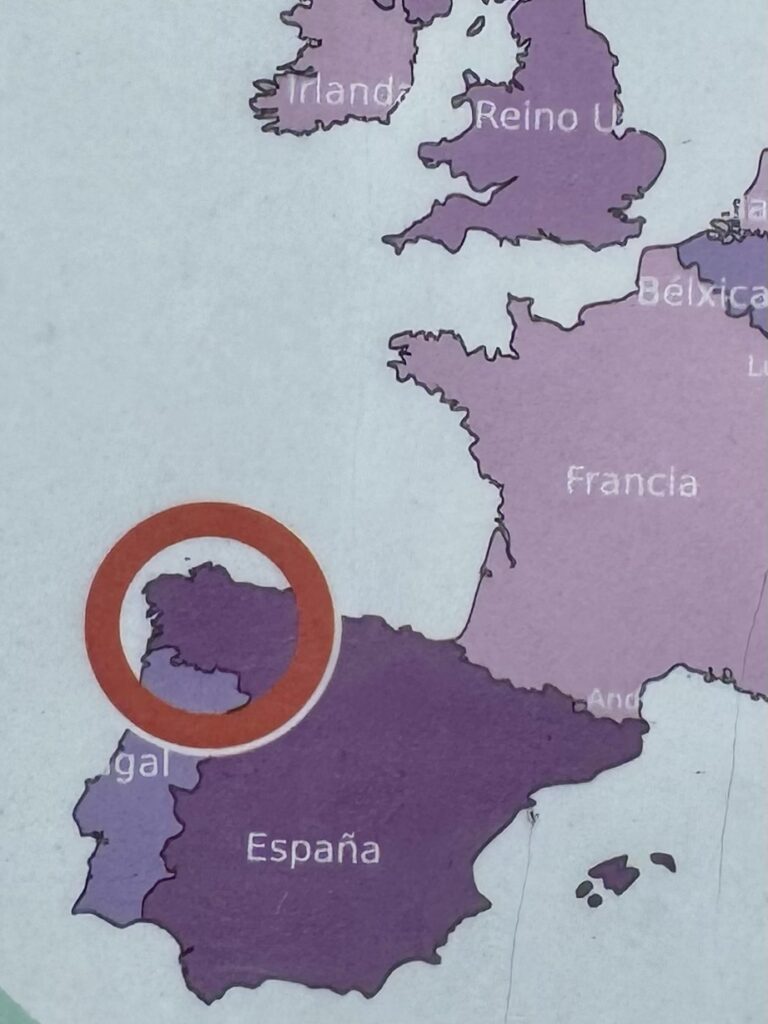
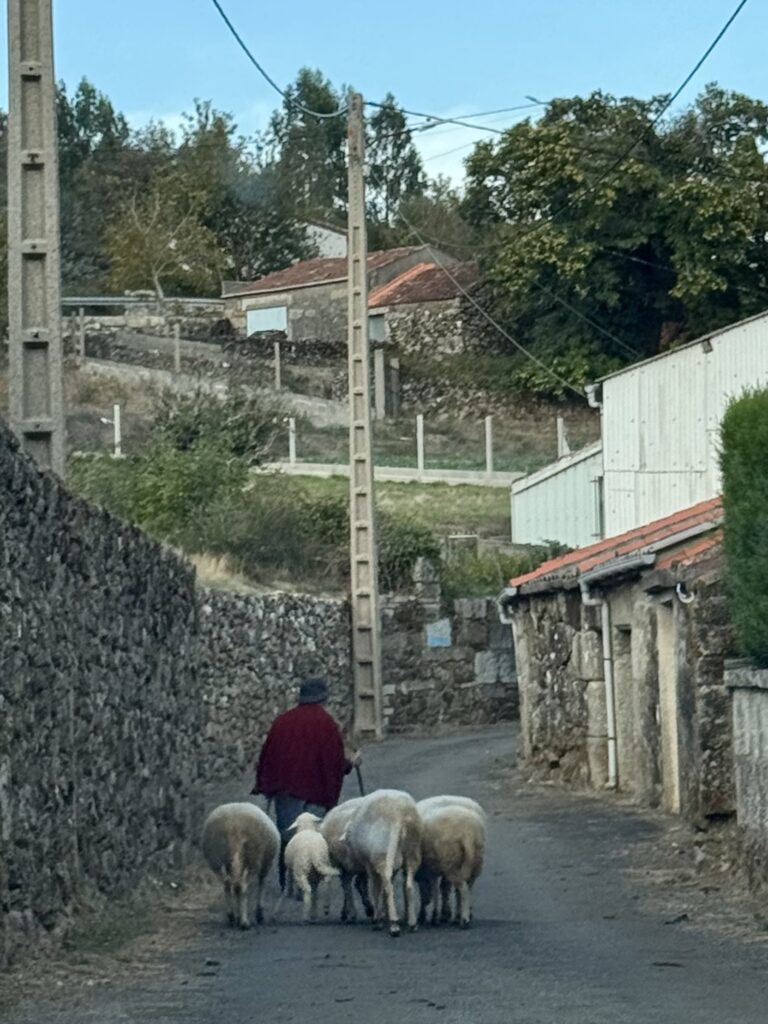
About an hour north of Porto our drive turned into narrow two-lane highways as we crossed the unguarded border and weaved through the Spanish countryside. Eventually we made it to Prado: a tiny village with a cluster of stone houses and likely more cats (and sheep!) than humans this time of the year.
We were housesitting for six cats, plus two street cats that reliably hang around outside during dinnertime.
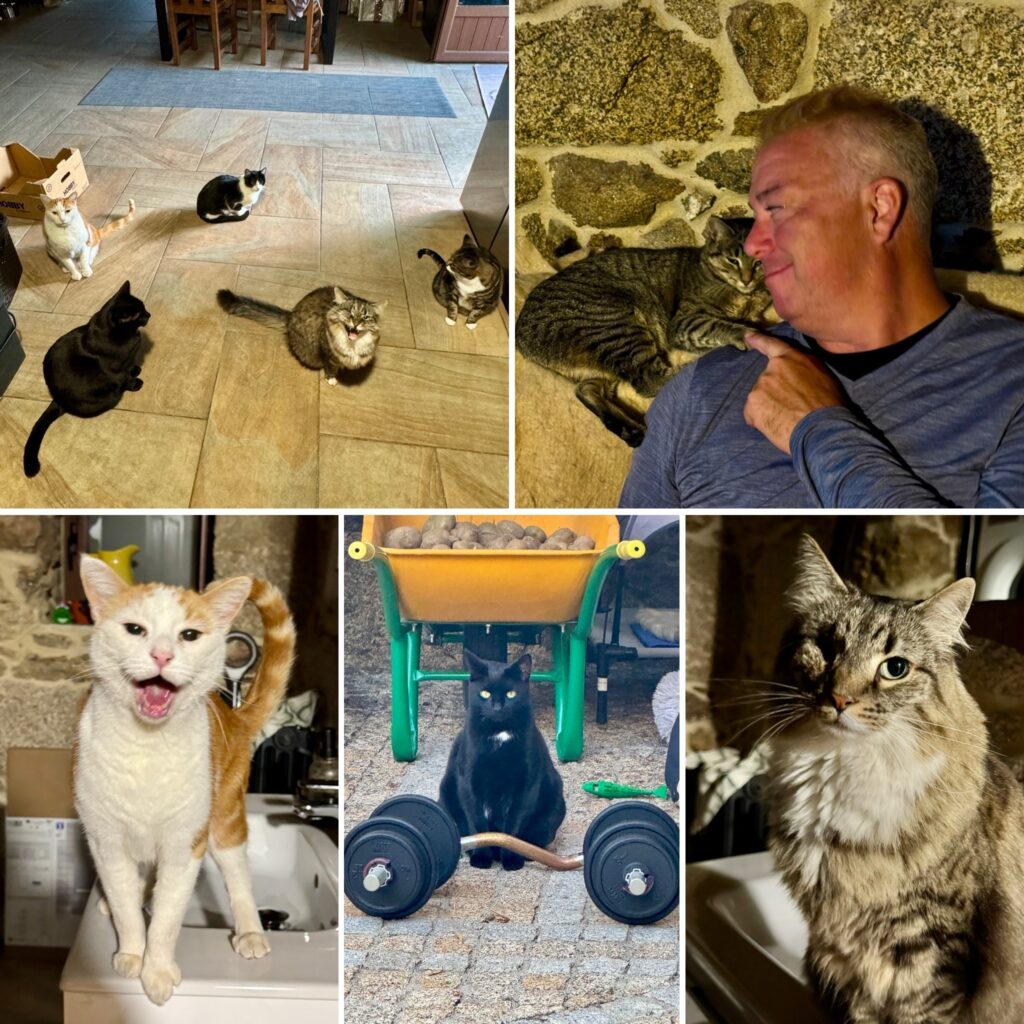
We had enjoyed the Galician coastal cities on previous cruise stops and we were excited and thankful to have a comfortable base to explore the inland areas of this region of Spain.
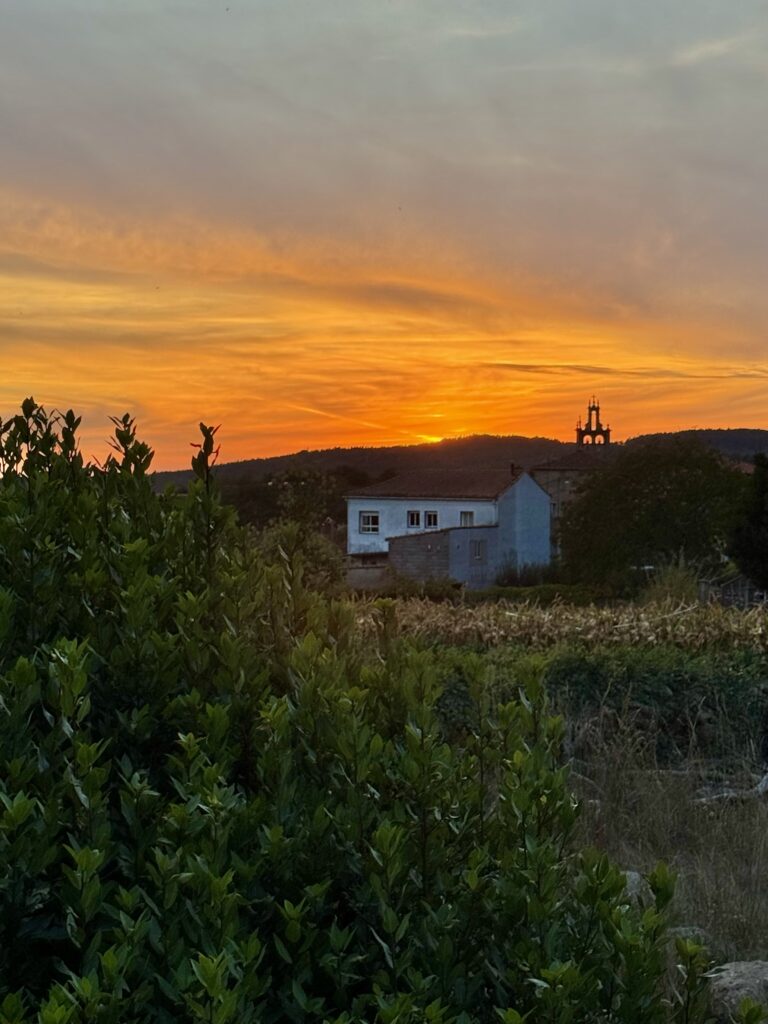
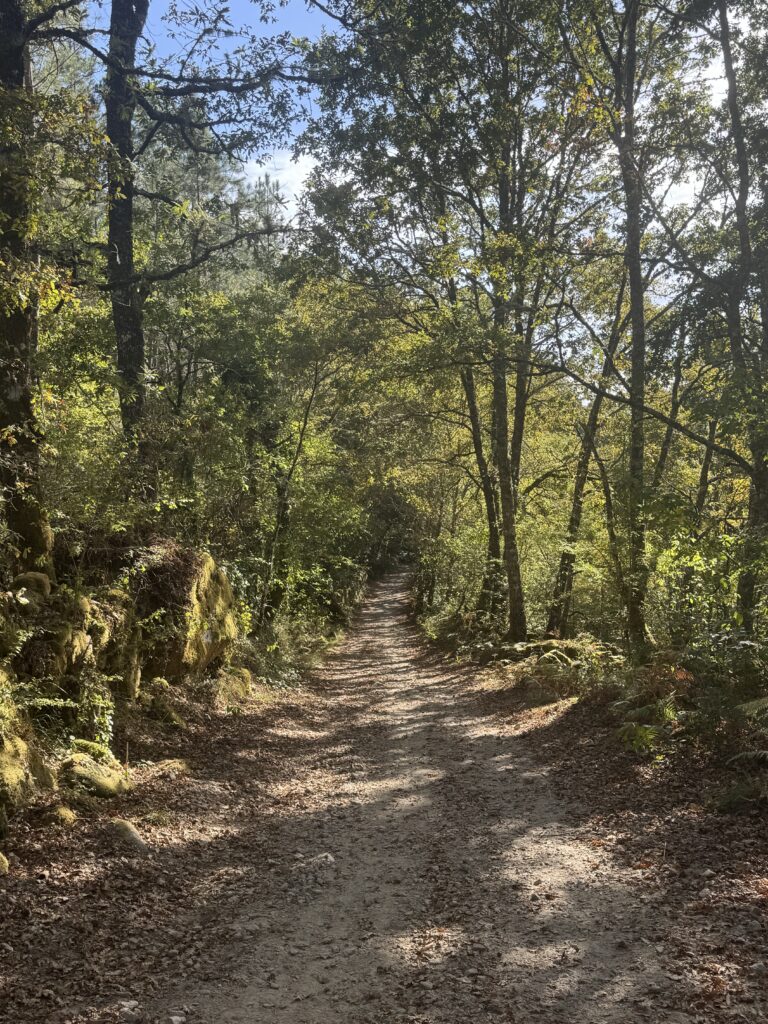
Galicia has its own language (a relative of Portuguese) and a long history. Long before Roman settlements there were Celtic tribes that called this part of Spain home. To us, Galicia felt a lot like the Pacific Northwest or Ireland. It is quite green, pretty, and rainy some times of the year. Luckily we had pleasant weather all week with rain only arriving our last day.
Aquis Querquennis
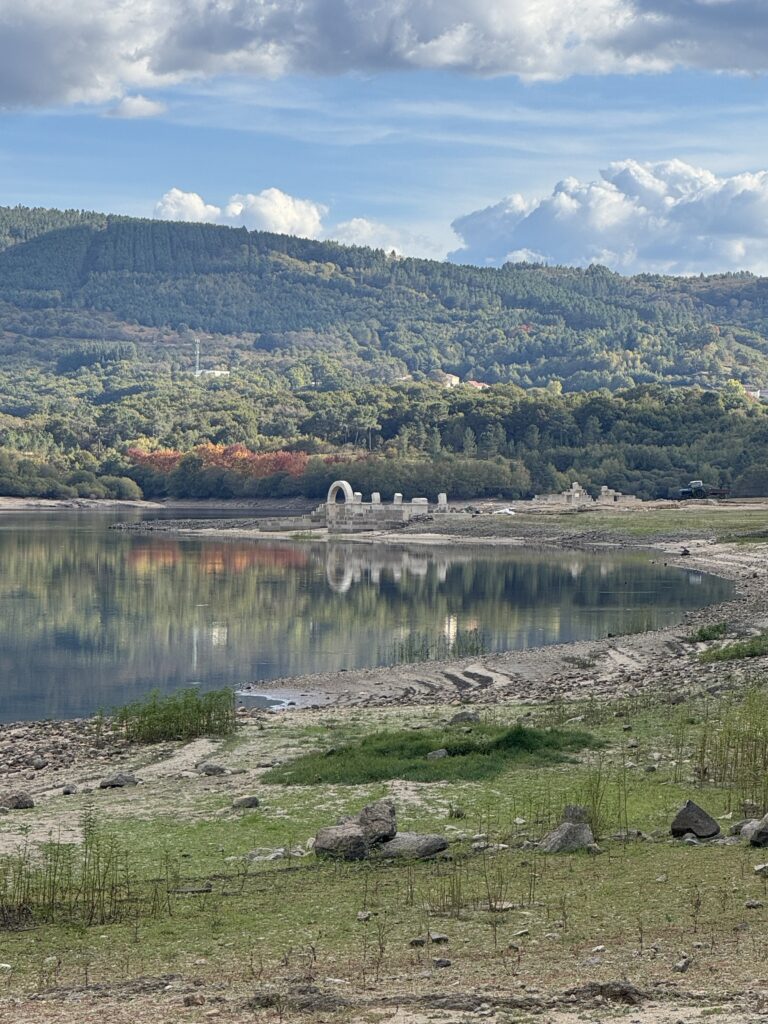
Having a rental car was crucial for exploring the area. We drove through many small stone villages and visited an old Roman military base called Aquis Querquennis. The base is located on the banks of the Rio Limia, with the area providing both a source of fresh water and geothermal hot springs. In 1949, a hydroelectric dam flooded the area, but the water level is now low enough that the camp is completely exposed and now lies on the shores of a reservoir called As Conchas.
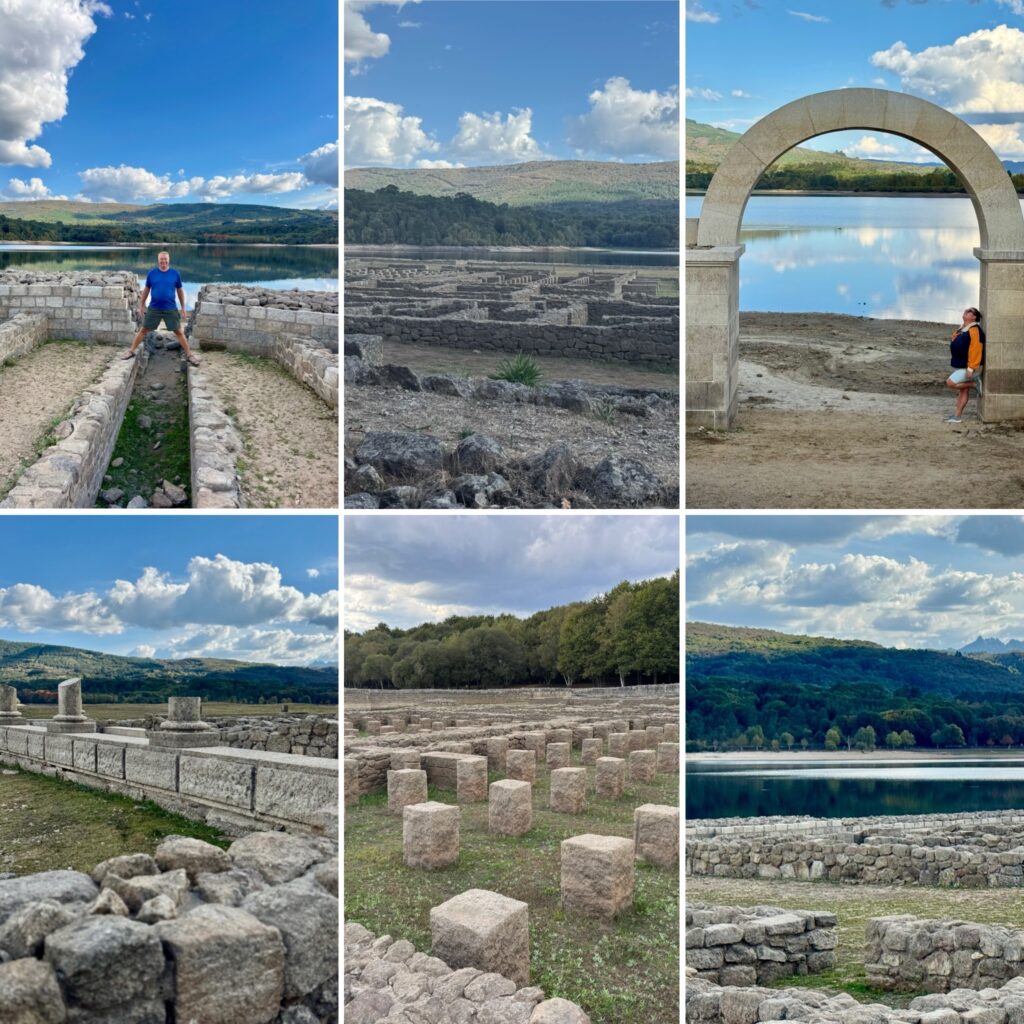
We saw an archeological crew continuing to excavate the base, restoring the walls using the same rocks. There are also modern reconstructions of two of the four gates, which helps provide perspective on the size of the fort.
After following the coastal path to the northwest, we enjoyed a soak in the thermal baths simply called Termas Romanas de Bande (or Roman Caldaria of Bande). Just like the Romans, I also love spa time. These stone pools with naturally-hot water felt great on a crisp fall day.
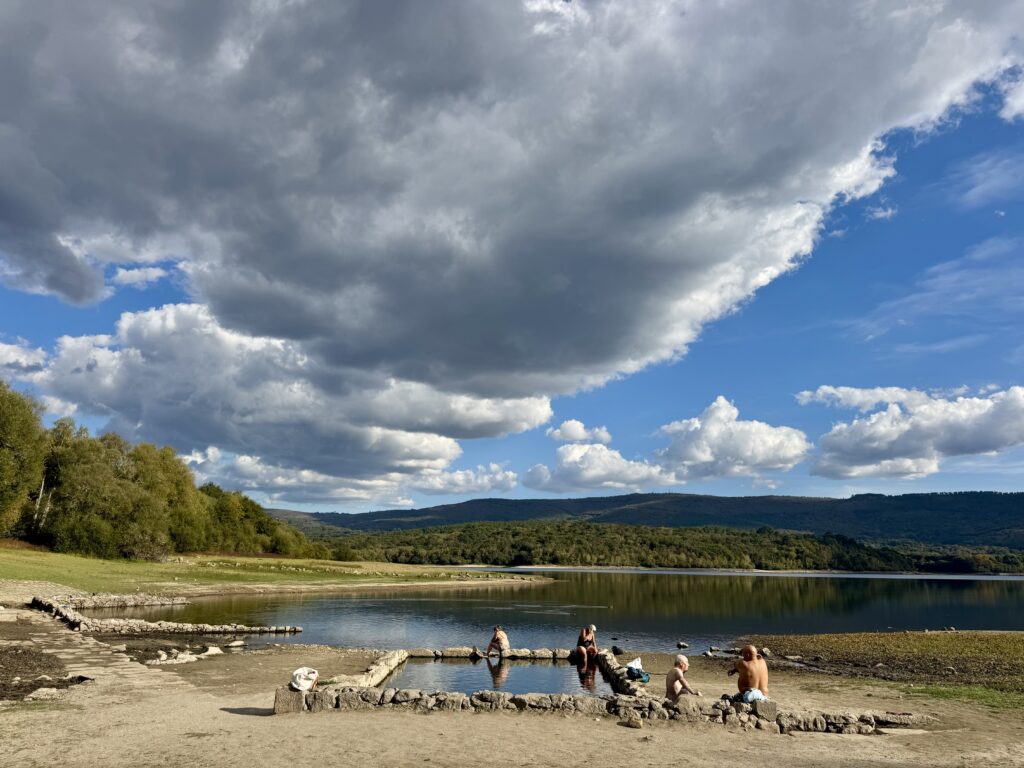
Other hot springs are available in the nearby city of Ourense, which has a pedestrian-only “thermal trail” that connects a number of free baths. Details can be found at the municipal website.
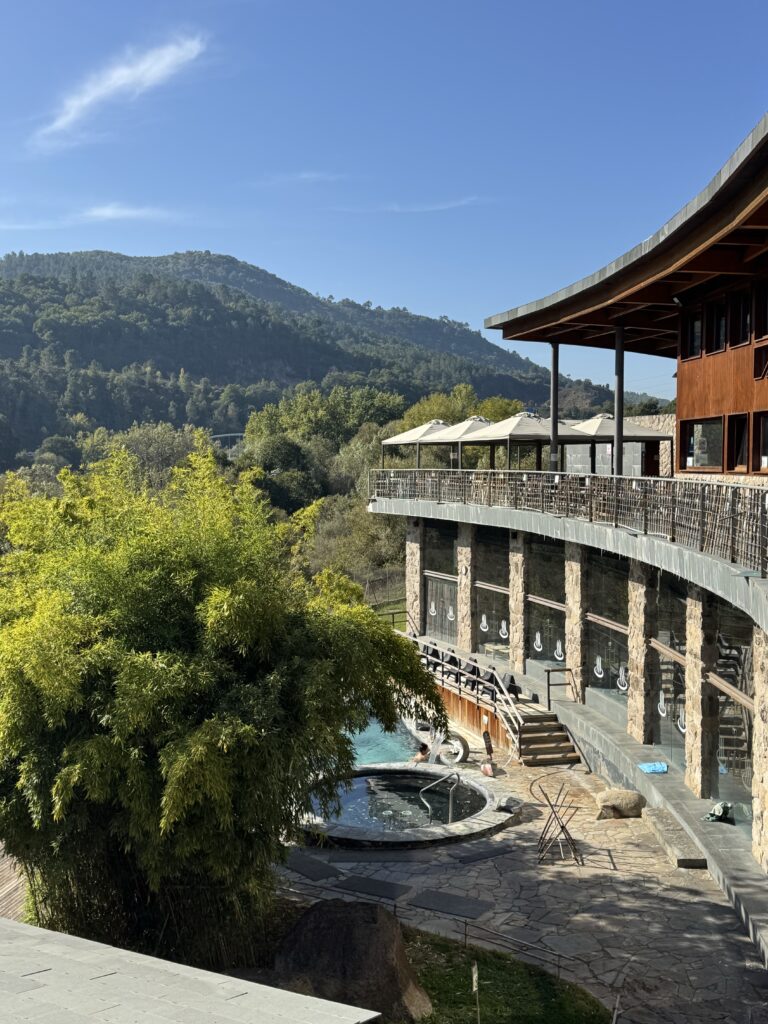
As of Fall 2025, only one free area is open in Ourense, as well as one paid spa. We walked by the free area (crowded but decent-enough) on our way to a Japanese-style spa, Termas Outariz. Admission was 6.65 euros for a two-hour session. They were not a traditional onsen as there were no rules forbidding tattoos. There were several whirlpools and soaking baths and we enjoyed all of them. It was a great way to start the day!
Douro Valley, Portugal
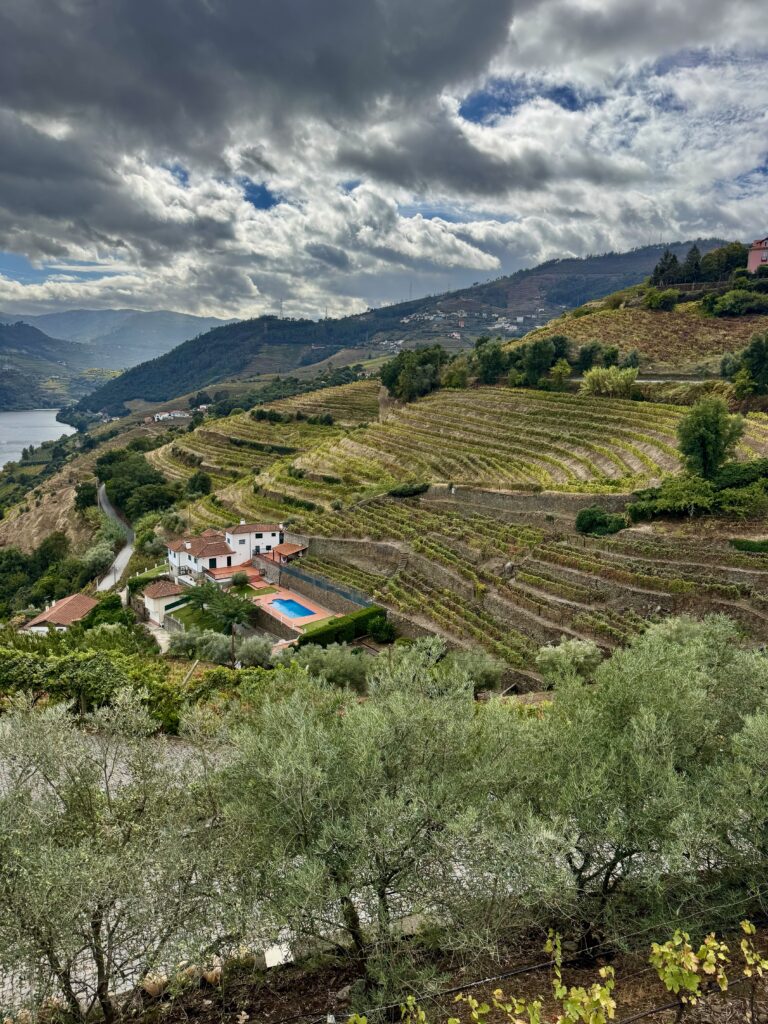
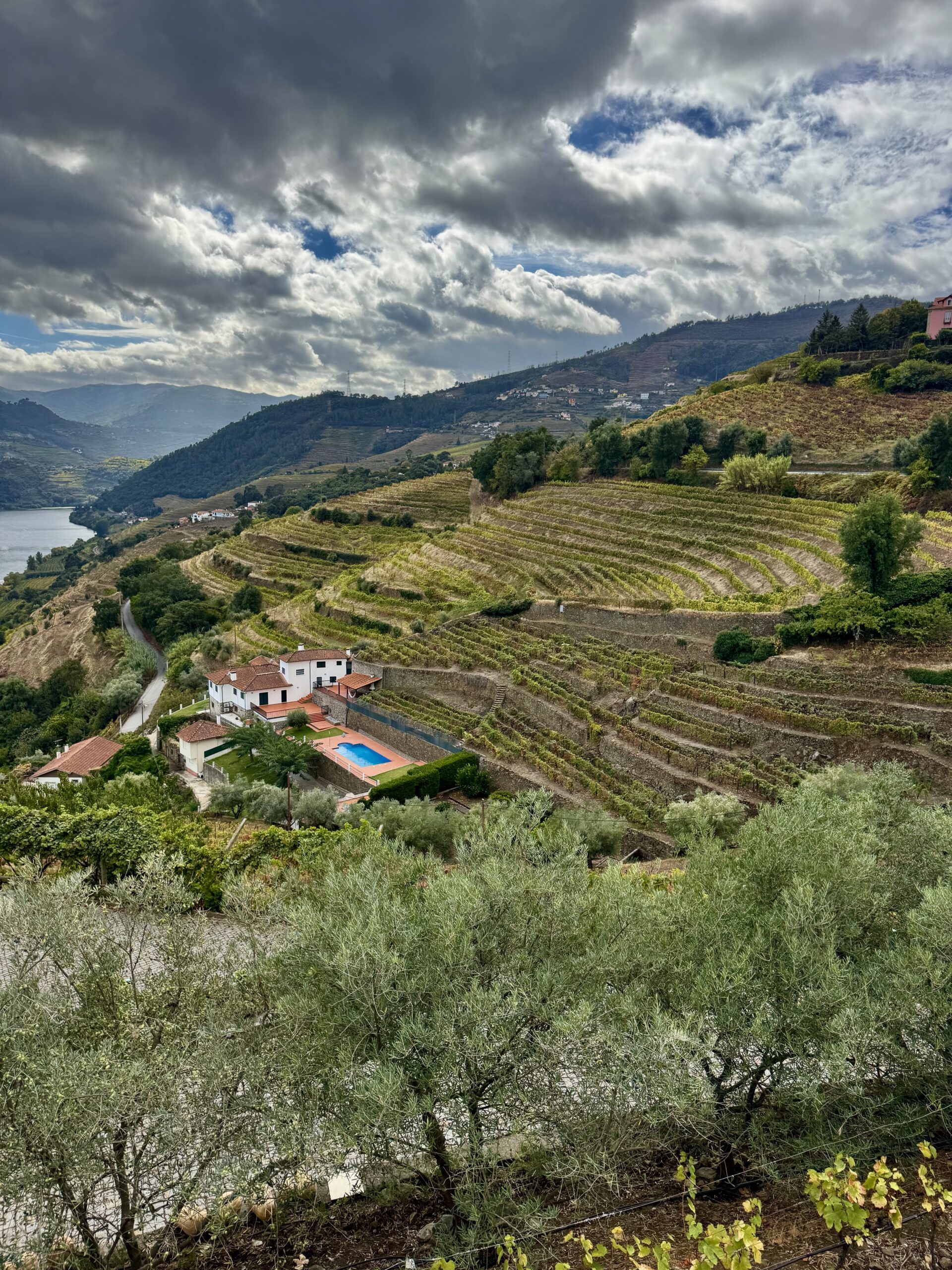
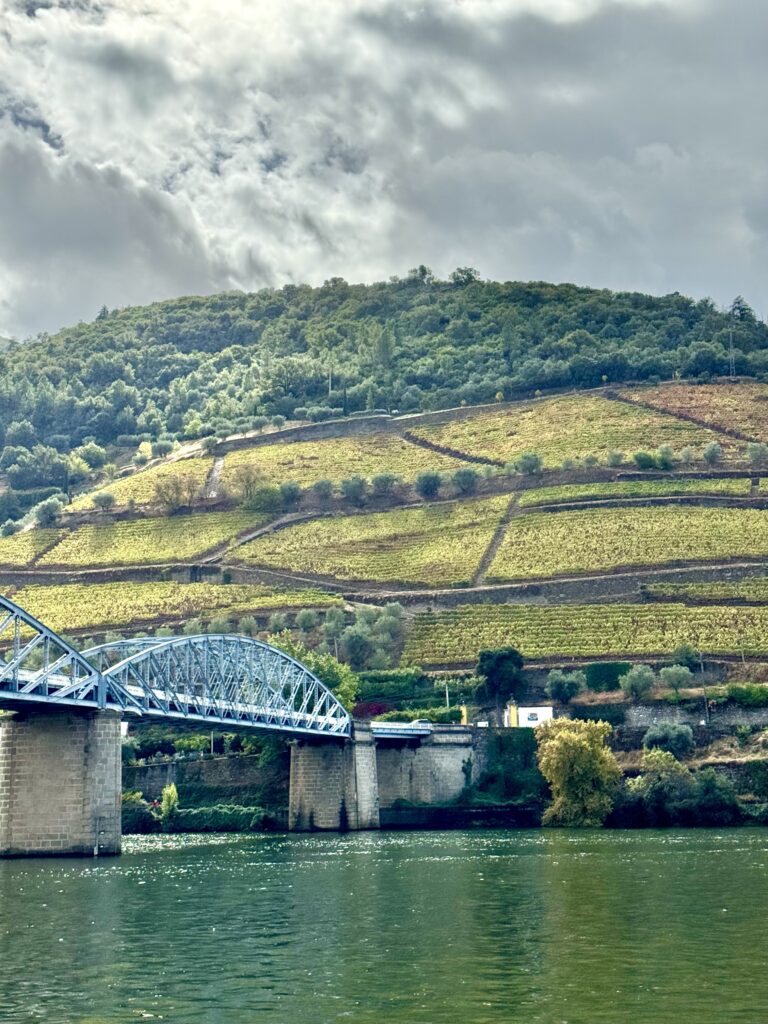
Wow. Just wow. There is nowhere else in the world like this. The deep slopes of the river valley are terraced from top-to-bottom and planted with traditional Portuguese wine varieties. Pictures cannot convey accurately how steep these vineyards are. So steep, in fact, that harvest is often done by hand because machines cannot access the vines.
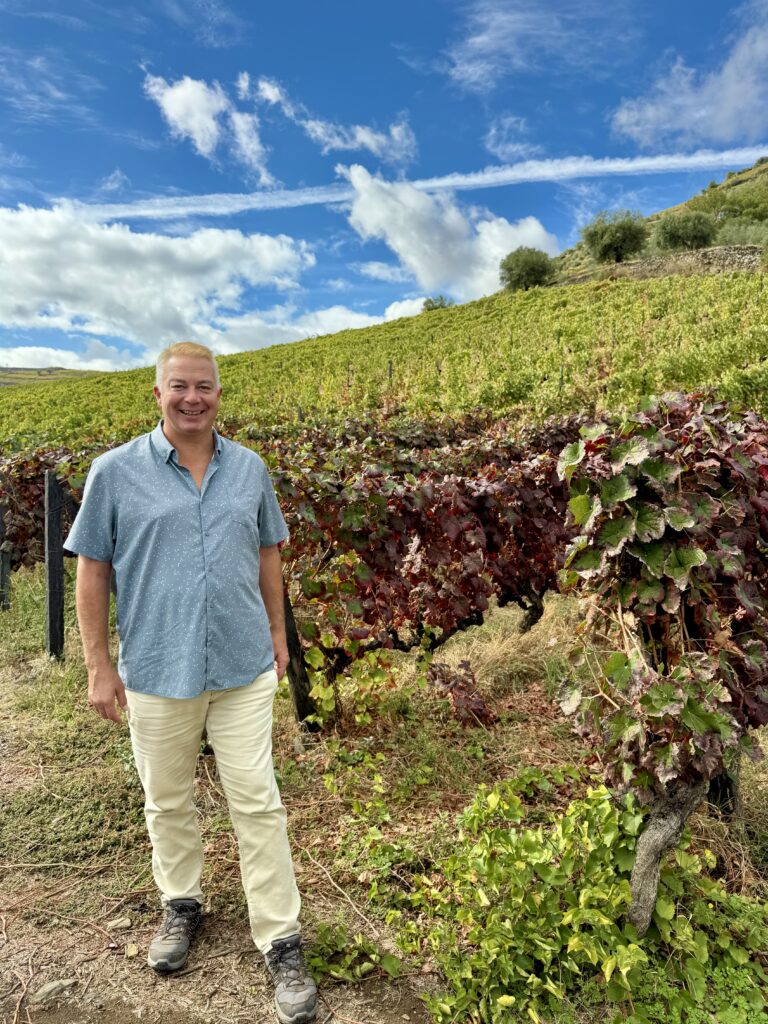
We stopped at almost every viewpoint on our drive in from the north and I am so glad we did. The next two days were solid rain and even though the scenery was still gorgeous, the fog floating through the valley limited our visibility.
We stayed in an Airbnb in Resende, about a 30-minute drive from the places we wanted to visit. The valley is immense, essentially running from the Spanish border at the east to the town of Porto on the west. It was difficult to narrow down what to see and where to taste.
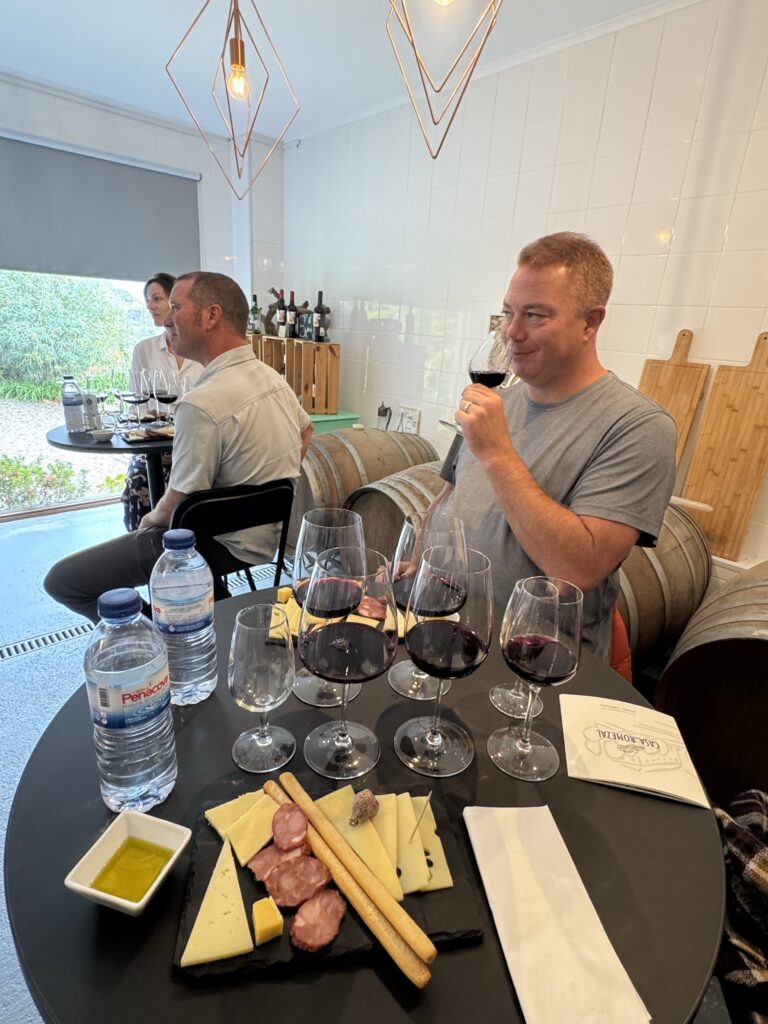
We chose to taste at Gueda, just 10 minutes from the town of Regua. Gueda is located on an estate that has been passed through a family for dozens of generations. The current owners are two siblings, with one providing us a pleasant and informative tasting, with an accompanying charcuterie plate. The wines were fantastic and wish we could have bought more bottles but our travel schedule was too tight with no time to drink them before flying.
From there we drove further east to Pinhao, a small riverfront village that we walked end-to-end in about 25 minutes. A number of small boats take tourists up the Douro River but since we had been driving along and above the river, we did not feel that a boat trip would give us a better viewpoint. However, if arriving by train or bus, then a boat tour would round out the experience. An hour on the water is only 12.50 euro, which seems like a reasonable price to us. There are also boat trips that start in Porto and come up the river for the day, and that would be a nice trip if using Porto as a base.
We stopped for a glass of port at Quinta do Noval. We had tasted their ports in 2022 when we were in Porto. It was nice to revisit to see if we still liked the product and yes, we do!
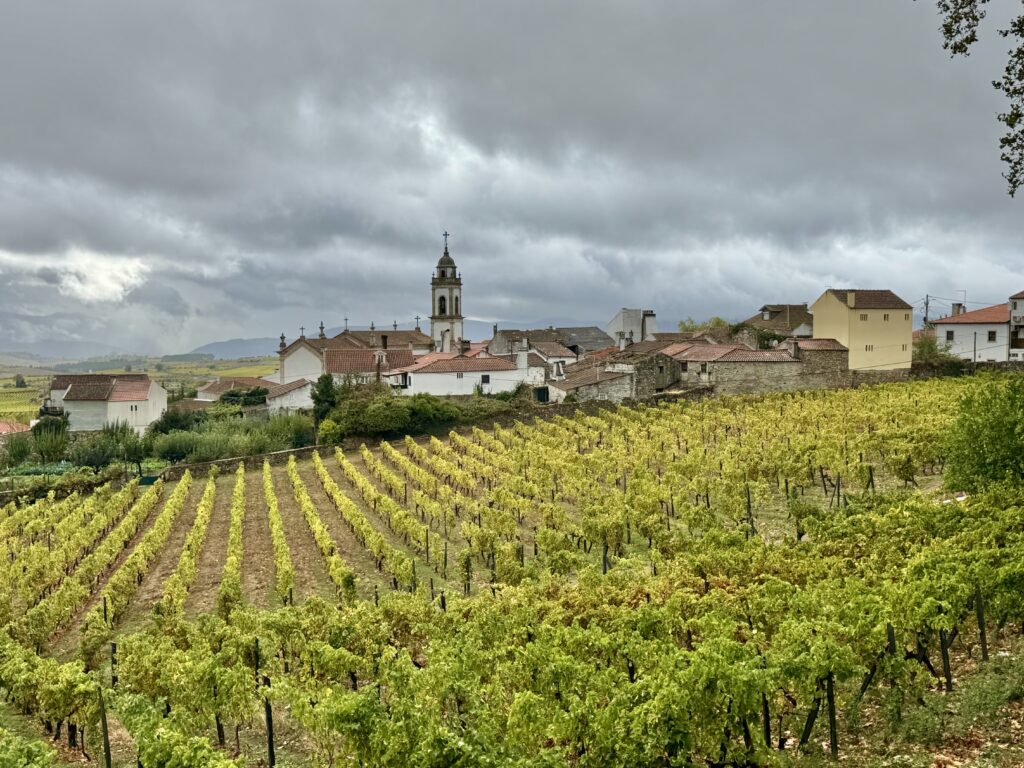
It was only afternoon so we drove toward Provesende, but got waylaid by Favaios, the moscatel growing area north of the Douro. We had a quick and fun tasting at the Adega Cooperativa de Favaios, the winemaker cooperative for the village. Moscatel can be used to create fantastic wines. Their base product is a fortified wine similar to a white port, bottled young or barrel-aged. They also produce sparkling wines, and we picked up a bottle to enjoy later. Fermented dry, it retained a bit of sweetness and floral notes. It was light and refreshing, and not cloying at all.
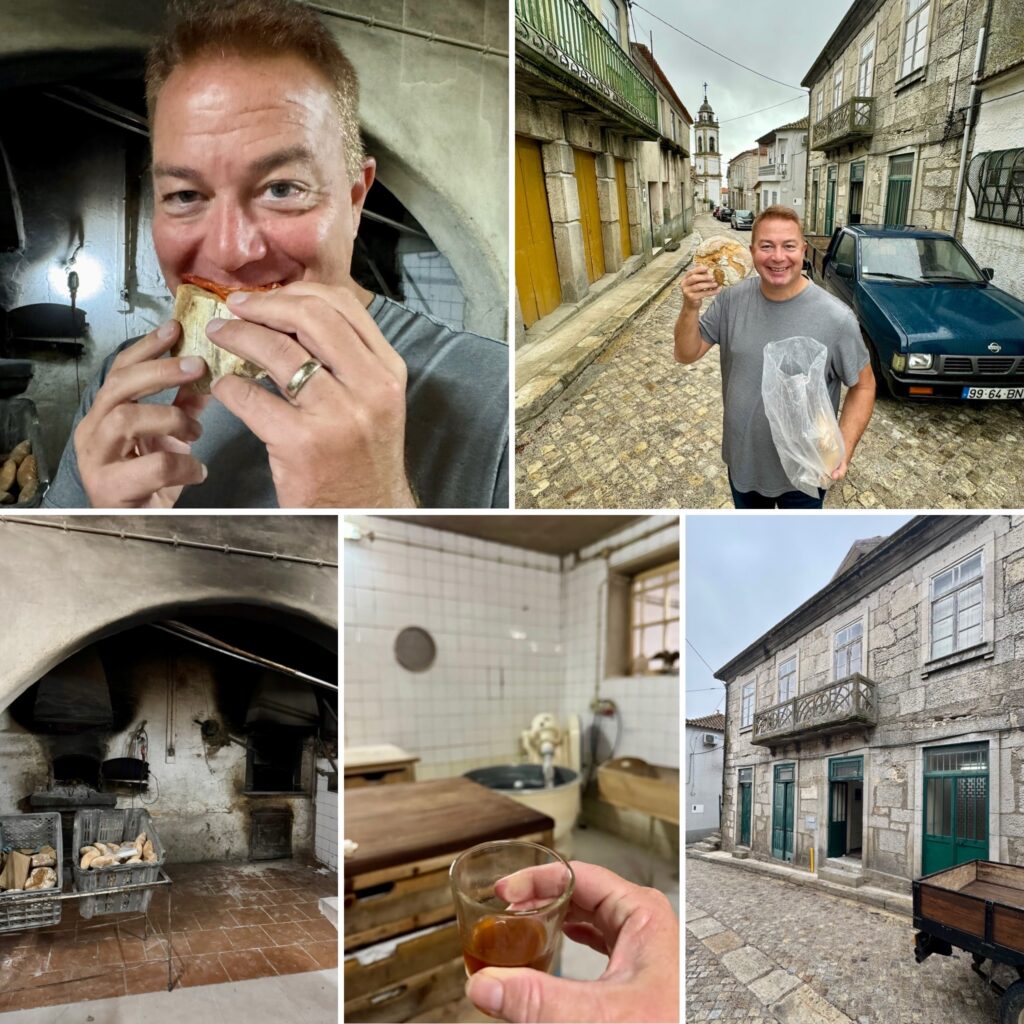
Just up the road from the tasting room is Manuela Barriguda, a bakery that Corey had read about. Identifable only by the address, we twice walked by an unmarked open door. Since the lights were dim inside, we hesitated but walked in and to the back. We found a tour group of a half-dozen gathered around, snacking on bread, butter, and chorizo. The wood-fired ovens were off for the day but there were still a selection of loaves for sale. The baker chatted at us in Portuguese, which we did not understand, but we understood when she poured us a cup of moscatel to drink. And while she was out of pão com chouriço (the meat-stuffed loaves that Corey has a taste for), her chorizo supplier stopped by while we were enjoying the wine and bread and she gave us some chorizo to make a little sandwich (also on the house!). Her loaves were a bargain at one euro each, and we took home one of each of the two that were on offer.
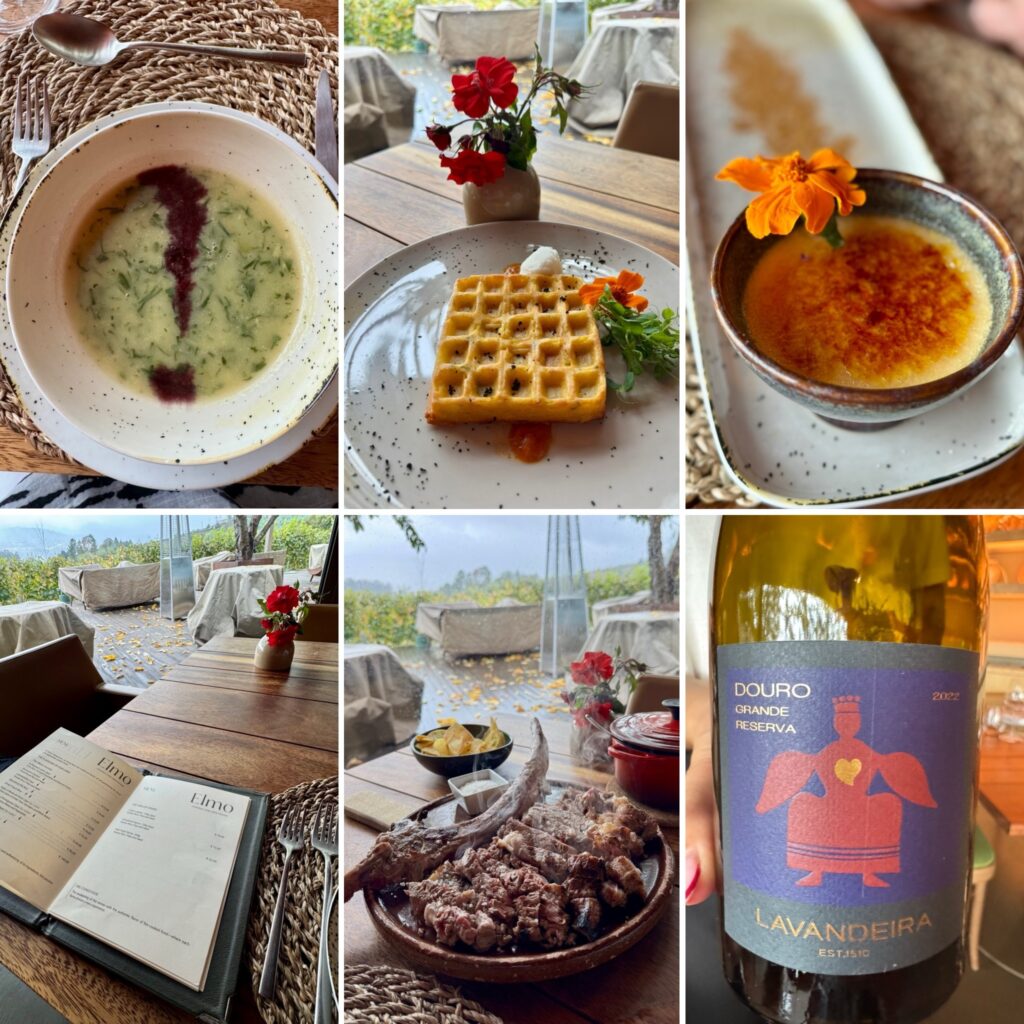
Our last day we planned a fancy lunch at Elmo, the restaurant at the Lavandeira hotel complex that offers unique takes on Portuguese cuisine. Who knew a cod waffle would be that amazing?
After lunch we took a day trip to Amarante.
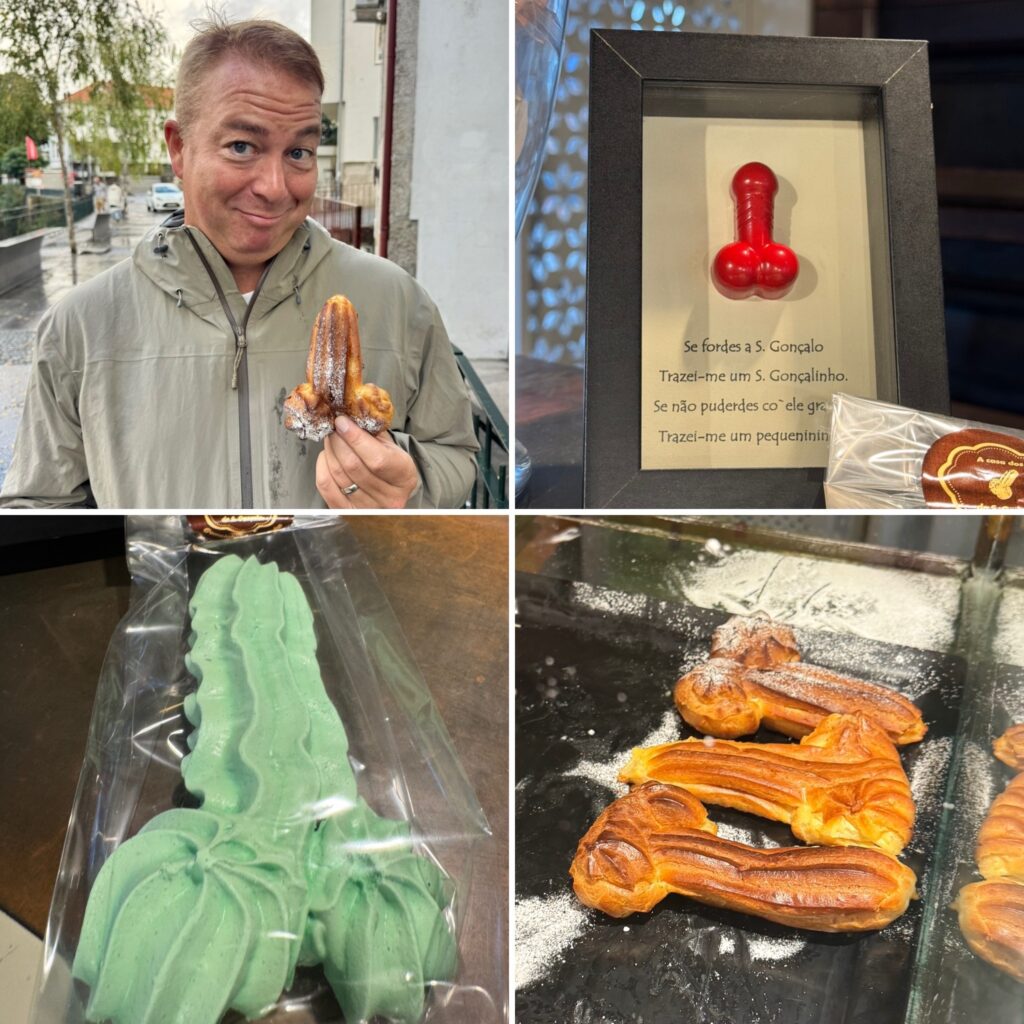
We knew very little about this village but the pictures from Google maps looked cute so we drove about an hour to get there after our fancy lunch. The village is nice but a bit touristy, and the bakeries resemble bachelorette parties.
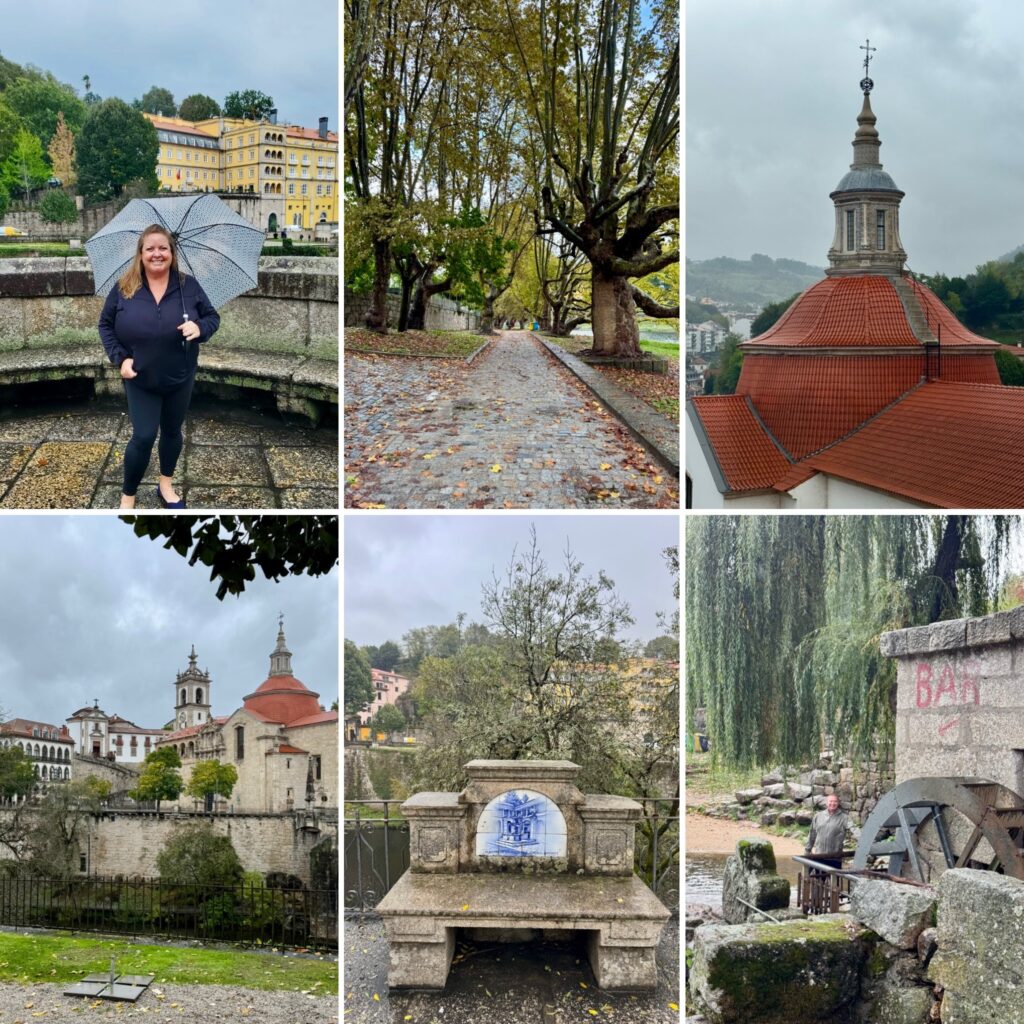
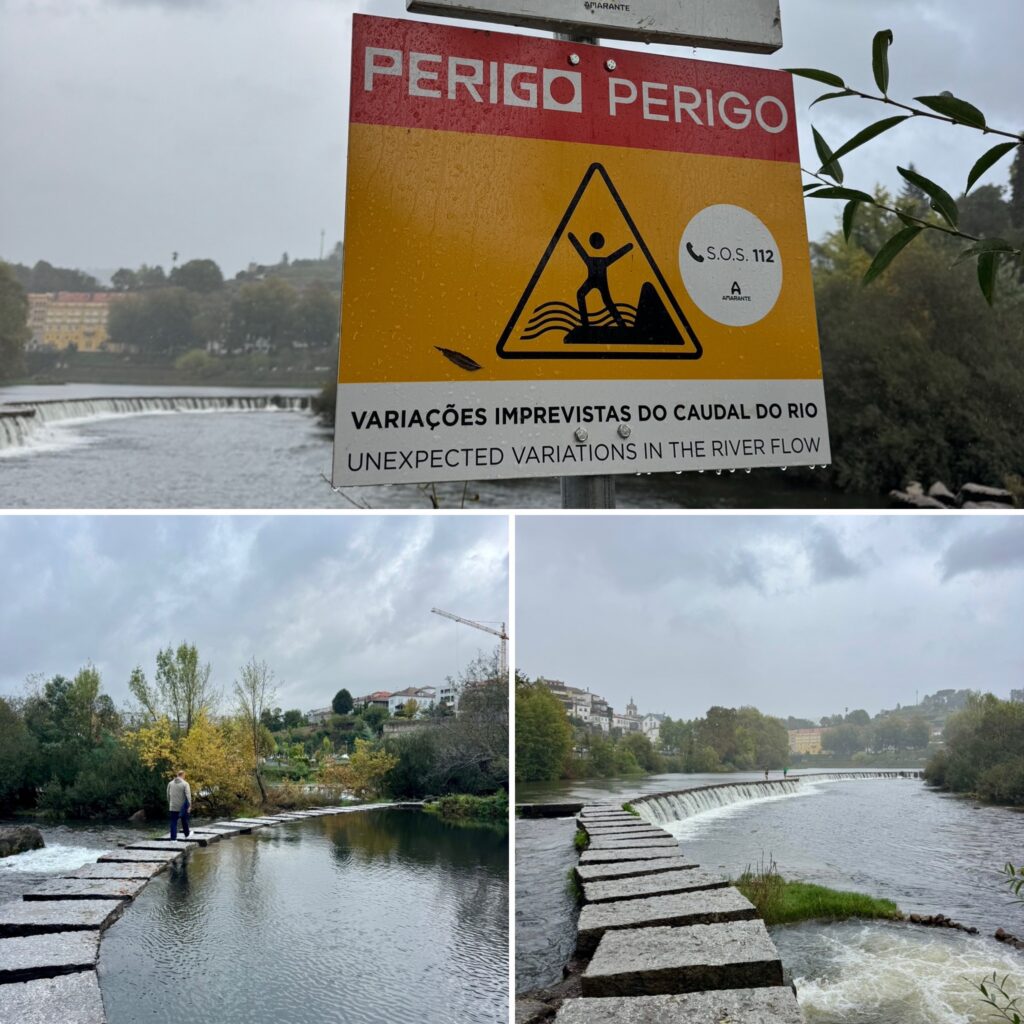
As we wrapped up our walk through town, we decided to take a bridge across the river as a shortcut. But it was not a bridge but a series of stepping stones, some of which were submerged on this terribly rainy day. Corey’s white shoes and my slip-on ballet flats were not suitable footwear! It also started to rain heavily. We got soaked from head to toe but I am happy I did not lose a shoe!
Coimbra, Portugal
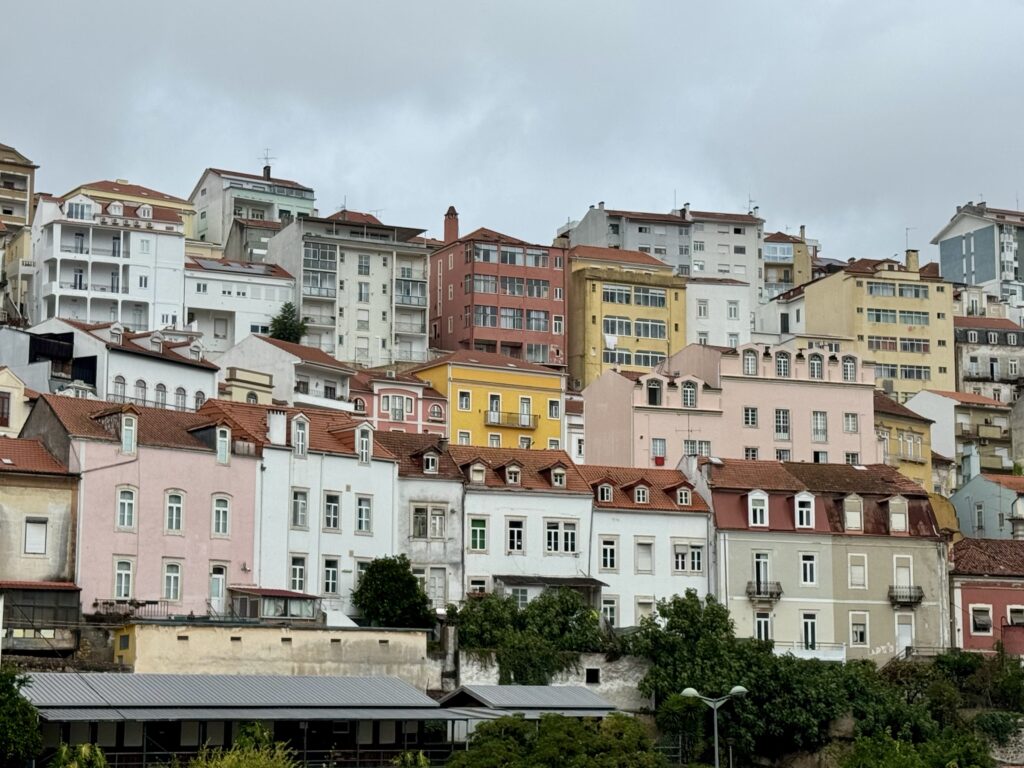
Coimbra is located between Porto and Lisbon, making it a nice stop on a road trip itinerary. It reminded us of a gritter Lisbon, with the hills, cobblestone sidewalks, and colorful houses (even if many of the houses were in ruins).
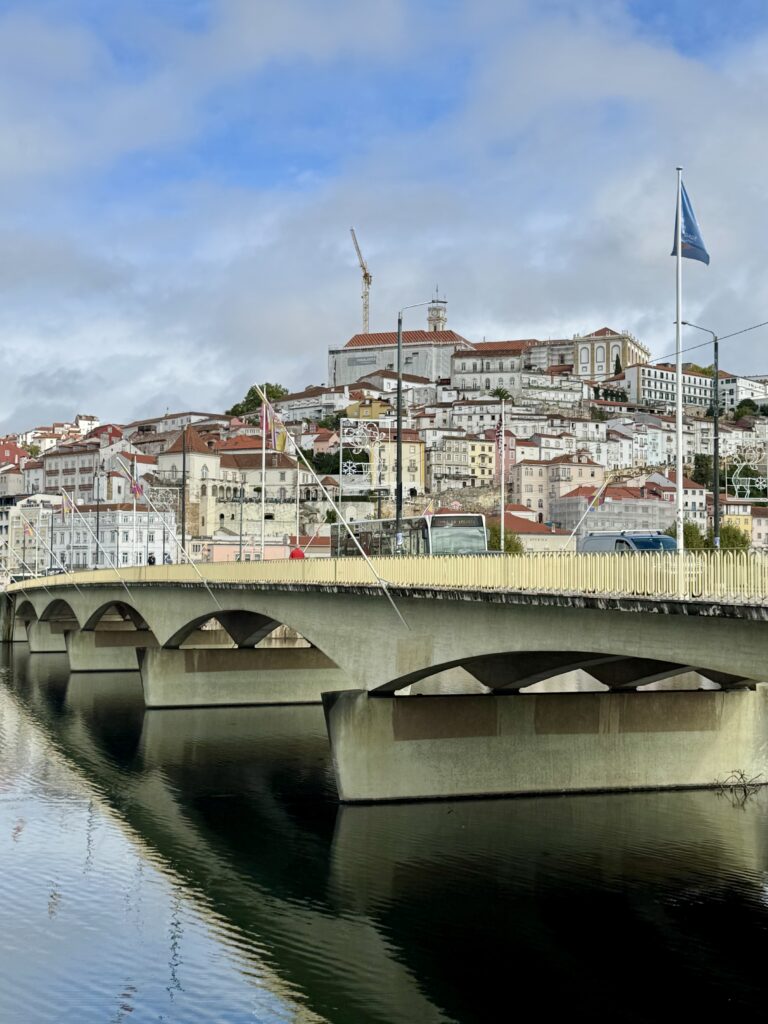
Coimbra has one of the oldest universities in Europe, and with school in session, there was a youthful energy around. We like university towns because there tends to be plenty of high-quality, affordable food around, as well as an abundance of sights and culture. Coimbra delivered on that notion. We had street tacos the first night, and a lovely inexpensive grill for lunch the following day.
Unfortunately the rainy weather followed us south but we made the most of our brief stop. The biggest highlight in this old city is the university. One of the many potential inspirations for Harry Potter, there were tour buses lined up to bring curious tourists to the top of the hill. Students still famously dress up for classes, donning black-hooded capes on top of their business attire, and we spied a few students walking around wearing their garb.
We actually aren’t Potter fans but we enjoy puttering around very old buildings. The Joanina Library requires a timed entry ticket and we booked ours for 9 AM, the first slot of the day. We parked the car across the river and climbed up to the university quickly since we were short on time: 16 flights of stairs in less than a half mile. What a way to wake up your body! Portugal is not for the lazy!
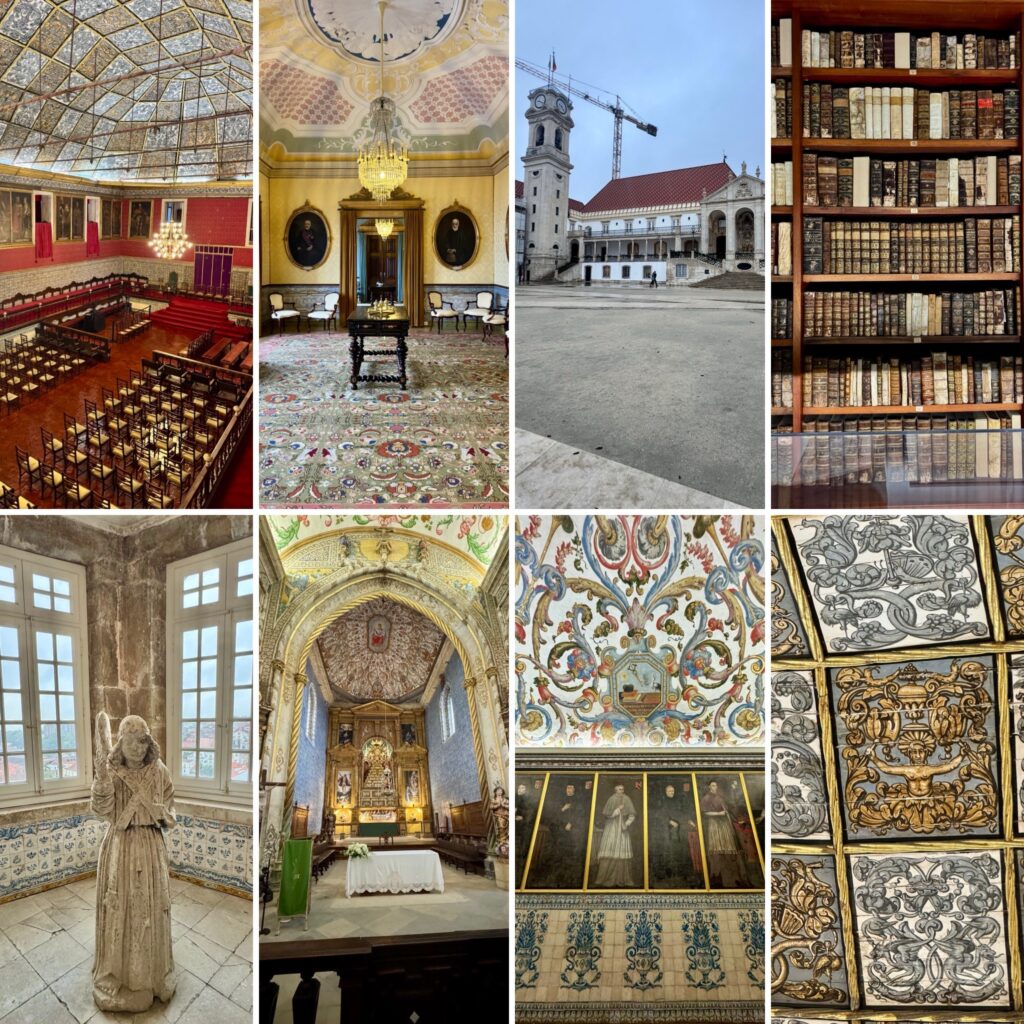
Our tour started in the old academic prison which seems funny until you learn that the university is built from an old royal palace. So that area was an old prison area from before it was a school. But we also learned that it was used lock up students and professors who strayed from the approved viewpoints.
Then the doors opened up to see the library. It was dark and we were the first tourists of the day. Each group gets 10 minutes to explore with your eyes only: no photography allowed. The three rooms were exquisite with thousands of books lining the lower and upper shelves. There was a golden crown above each doorway and beautiful artwork hung around the room.
Fun fact: the library has a resident colony of bats to help with insect control. Each evening, staff cover the furnishings with heavy leather fabrics to keep the furniture clean. We did not see any bats but we did see one of the rolled up covers!
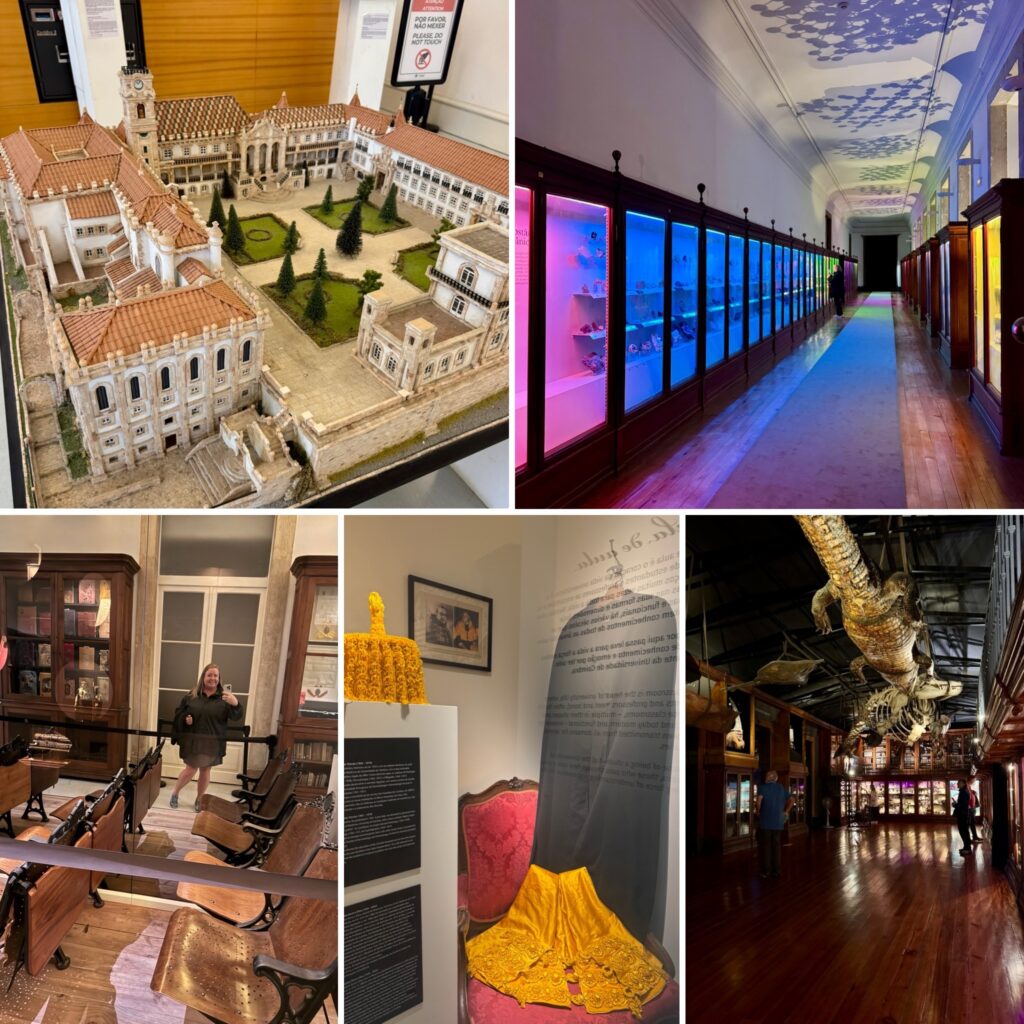
After our time was up we toured the rest of the university which included a few of the science halls, bits from old palace, and some art exhibits. All of that was included in one ticket for roughly $18 USD. Not a bad price for touring the beautiful property, plus you get entry for two days for slow explorers.
Corey and I carefully meandered down the streets toward old town. The cobblestones were wet and we successfully made it to flat ground without slipping. The lower town was cute with narrow, pastel colored buildings and tiny streets weaving around.
We enjoyed lunch and then relaxed at our hotel, getting organized for a flight and eating all our leftover snacks. It was a mini hotel room feast.
The other thing Coimbra is famous for is fado, Portuguese folk singing. In Lisbon this is almost-exclusively performed by women. In Coimbra it is the opposite, as the university historically only admitted males. We were not able to squeeze in a session but hope to be in Coimbra in the evening the next time we are in Portugal.
Conclusion
Time always feels so short in a country and although we got to see a lot more of Portugal, there are so many historic towns between Lisbon and Porto that we drove quickly through on the efficient (but expensive) toll highways. Plus there is the entire southern region of the Algarve!
We flew out from Lisbon on an early flight and headed to Rome, with a long stop in Madrid at the Iberia lounge. Next we spend a few days in Rome before boarding a cruise back to the United States.