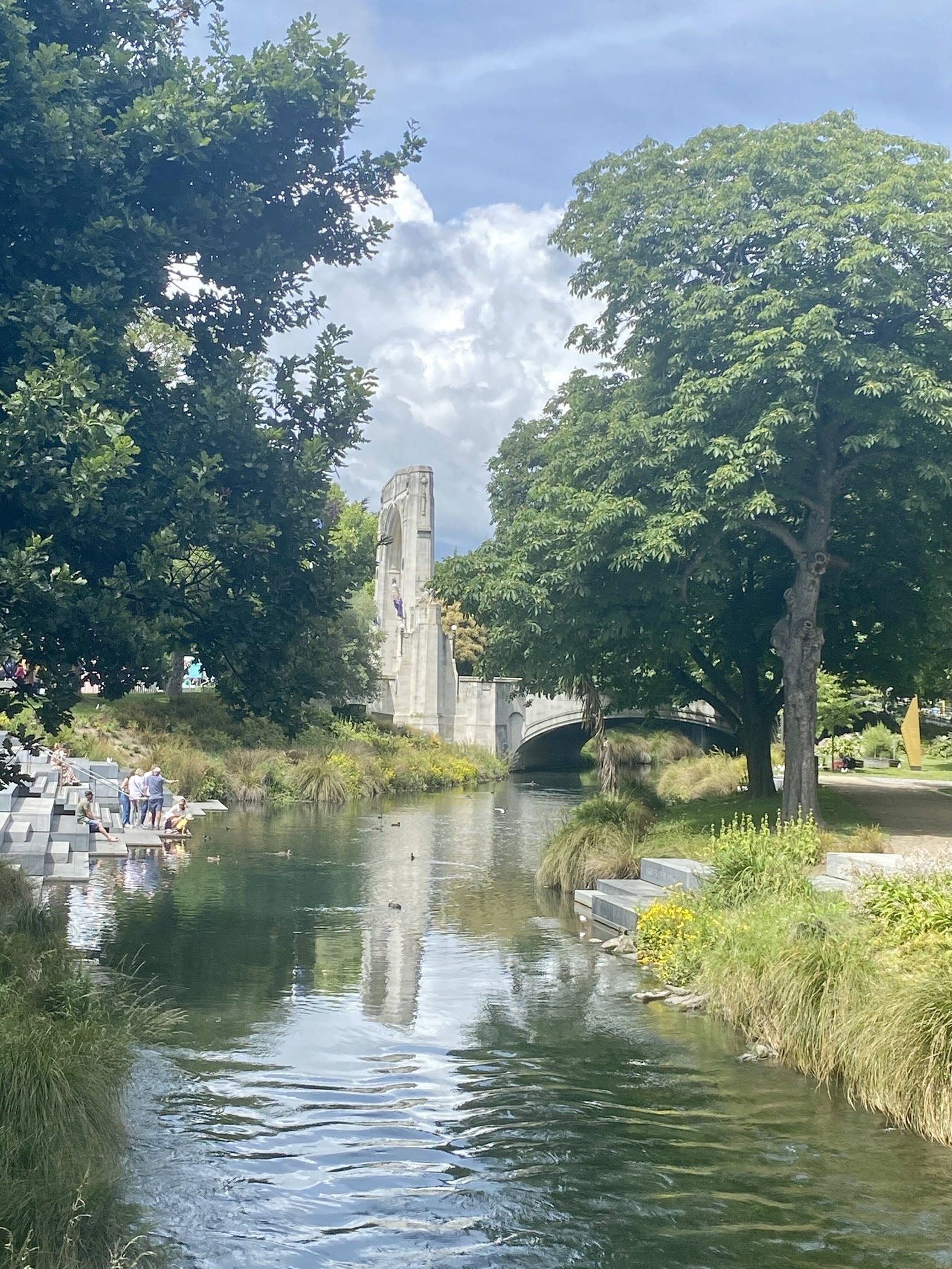
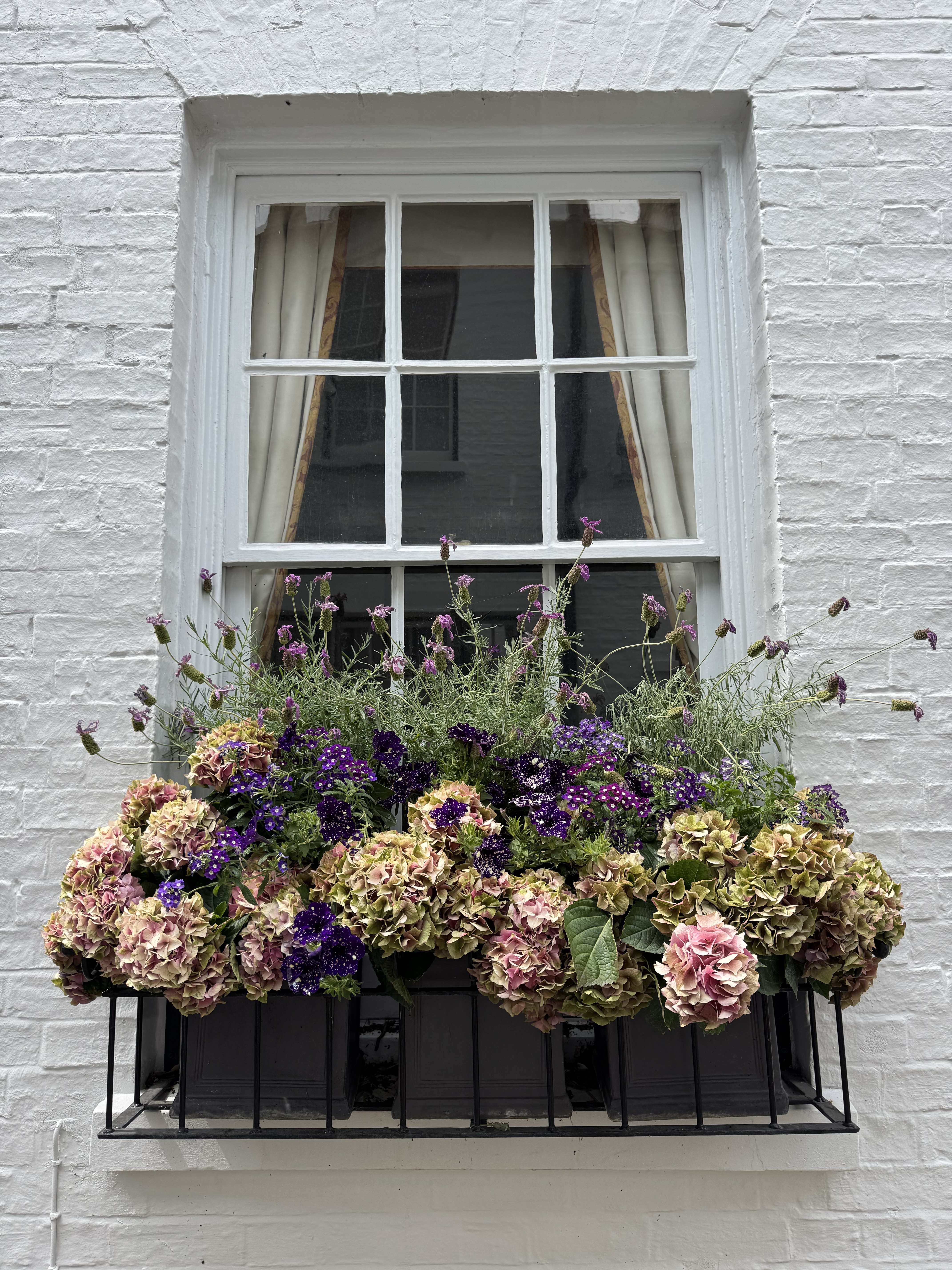
A month in England and we didn’t step foot in London. There is so much to see on this island. To experience quintessential England, we recommend getting out to at least one small town!
Grantchester
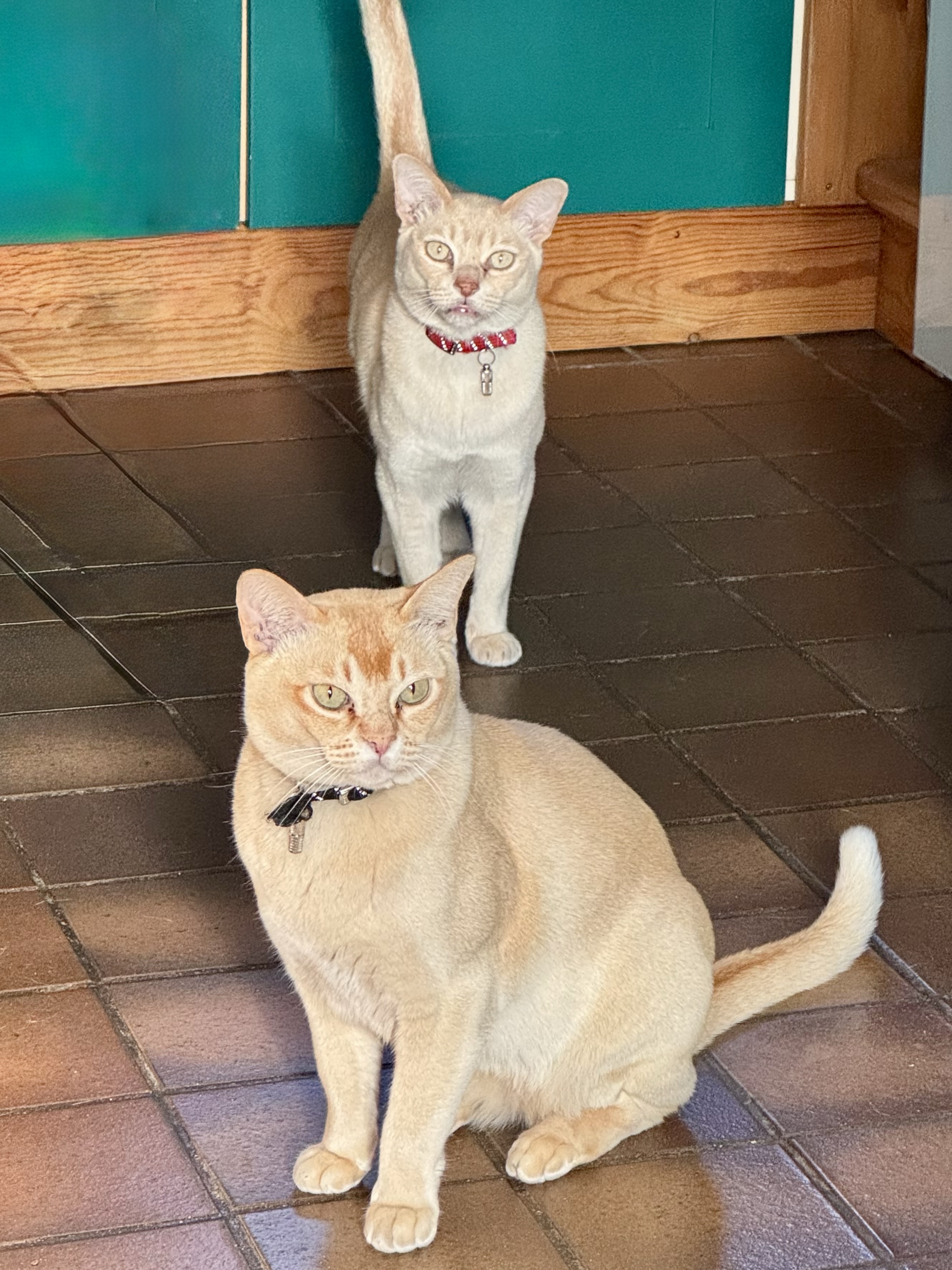
We left Oxford by bus and moved over to another famous college area, Cambridge. We spent two weeks with the boys, Mowgli and Merlin, in the tiny village of Grantchester, located just south of Cambridge proper. It is a village so small that there are no shops… but there are four pubs!
To prepare us, we started watching the television series Grantchester. Set in the 1950’s in the village, it features the Grantchester Parish Church, the Grantchester Meadows, and a number of sites in Cambridge. The main characters are a vicar (Anglican priest) and a police officer, who work together to solve crimes. Thankfully we did not experience any murders during our time there!
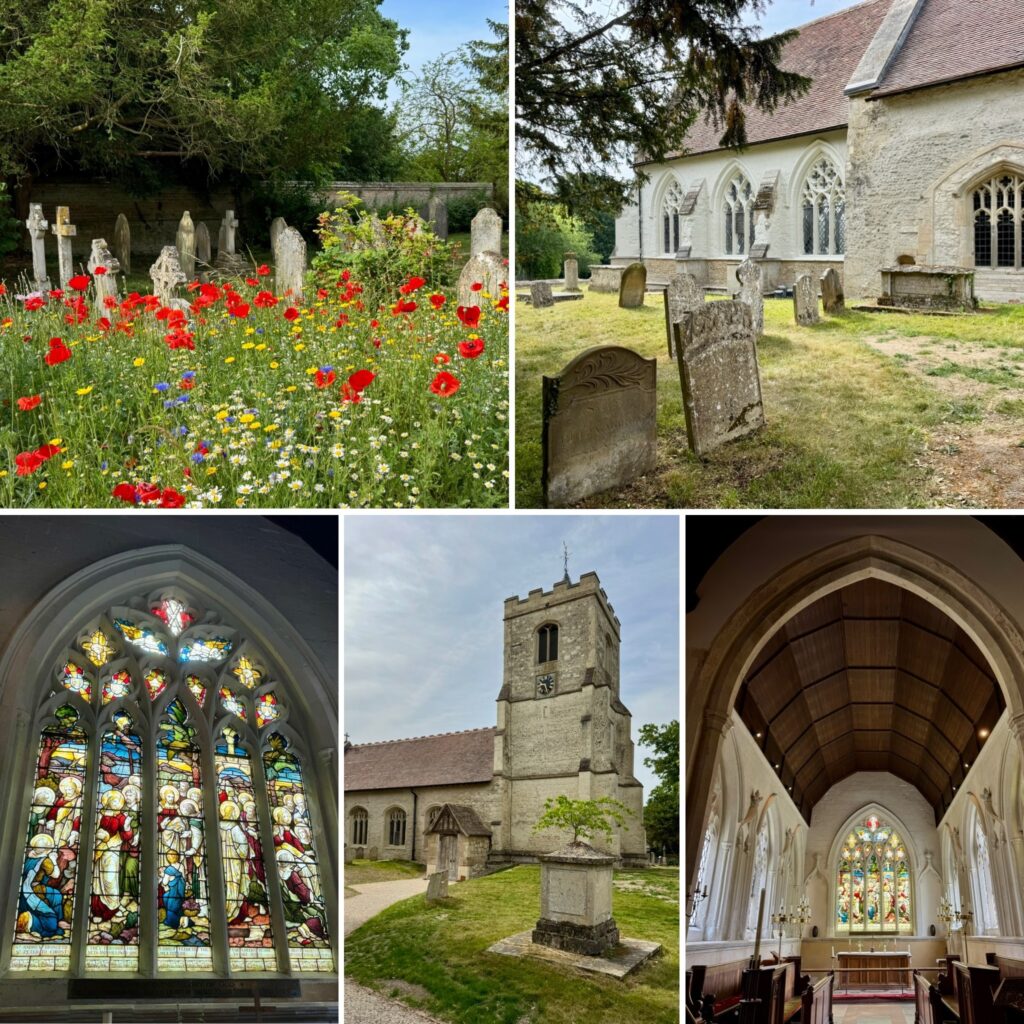
One of the main features of this town is the church, and the cemetery in the church yard. Mostly constructed in the 1300’s and 1400’s, the church building is well-maintained and open daily for visitors. When we visited we happened upon some fellow American tourists, there to visit the church they had seen on the television show (which plays on PBS in the US).
Between Cambridge and Grantchester is a large expanse of land known as the Grantchester Meadows. It features rustic walking paths to connect the town and the village. The River Cam flows through the Meadows and during our time there, the Meadows were filled with students celebrating the sunny end to the school term by swimming, tanning, and playing ballgames in the grass.
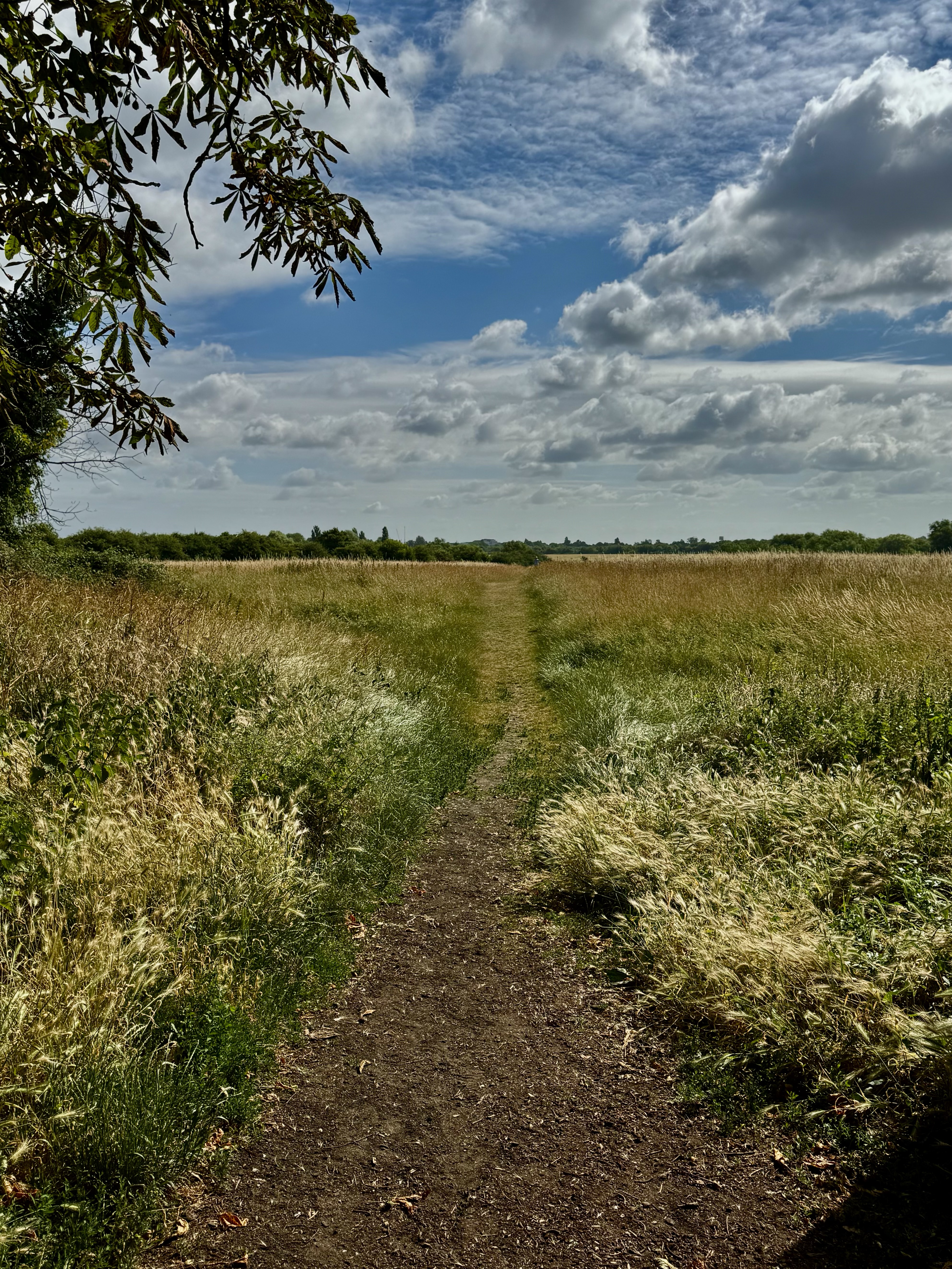
The other popular thing to do is the Orchard Tea Gardens. Set right next to the Meadows is a large garden area to enjoy tea, scones, pies, etc. Open for breakfast and lunch, where else would you want to be on a sunny afternoon?
We visited three of the four pubs in the tiny village. We skipped Rupert Brooke as it was the most posh (re: expensive). But we also found the other three to be pricier than some of the pubs in Cambridge proper. All three did feature a good beer selection and beautiful, spacious garden areas for drinking.
We also spent some time exploring all that there is to do in Cambridge. From Grantchester we either walked into Cambridge via the Meadows, or rode the semi-reliable bus.
Services for Grantchester are provided in nearby Trumpington, a southern neighborhood of Cambridge. It was there that we shopped for groceries (at Waitrose), dropped parcels at the post office, and played tennis on the local court (with free reservations via Cambridge Parks).
Thankfully we had great weather throughout our stay. If anything it was too hot as there was a heat wave in June. Temperatures reached 90 degrees F, and with no air conditioning or fans, it felt hot! Fortunately the garden was filled with cooling plants and shade trees, and the river was always close by for a swim.
Cambridge
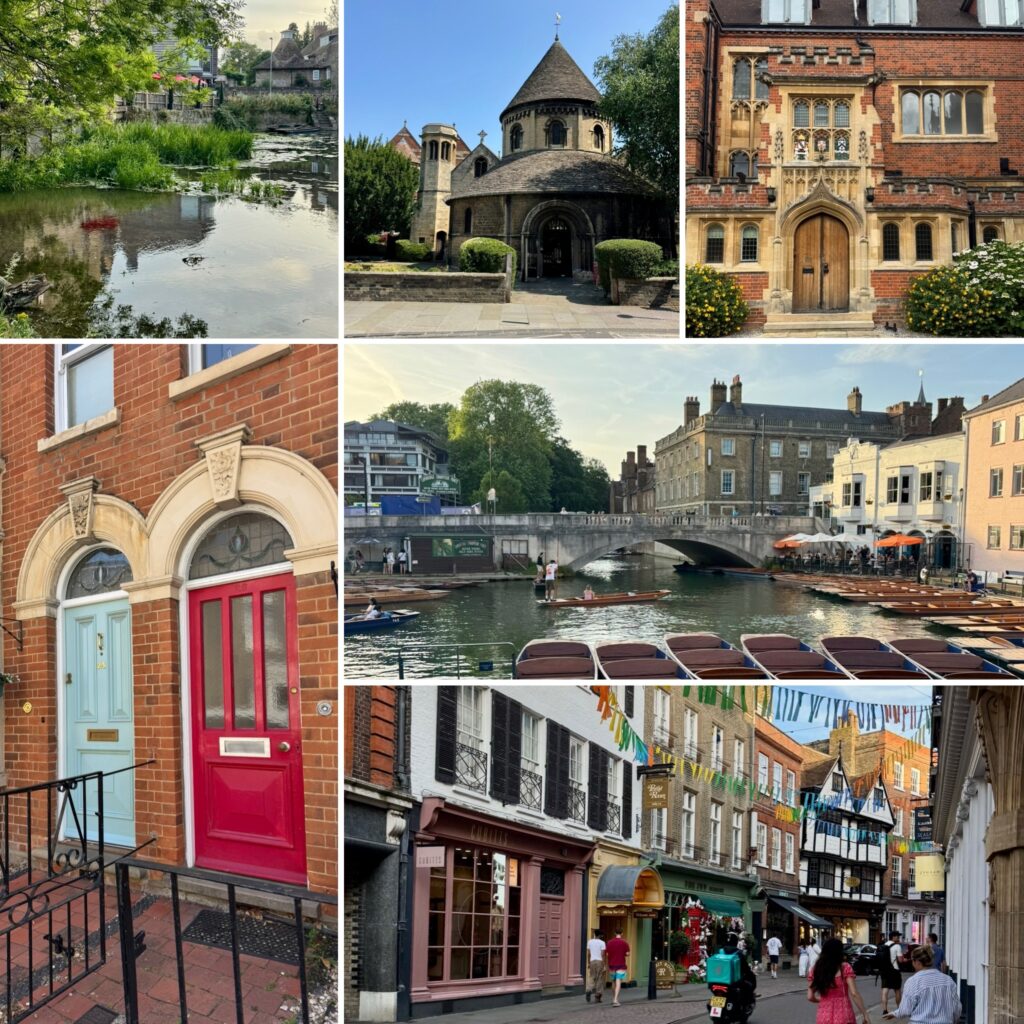
Did you know the city wasn’t always called Cambridge? In the Middle Ages it was known as Grantebrycge, meaning the bridge over the River Granta. As the language evolved, the town name started to be pronounced Cambridge, and the name of the river changed to the River Cam, to match. But also, one of the tributaries of the River Cam is still known as the River Granta (although there is no consensus on where the divide is).
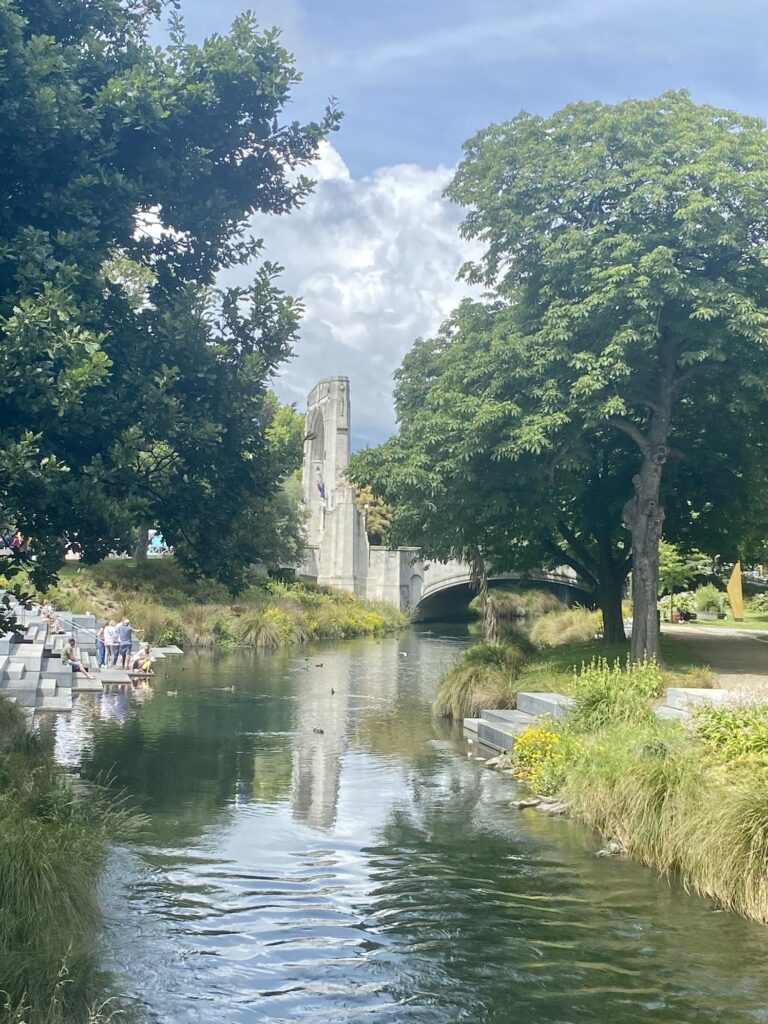
The river is the most important geographical feature of Cambridge, and the university is the most important cultural feature.
Like Oxford, Cambridge is made up of constituent colleges. Currently there are 31 colleges at Cambridge. We visited Oxford during exams, and we visited Cambridge at the tail end of exams, when the colleges were preparing for the festive season known as May Week. If you’re coming to Cambridge or Oxford and touring the colleges is important, be sure to time your visit with the school calendar.
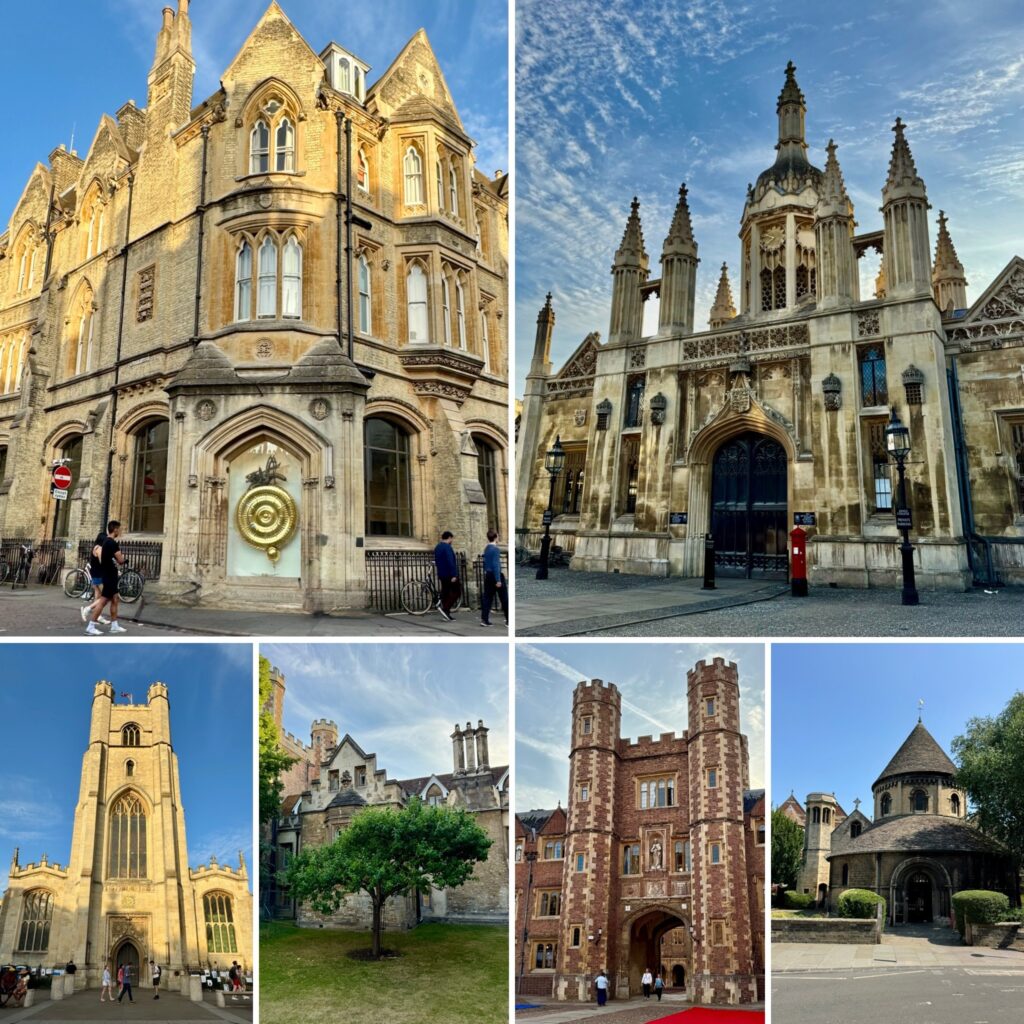
Tradition is important to these old universities. May Week it is the post-term time for formal balls that start before sunset and last into the early morning hours. Funny enough, it is not in May and it lasts longer than a week! Black-tie is required, the food and drink are gourmet and unlimited, and the entertainment is top-notch, including musical acts and post-sunset firework displays. After the sun rises at around 4 AM, students pose for “survivor photos” in front of the classic buildings.
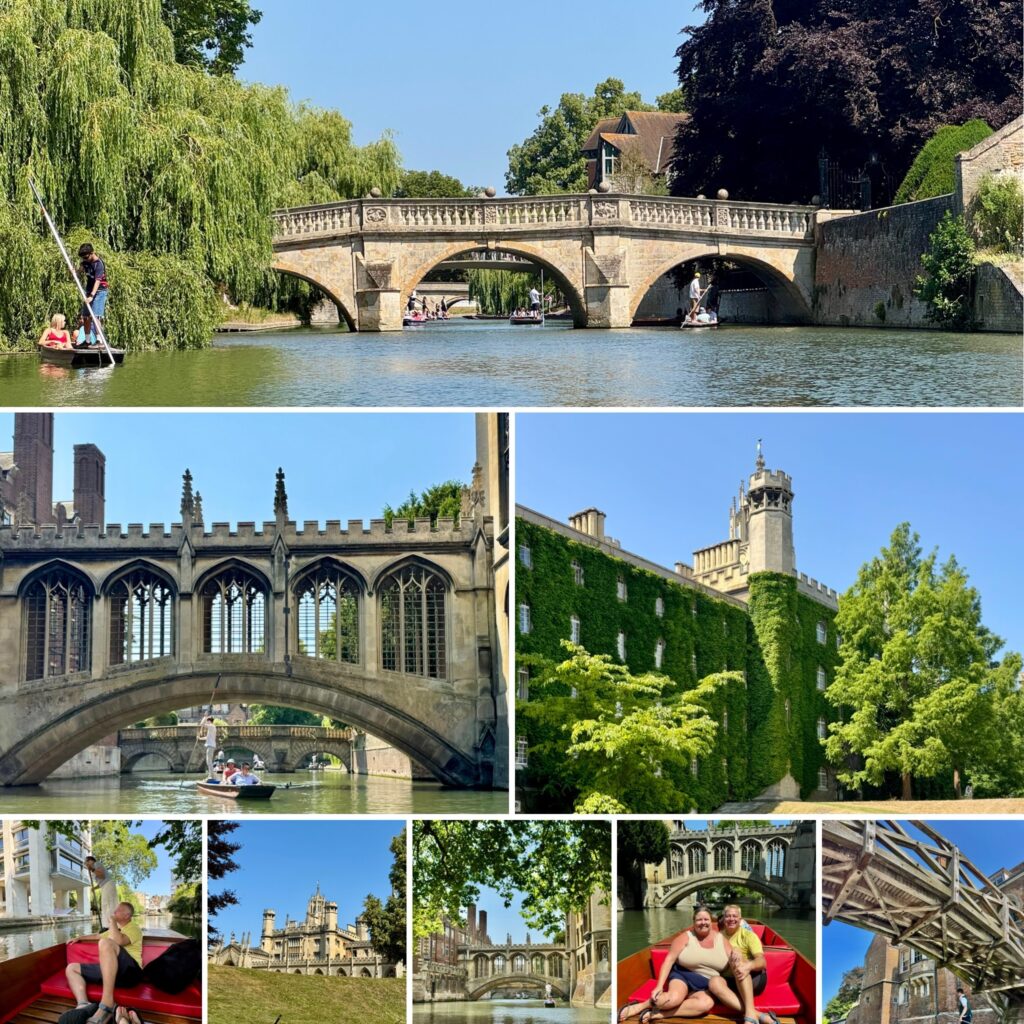
The River Cam can and should be explored via punting boats, a long and flat style of boat that is propelled by pushing the bottom of the channel with a long pole. Floating the river exposes an area of the colleges known as The Backs, only visible via boat or with access to the college grounds.
While punting boats are available for rent, piloting them is not a simple matter. There are at least eight companies that provide punting tours. We prebooked a tour that over the course of an hour took us a mile up the river and then returned. We were able to see seven colleges and learn about the history of the city and the various colleges, as well as some suggestions for further exploration. We learned that King’s College (and its beautiful chapel) has been a tourist destination for more than 500 years, that St. John’s and Trinity compete to have the best May Week fireworks shows, and that King Charles is an alumnus of Trinity College.
Since the river flows through the Meadows, it is common for folks to punt their way out of Cambridge and all the way down to Grantchester to enjoy a pint or a picnic!
Churches and colleges
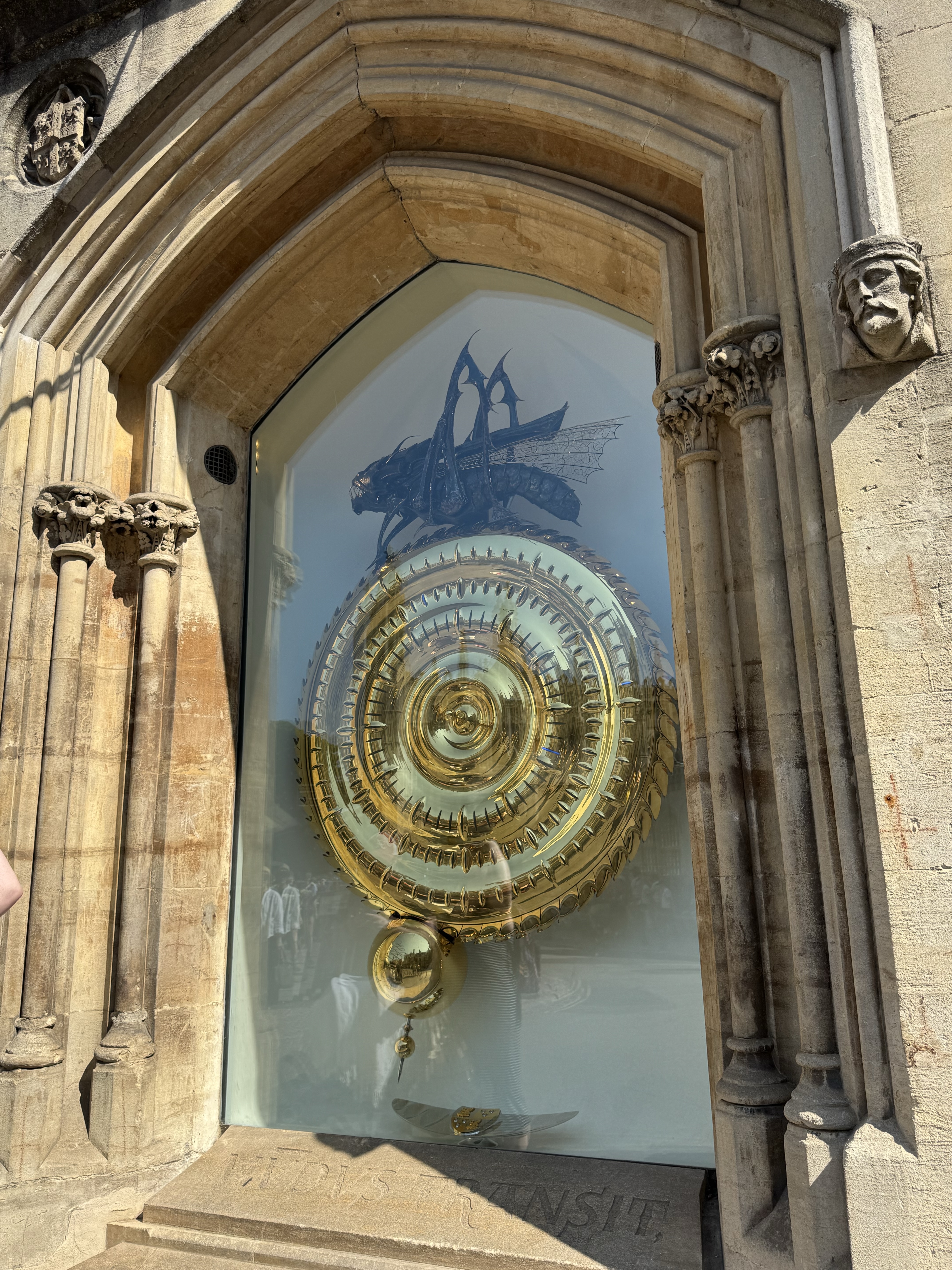
The Corpus Clock is located outside of Corpus Christi College. It is made from gold and has the most interesting design, featuring the timekeeping element of a grasshopper “devouring” the seconds as they tick. While the timekeeping is analog, the display uses LED lights, and there are a few “tricks” that the clock plays as the hours tick onward.
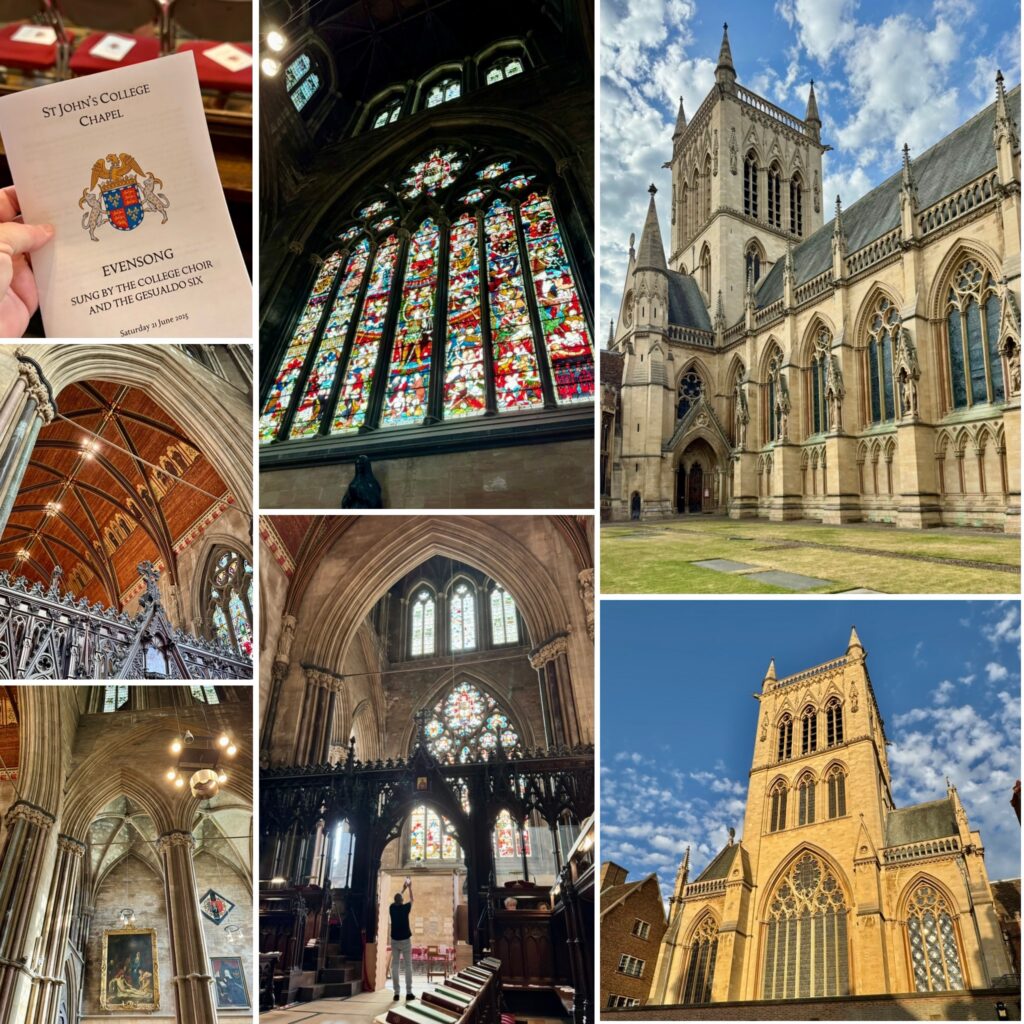
We attended Evensong (an Anglican choral worship service) at St John’s Chapel and enjoyed walking through Cambridge on a warm Saturday evening. We passed several students dressed in tuxes, kilts, and evening gowns.
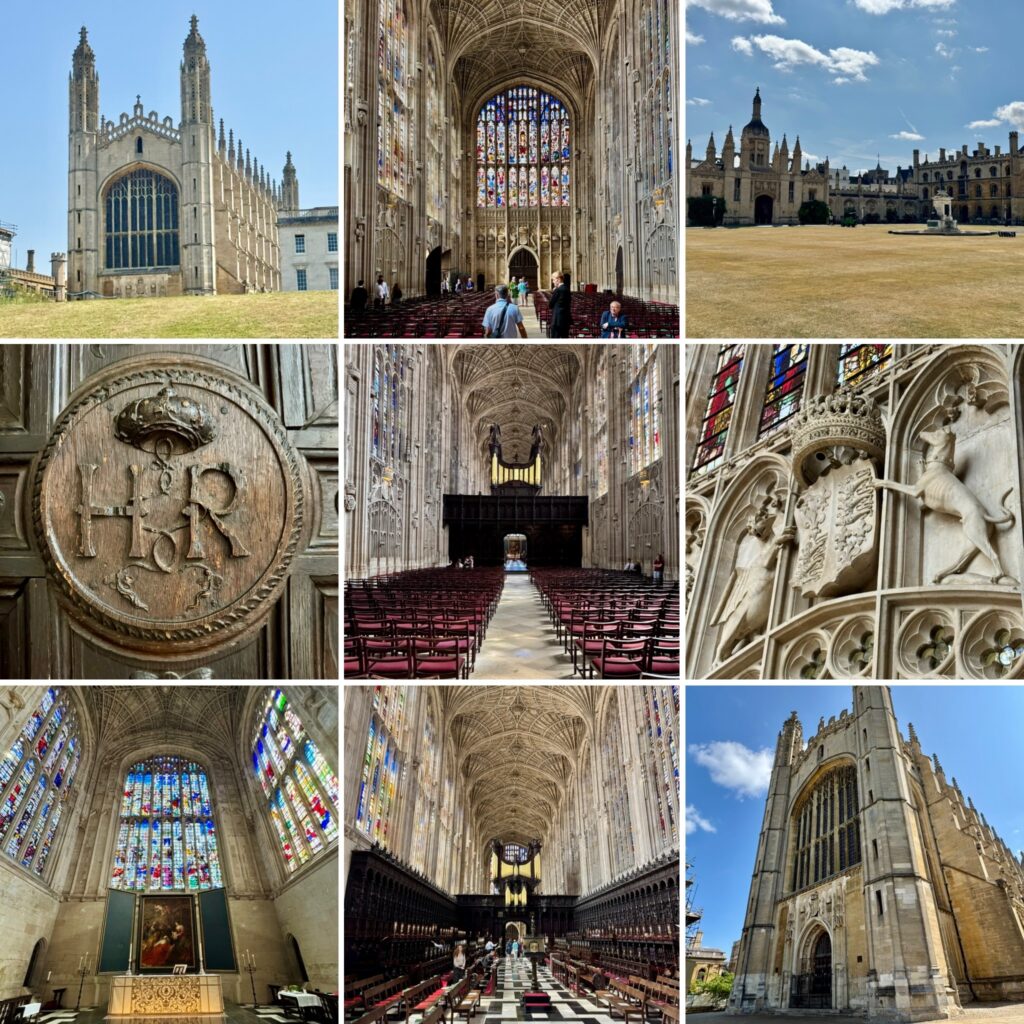
Sunday morning we grabbed an Uber to attend Eucharist service at King’s College Chapel. We saw that the music for the mass was by Stravinsky. The chapel itself is stunning. We had seen it from the back while punting but it was something else to step inside.
We also went to an end-of-term Evensong at Selwyn College. Selwyn was one of the friendliest colleges we visited. Since we were early, the porter invited us to have a drink in their cafe/bar (reasonably-priced cask beer and outdoor seating). After the Evensong was a catered garden party in their beautiful grounds. We came back on a later date for a choral and string concert, including a piece by Vivaldi. Selwyn’s chapel is less ornate, but still beautiful and full of stained glass and dark carved wood.
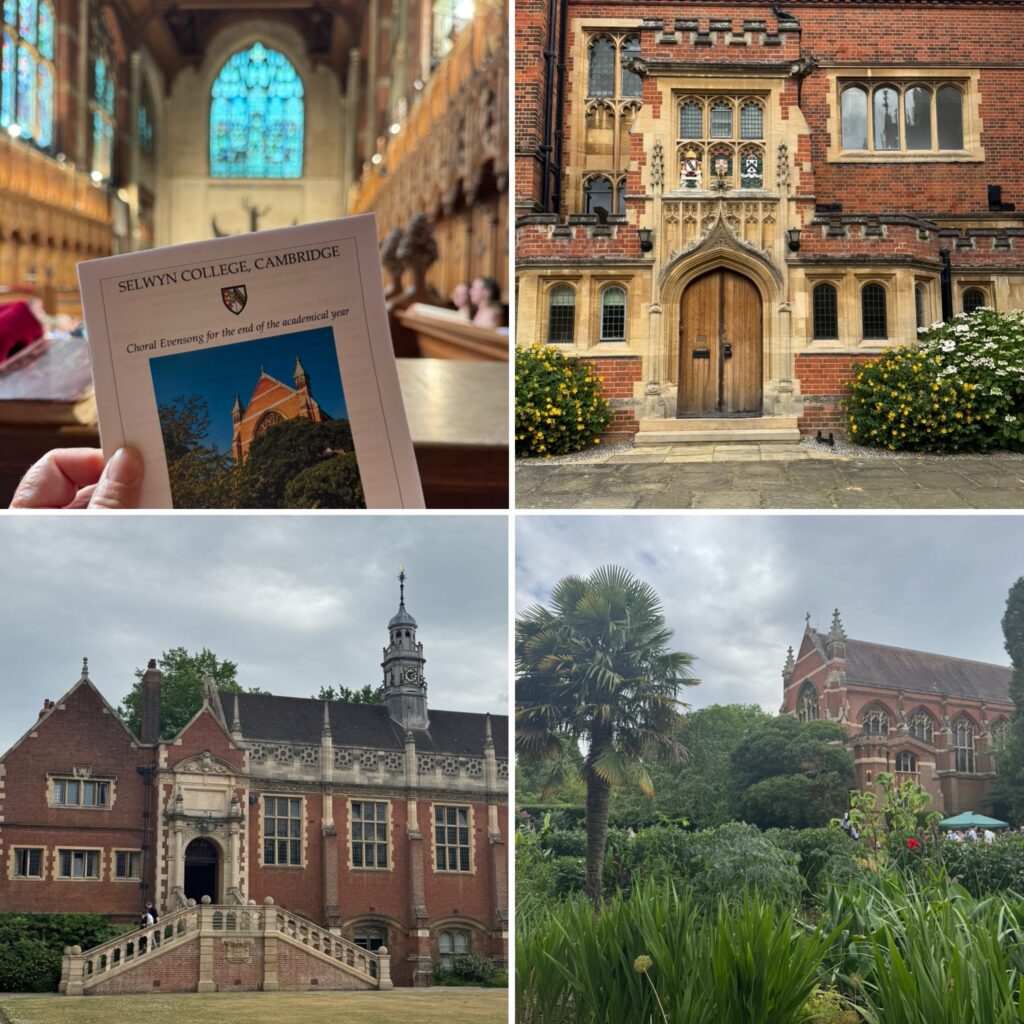
Similar to Oxford, attending a worship service is not a substitute for a full tour, but it does provide the chance to walk through the college grounds and spend time in the chapels.
Great St Mary’s Church is the “university church” for Cambridge. In addition to worship services, it regularly hosts secular concerts that take advantage of the great acoustics. We saw a performance of their chamber music group, itself part of a recurring free lunch concert series. Unfortunately, GSM is also open to the public and is regularly part of Cambridge walking tours. So this free concert attracted a number of lookie-loos who came in to talk, use their phones, dig in their purses, rumple plastic bags, etc. The sound echoes beautifully in this 500-year-old church, but it was not just the sounds of the stringed instruments.
Food and drink highlights
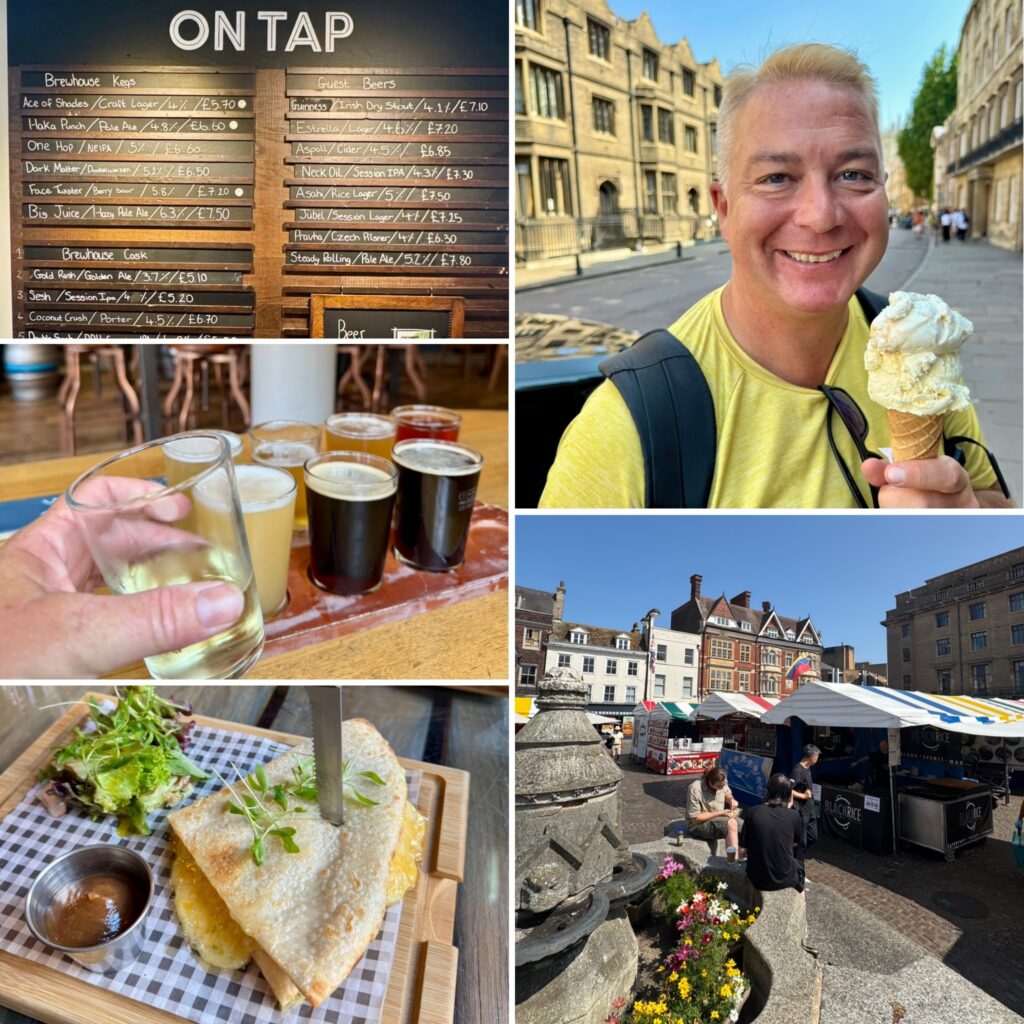
We had a quick half-pint at the Eagle which is famous for being the pub where DNA was discovered.
There is one Wetherspoons in Cambridge, The Regal. We enjoyed their cheap beer in the setting of an old movie theater. There was beautiful, historic decor, and a two-story terrace.
The Fitzbillies bakery has been dishing out goods since 1920. We tried their famous Chelsea bun and another frosted bun. Both were good but a little pricey.
Knoops is a UK chain serving dense chocolate drinks to order. Given the heat, we drank a decadent iced chocolate that I still dream about. How can a cold liquid chocolate drink be that good?
Museums
The Fitzwilliams Museum is a moderately-large museum with free admission and a wide-ranging set of galleries. There was so much art from around the world. We visited one morning and could have spent a full day looking over all the artifacts.
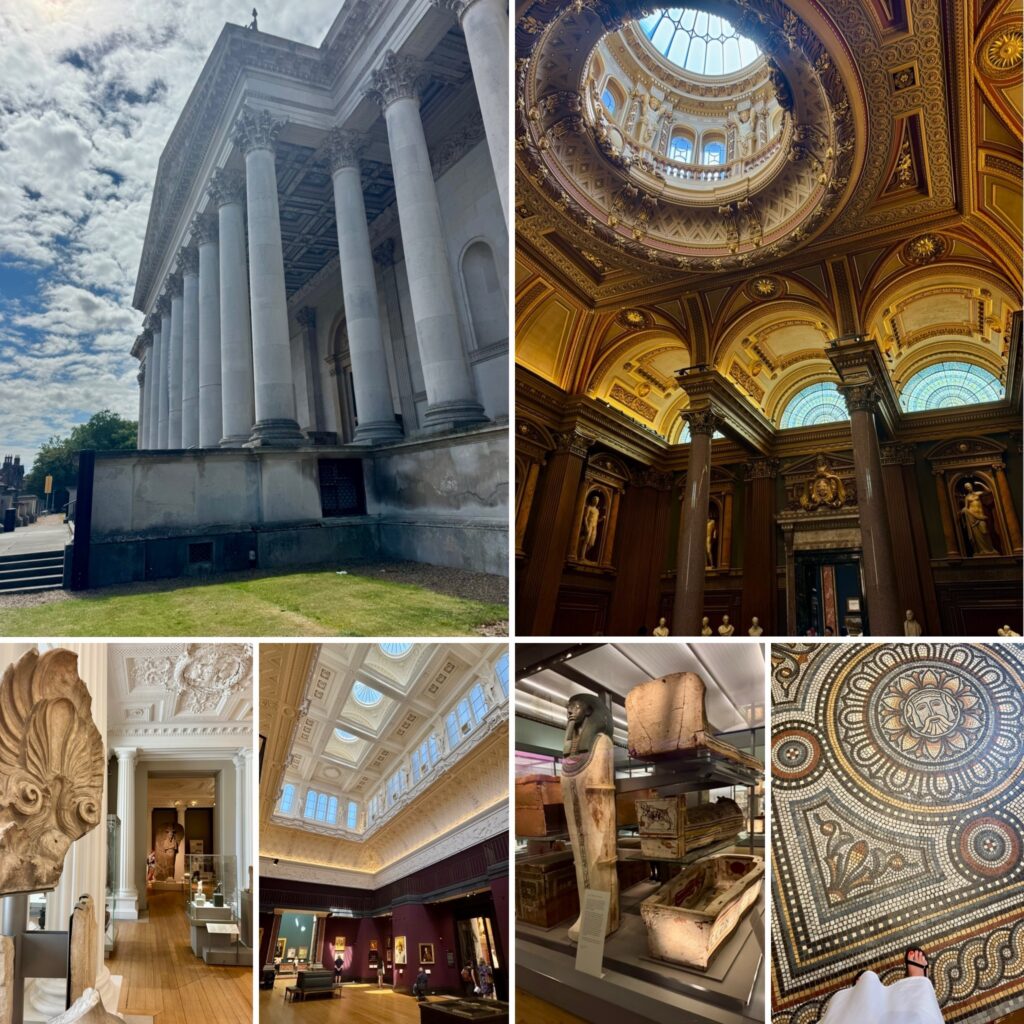
We passed quickly through the collections of Ancient Greek and Roman art, as we were just in Greece looking at very similar items. I surprisingly enjoyed looking at the old porcelain collection.
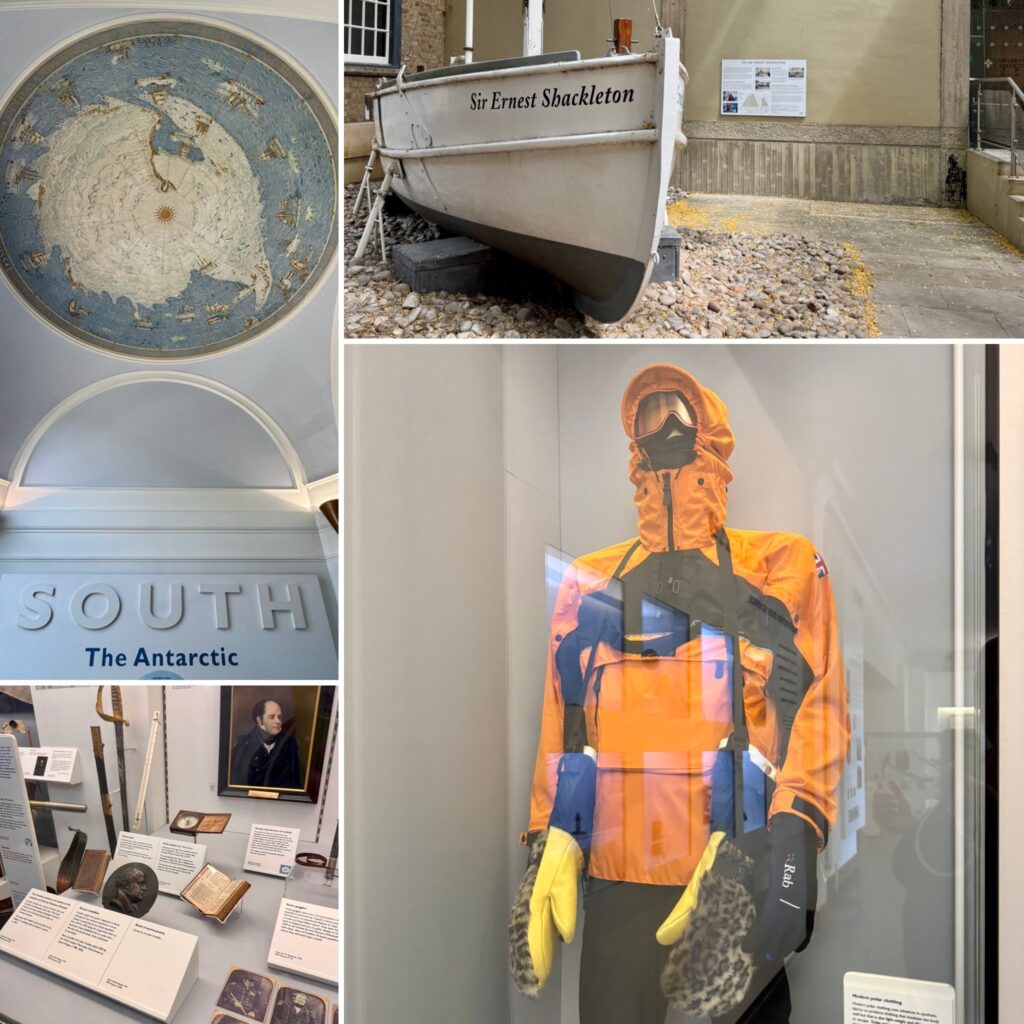
We also visited the Polar Museum, which is also free to enter. It is quite small and dense, focusing on expeditions to both poles. The information is not displayed in any particular order, so it was difficult to keep up with who went to which pole, and when. But there are a good selection of artifacts from the exhibits, and it was nice to revisit some of the explorative history that we learned when in Antarctica and Iceland.
Green space
In addition to the areas around the river and the college gardens, Cambridge features a number of parks. We had a picnic on a nice Sunday afternoon on Jesus Green. Jesus Green has two public natural-grass tennis courts, but at the time we were there, the lines were laid out but the grass had not been cut and the courts were not available for rental.
Ely
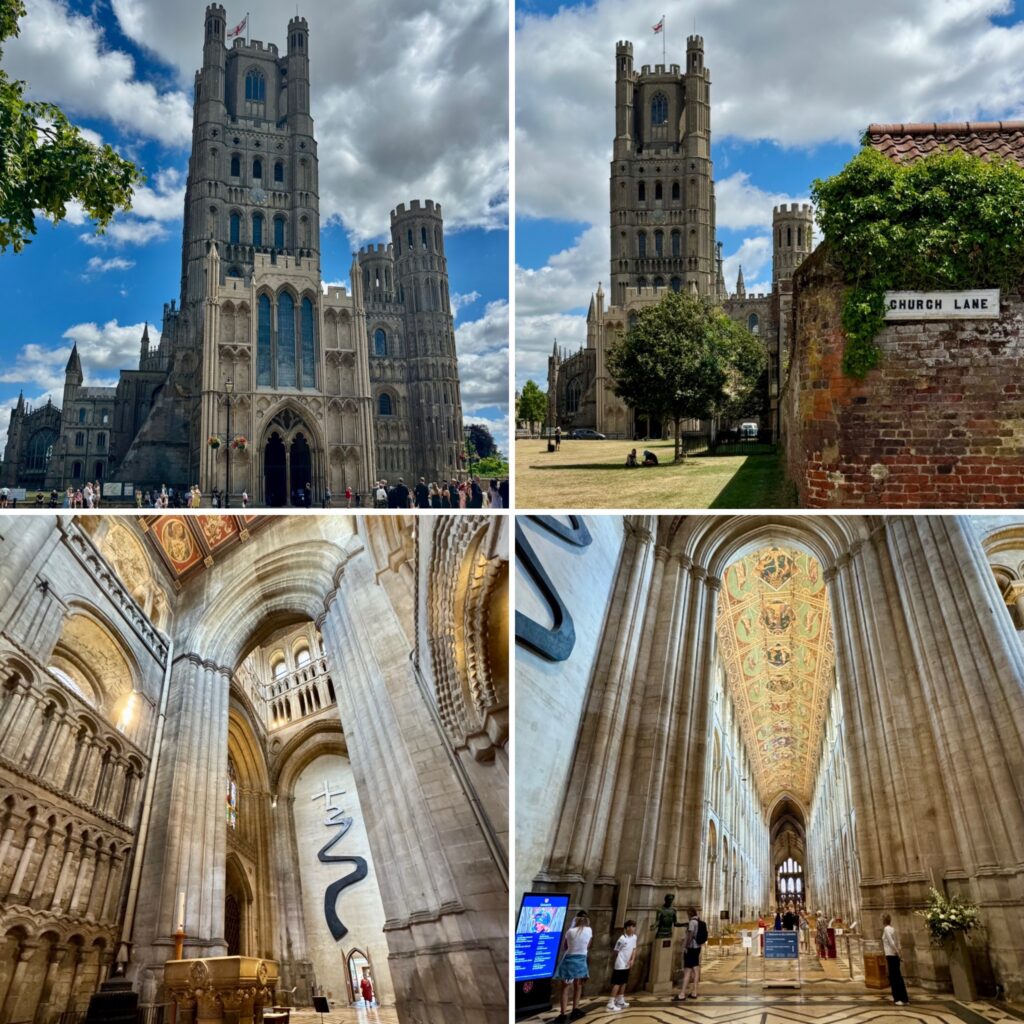
A small town only two train stops from central Cambridge, Ely is famous for a large cathedral disproportionate to the size of the town. All of the Anglican churches and chapels in both Cambridge and Grantchester fall under the jurisdiction of the Diocese of Ely.
As we walked through the garden from the canal and into town, the behemoth church towered above the grass and trees. It was a breathtaking sight! I can only imagine how people coming to Ely would have reacted when seeing the large church coming into view.
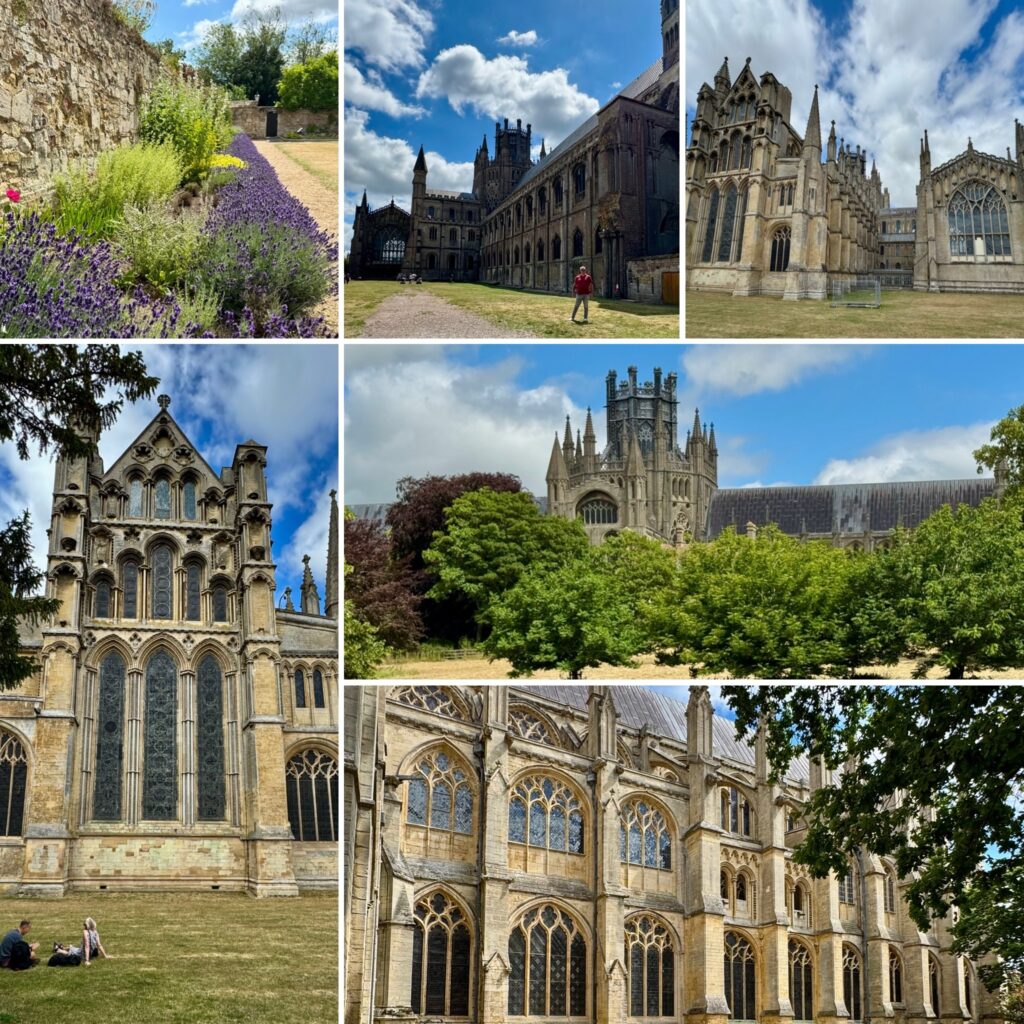
Ely Cathedral has origins dating back to AD 673 when St Etheldreda built an Abbey Church. The present building dates back to 1083, and was granted Cathedral status in 1109, with additions being made through 1375. All that to say – it’s old and stunning!
Cromwell House
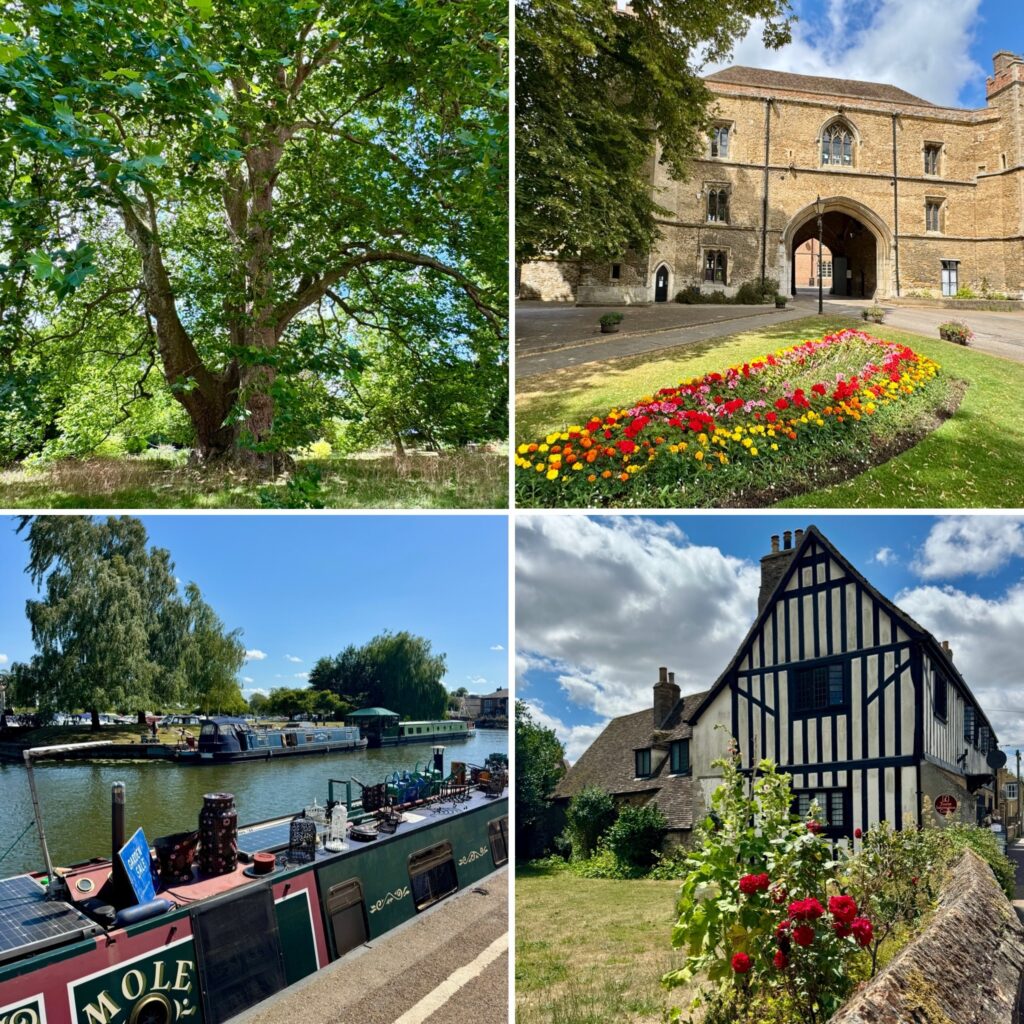
We had read that the admission was a little steep for the museum. So we just walked by and briefly stopped for a photo at this very-old residence.
Big tree
Just down the lane, the largest London plane in the UK resides.
The tree is believed to have been a gift from King Charles II to Peter Gunning, the Bishop of Ely. It was planted at the Bishop’s Palace in 1674 when it was around ten years old. It is believed to be one of the original London planes (Platanus x hispanica), first recorded in 1663. Seeing the tree was a stroke of luck: we wandered through an open gate into an empty garden, but when we returned to the street, the sliding gate was closed and locked!
High Street and Farmers Market
Ely is a pretty typical English small town, with nice streets and alleys to wander down. There is a pretty small downtown area but the small lanes weave and curve behind the High Street, which creates a maze of shopping.
Brighton
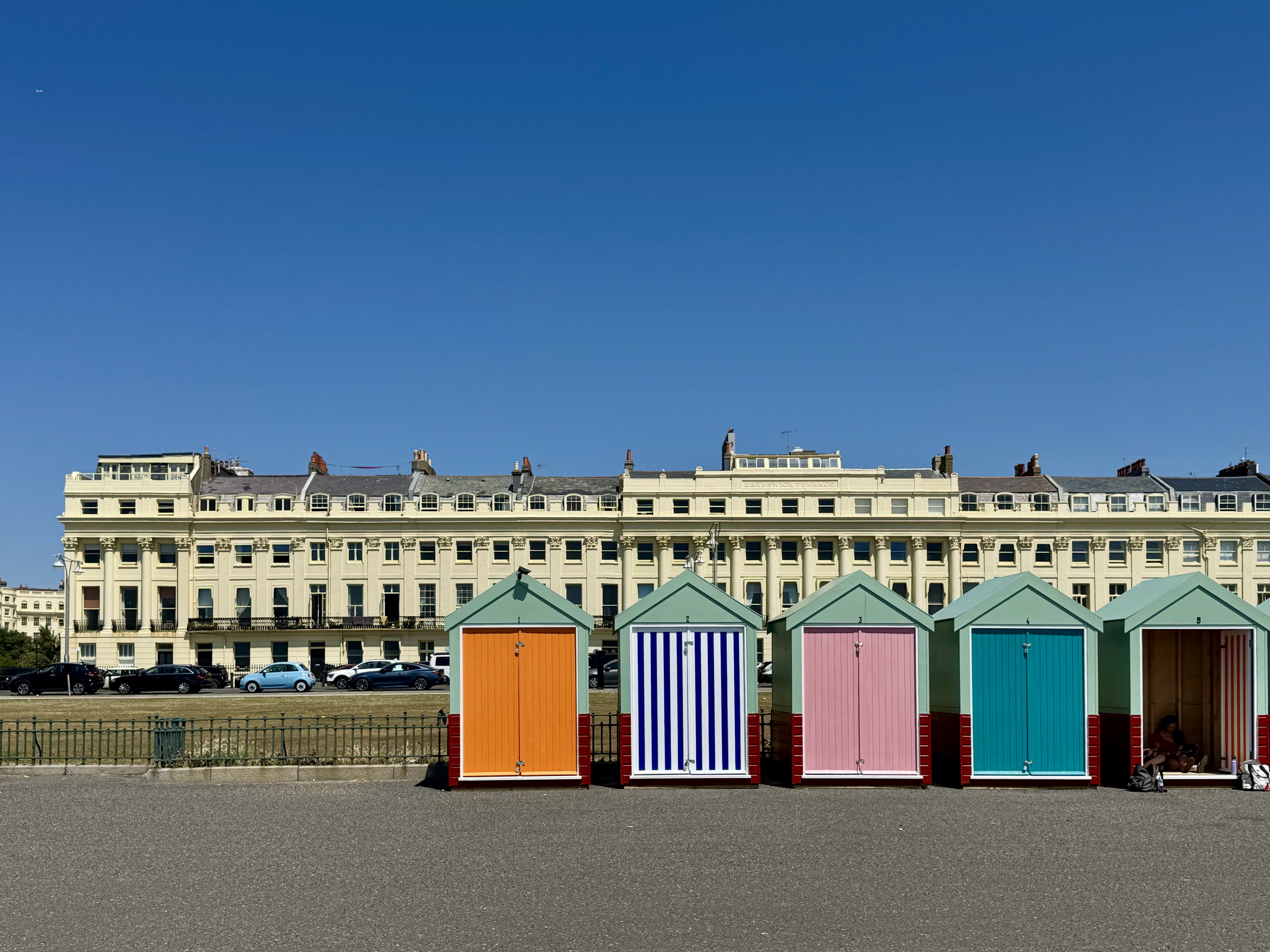
After nearly two weeks in Grantchester, we took a train to Brighton. The salty air greeted us from the train station. We were lucky to have such warm weather for our seaside vacation.
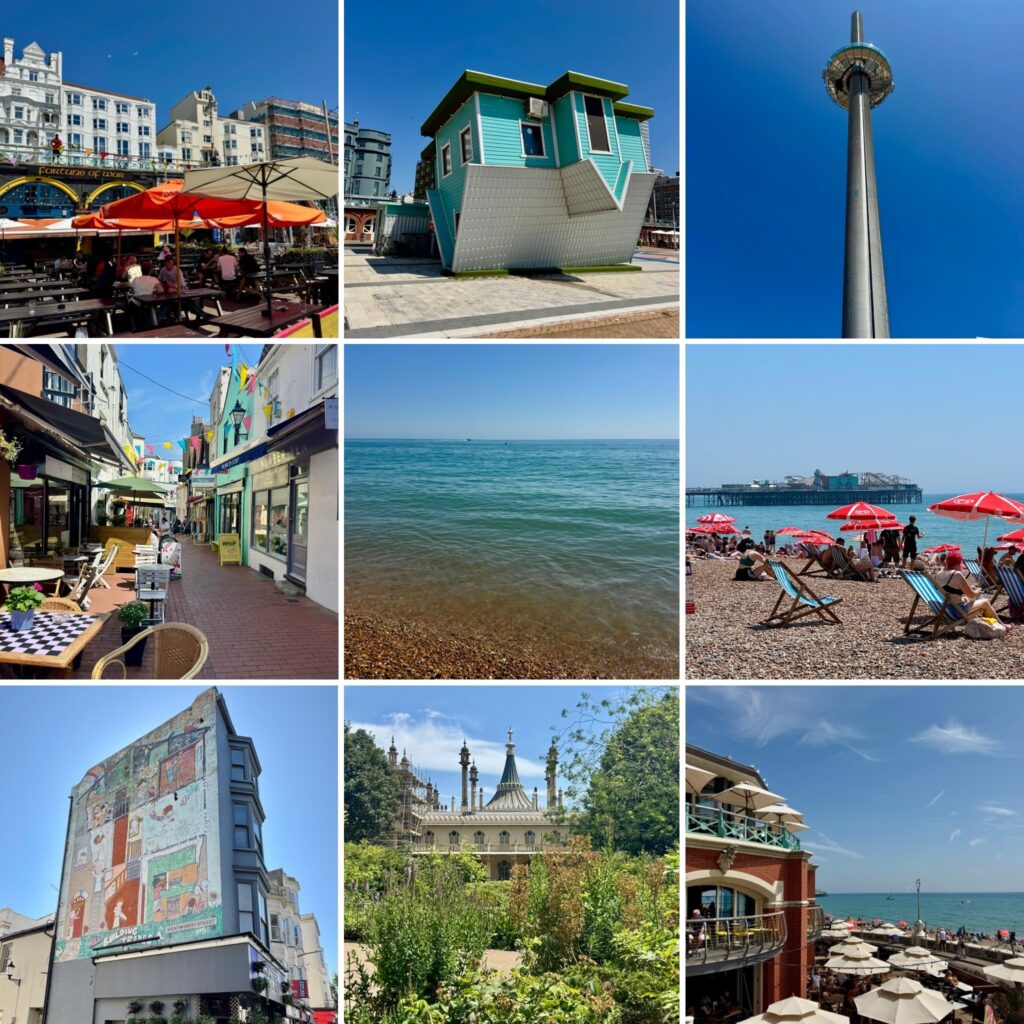
Brighton and Hove are coastal towns, due south from London. In the late 1700’s, Brighton became a summer home for royalty, and a railroad was laid out from London to the resort town. Over time the town grew around the palace and has continued to expand as a resort area, although the royal summer home was relocated in the mid-1800’s.
Much like people did a hundred years ago, our route to Brighton was a direct Thameslink train that brought us from its start in Cambridge down to the end in Brighton (passing through London along the way).
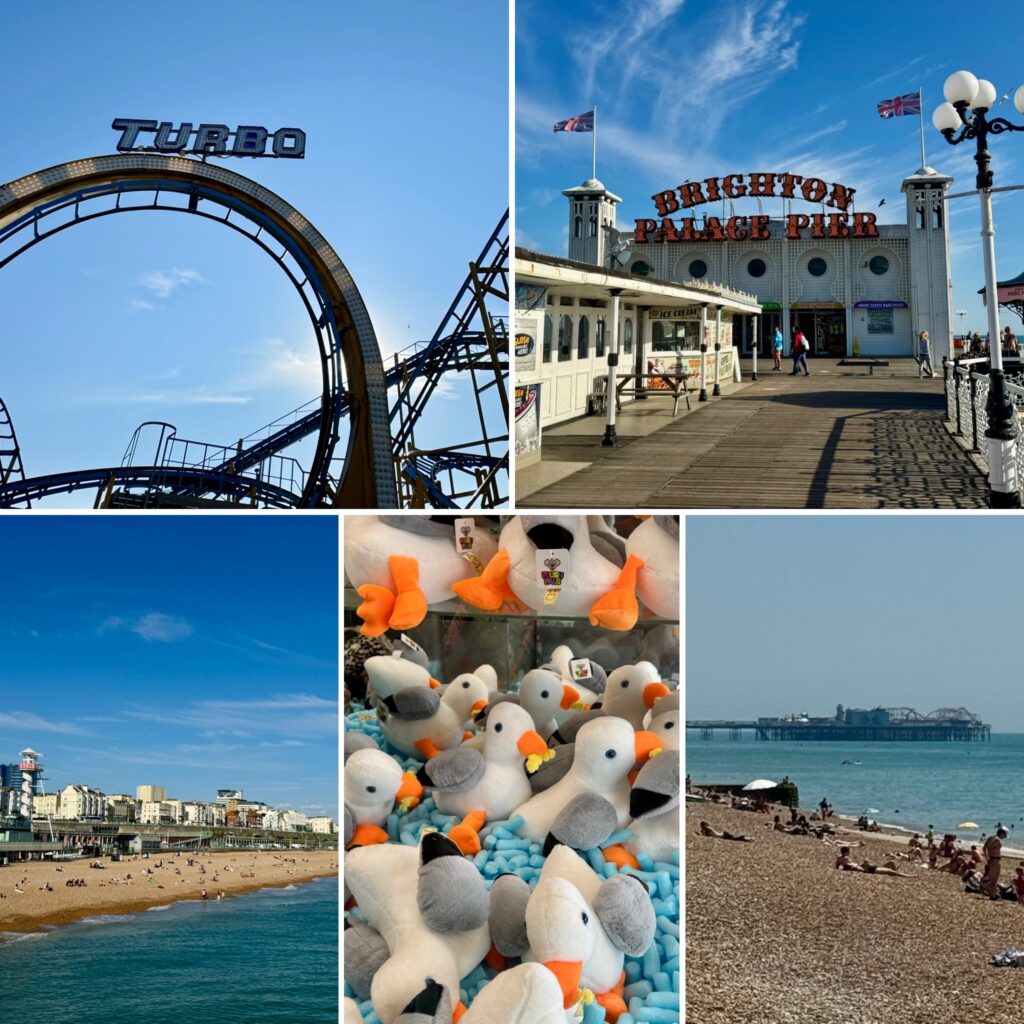
We stayed in Hove, actually, just a block or two from the shoreline. Corey’s parents joined us and together we enjoyed the area for a few days. We enjoyed long walks along the beach and down Brighton Palace Pier. We explored the old retail area known as The Lanes. There was an abundance of cuisines represented, and we also enjoyed cooking some meals at home for the family.
What’s next
We continue our travel with Corey’s parents on a 14-day British Isles cruise on Princess. We will have stops in England, Wales, Scotland, and Ireland (Republic and Northern). It is a port-packed itinerary with just a few sea days to rest, and with so much so see.