Wokingham
Right from the ship in Southampton we headed to Wokingham to stay with Audrey and Archie. The cutest pugs we’ve ever seen!

This town would never have been on our radar but it is quite well known in England for being a small town with a large quantity of pubs. The historic existence as a market town meant there was the need to supply food, drink, and lodging to the traders. While there are less pubs now than there used to be, there are still dozens of them, and the town is still popular for pub crawls.
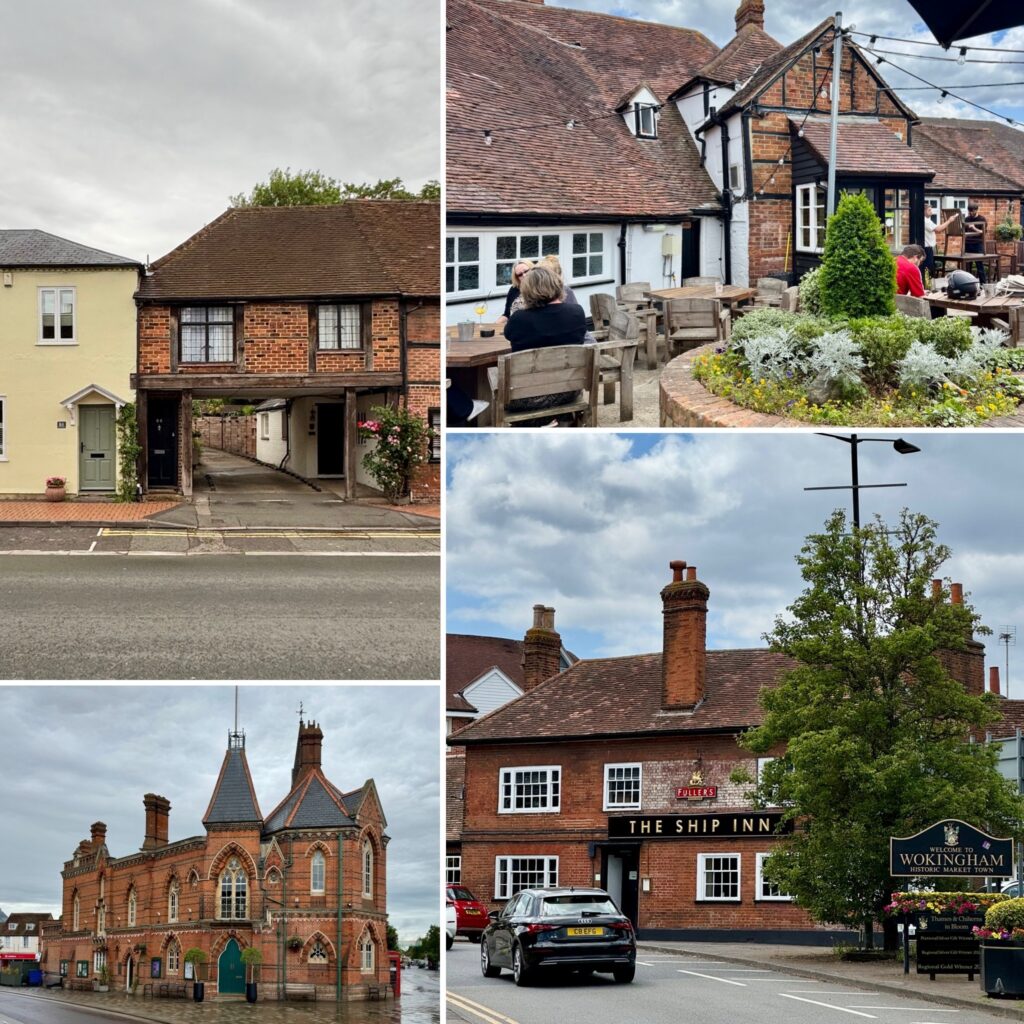
We spent our time writing, walking the pugs, and checking out the charming town. The downtown area is especially cute with brick buildings and lanes. Pugs and pubs sums up the week!
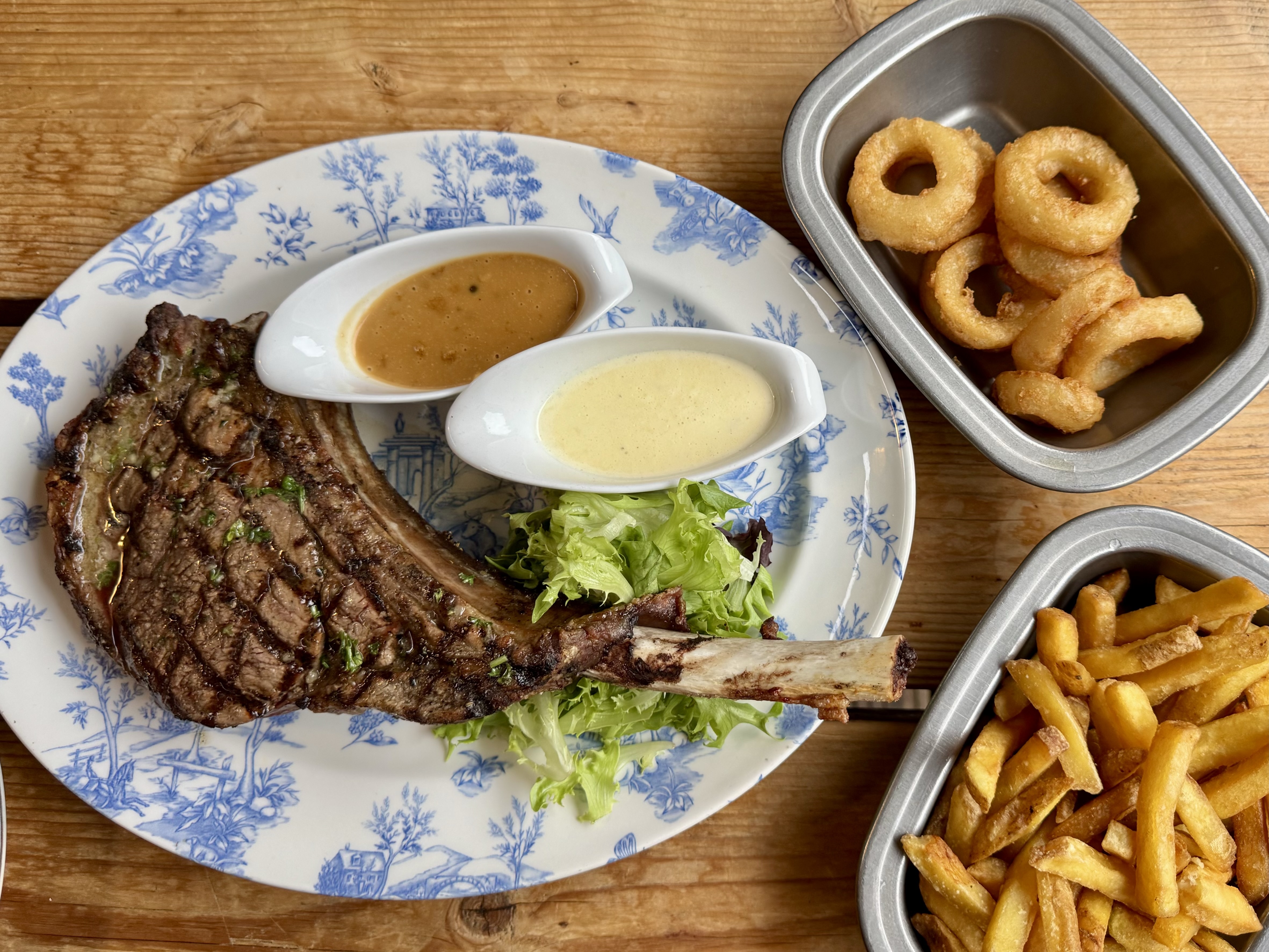
The highlight of the week had to be the Thursday night steak special at the Lord Raglan. We left the dogs at home, walked into town and shared a one-kilogram (35 ounce) tomahawk ribeye. For £36 (under $50 USD), it came with two sides as well. We sat out on the patio, where the smoke from the grill wafted above us. It was a lovely meal!
Witney
This quaint town lies only a dozen miles west of Oxford and is the largest market town in the Cotswolds. We left Wokingham and spent a week in Witney with Romeo. We enjoyed both the town itself and the surrounding area.
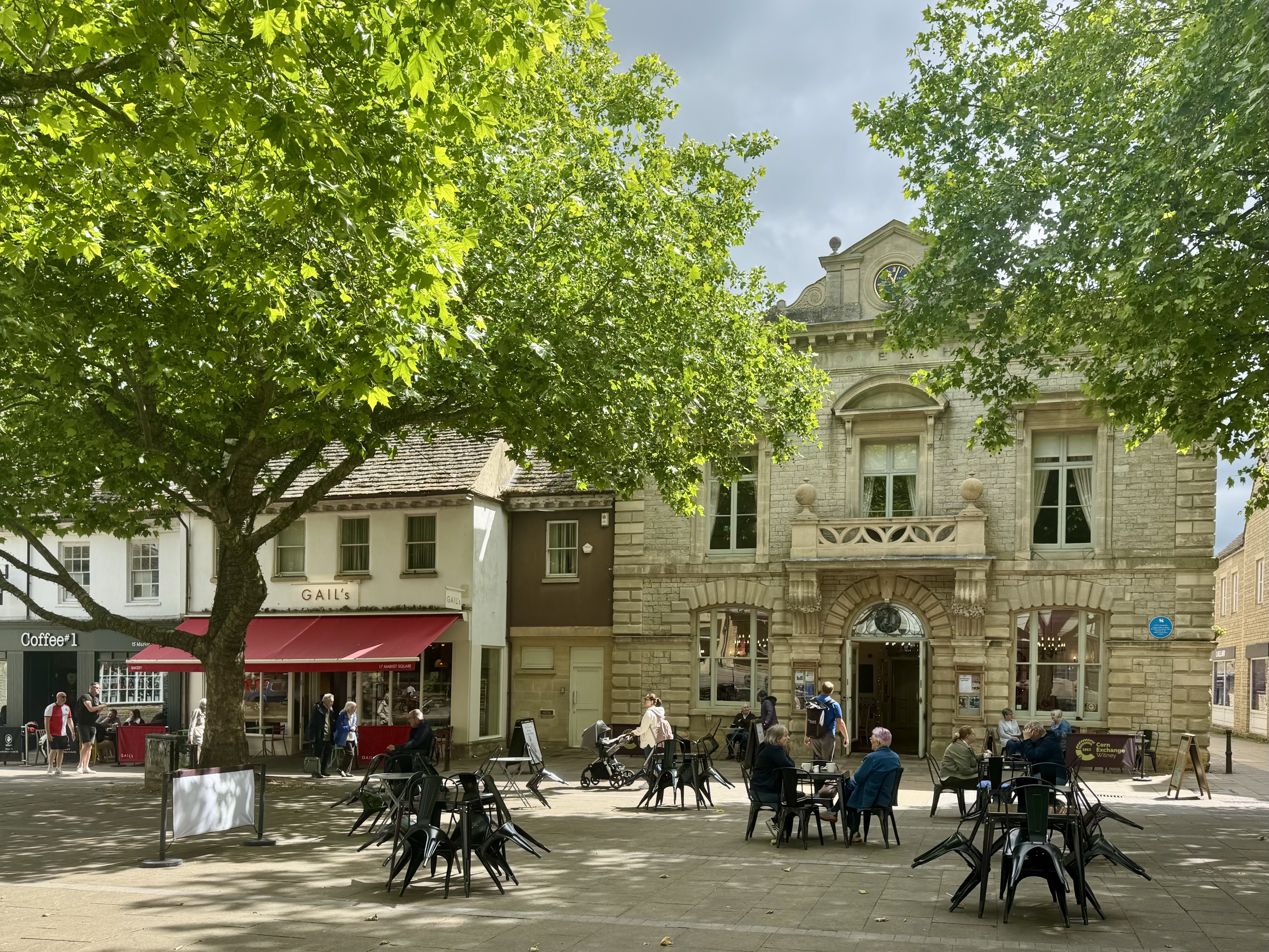
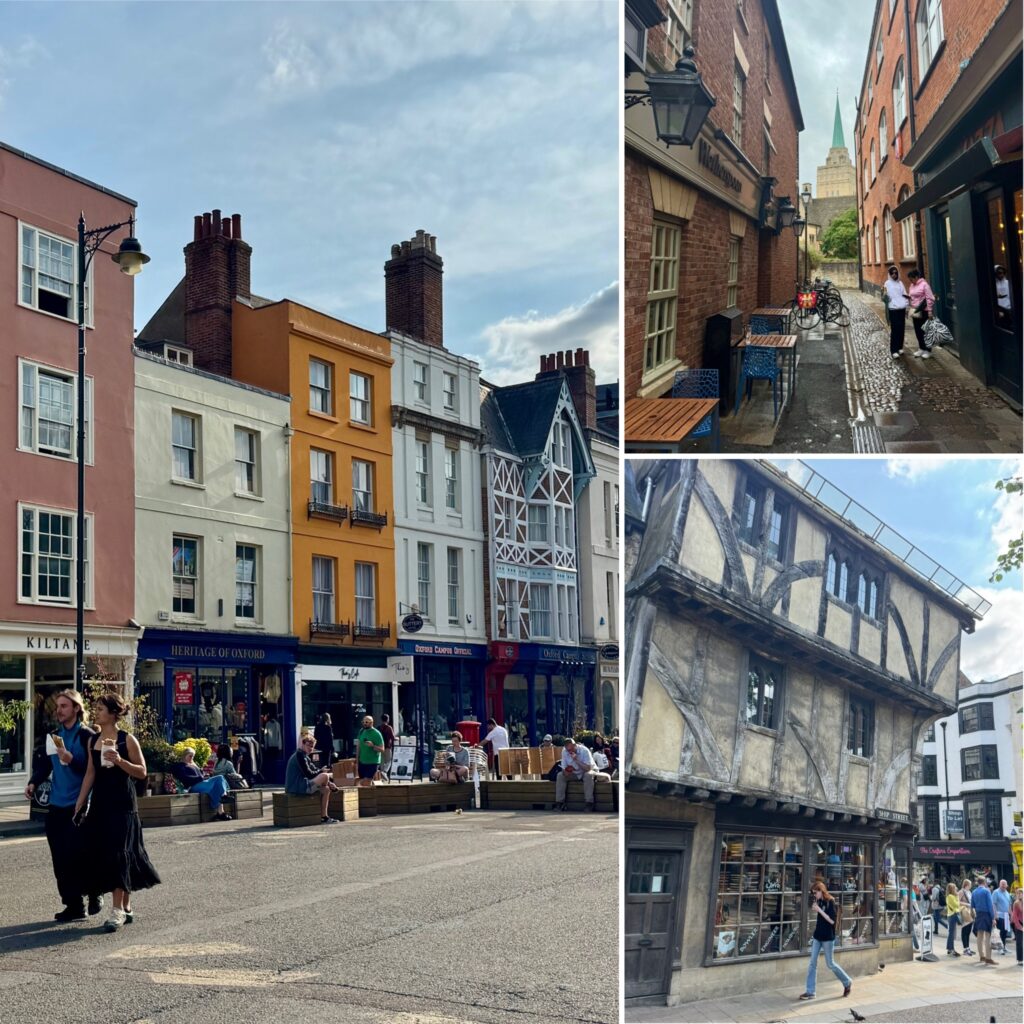
The high street is cute and filled with all sorts of modern shops, boutiques, and pubs.
Blankets and beer! One of the most famous things in Witney is the historic Blanket Hall. This was a guild hall for the blanket weaving trade, and was also once a brewery. Witney wool blankets were world-famous and were traded in North America by the Hudson’s Bay Company. We did a tour one day of the restored building and enjoyed a garden lunch from the attached pie shop.
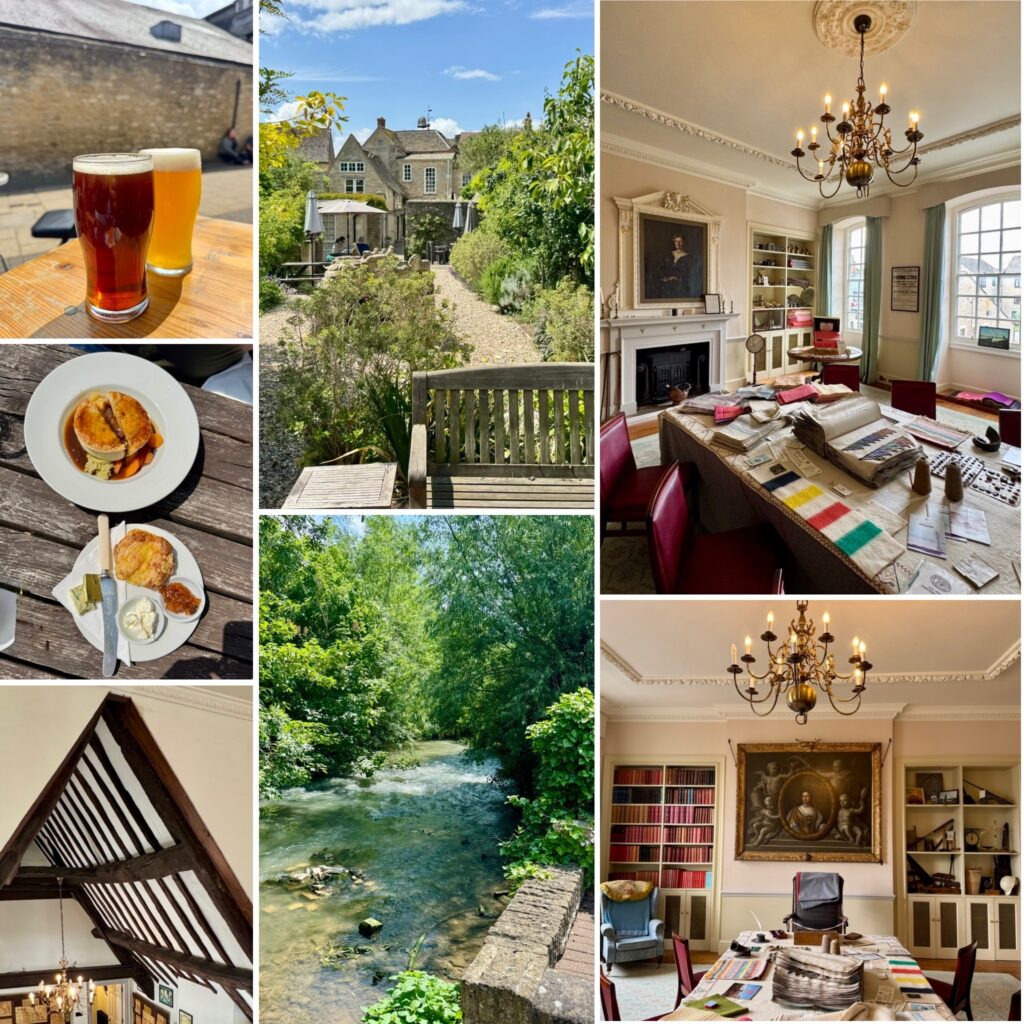
A highlight was the Crafty Pint, a small pub with a contemporary selection of beers. I enjoyed a lemon pastry sour beer while Corey stuck with a more traditional nut-brown ale, both served from casks.
Cotswolds
We have to admit that we had not heard of the Cotswolds prior to coming here. It is an area of southwest England known for rolling, grassy hills. This area is perfect for grazing sheep, and the villages in the area were once quite wealthy from the wool trade. But eventually the wool trade declined and the mills closed, leaving this areas in a time warp. But without further development, the towns have maintained their historic country charm. Pebbles, vines, flowers, bubbling brooks are all key attributes. Imagine how a painter would capture a scene of a quintessential English village, and that is what the tourists are flocking to in real life. We flocked to a few of the nearby villages!
We spent an afternoon walking to Minster Lovell. It’s a tiny and old village close to Witney. The cottages had colorful gardens in the front, with vines growing up the old stone walls.
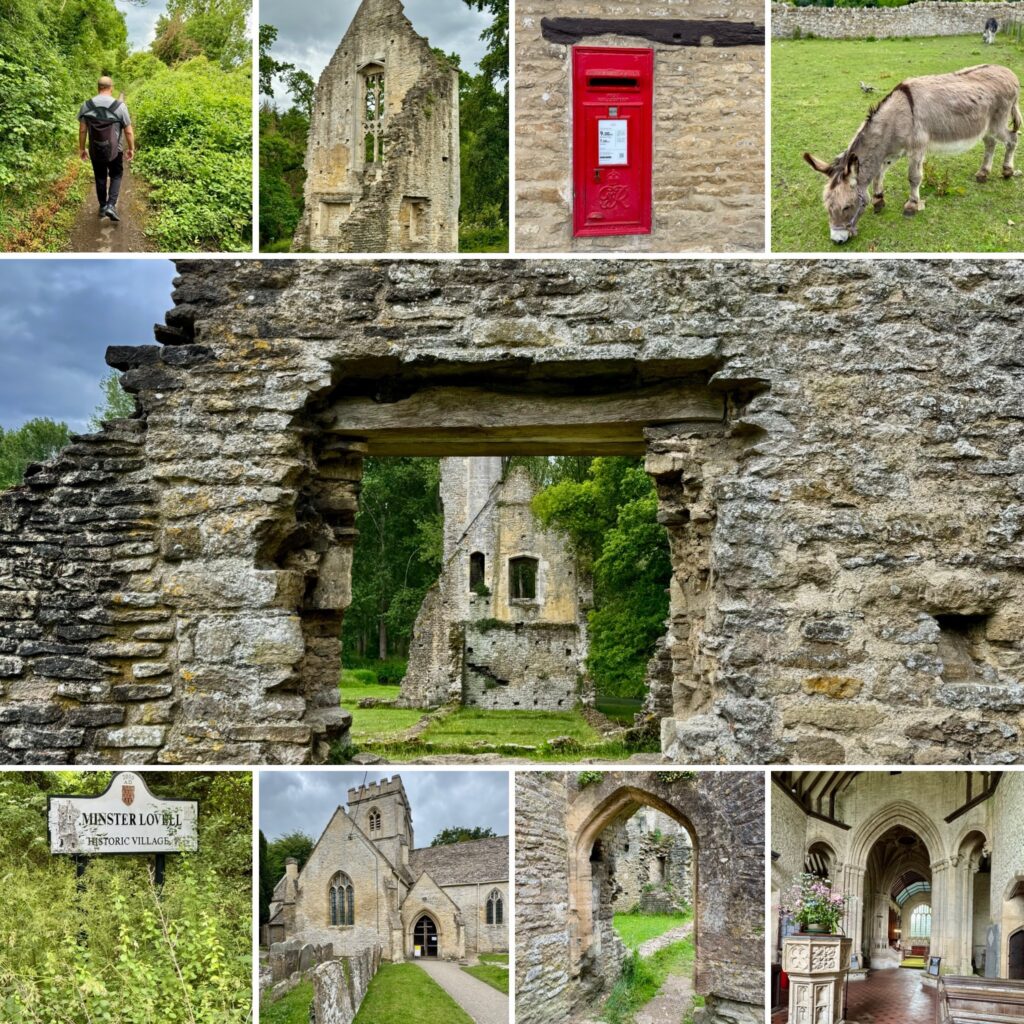
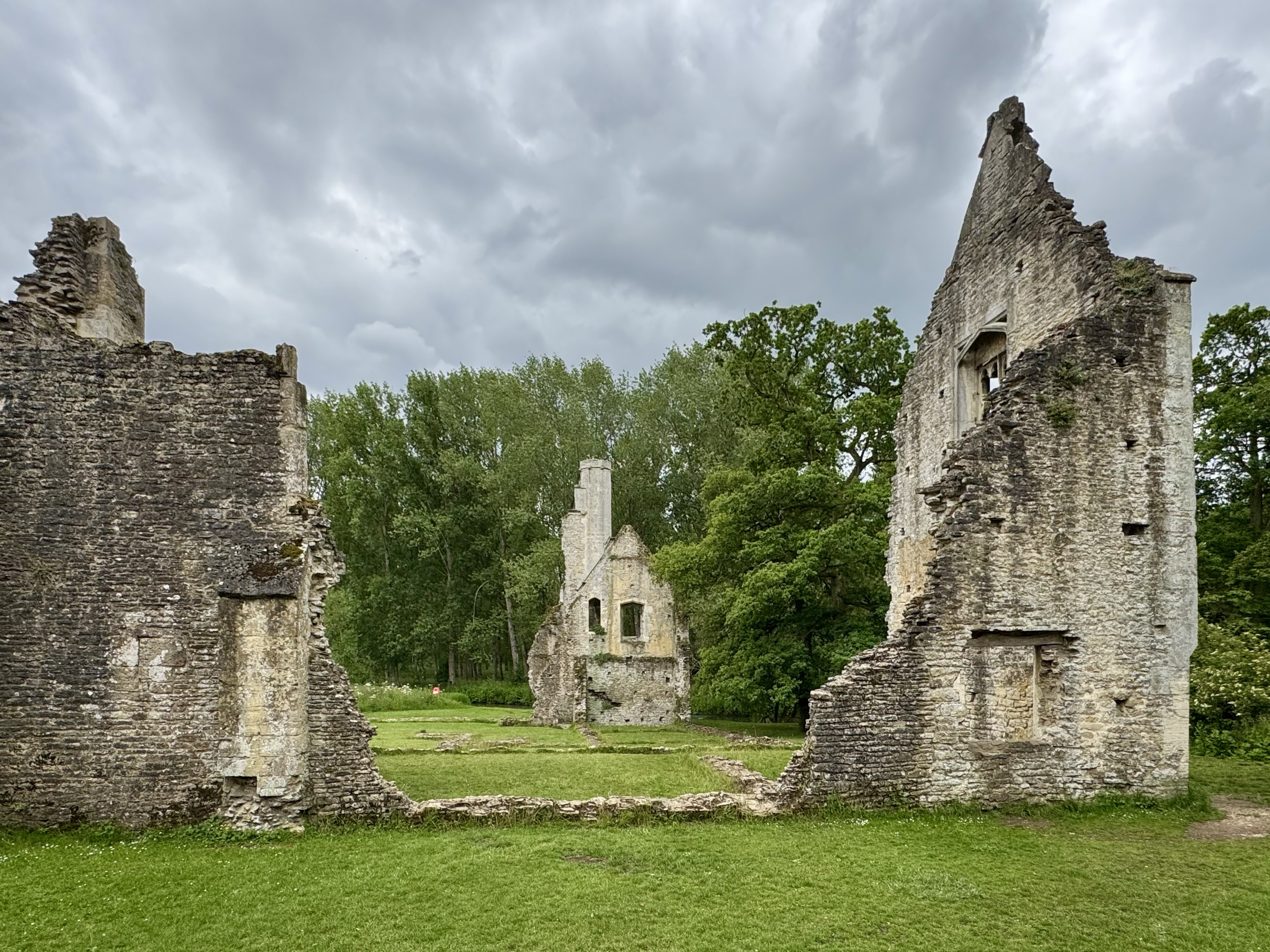
The ruins of an old mansion, Minster Lovell Hall, are a highlight at the end of the road. Built in the 1400’s but mostly-disassembled in the 1700’s, it is now a set of stone walls in the grassy meadow. One can imagine the beautiful home nestled next to the river, with views of the grounds from the towers.
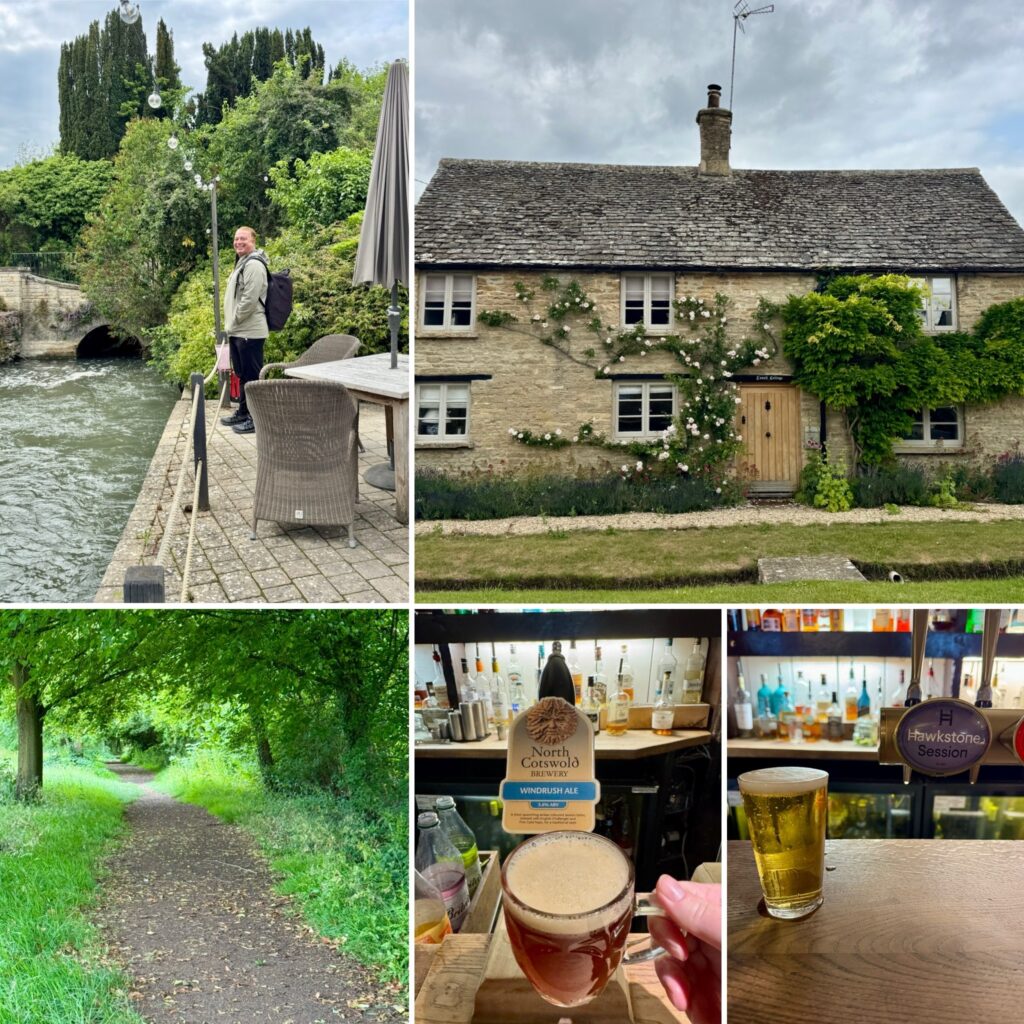
We paused at the village green to watch the white-clad cricket players, then continued to the Old Swan garden for a pint. Then we walked home. We noticed a handful of other visitors and only one small tour group while we were there which made it a nice visit with our crowds of people filing off a bus.
We took another trip to the Cotswolds later in the week. We took a bus to Chipping Norton, then caught another bus to Moreton-in-Marsh. We had read this village has the biggest market and there were some great stalls. We also shopped in the stores along the high street.
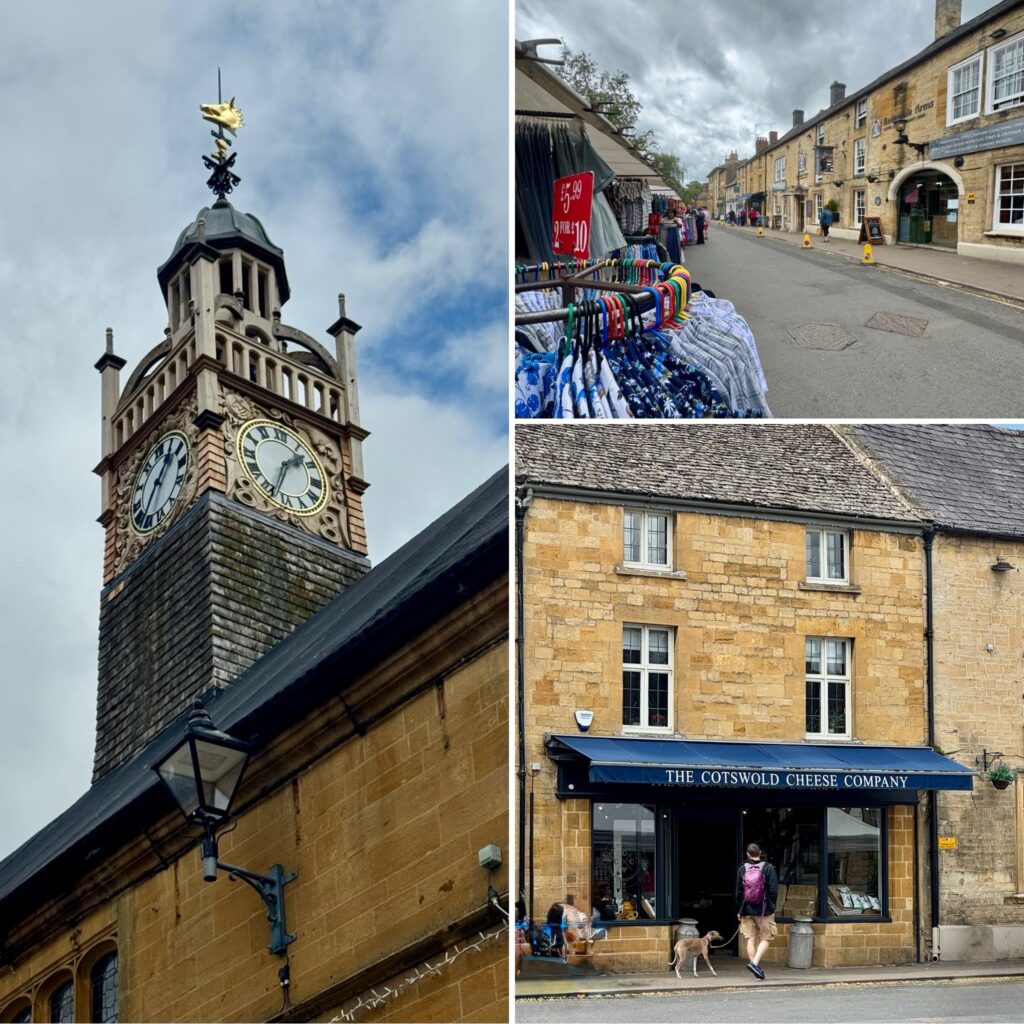
We decided to buy some cheese and bread and have a picnic at the next town. So we boarded the 801 bus and 15 minutes later we arrived at Stow-on-the-Wold.

It was so much busier than the other places and large tour buses were driving by. But there are a number of interesting things to see in town. We used a Rick Steves guide to take a short walk through the town. While it is small, there were a few interesting sights, especially because of the role that Stow played in the English Civil War.
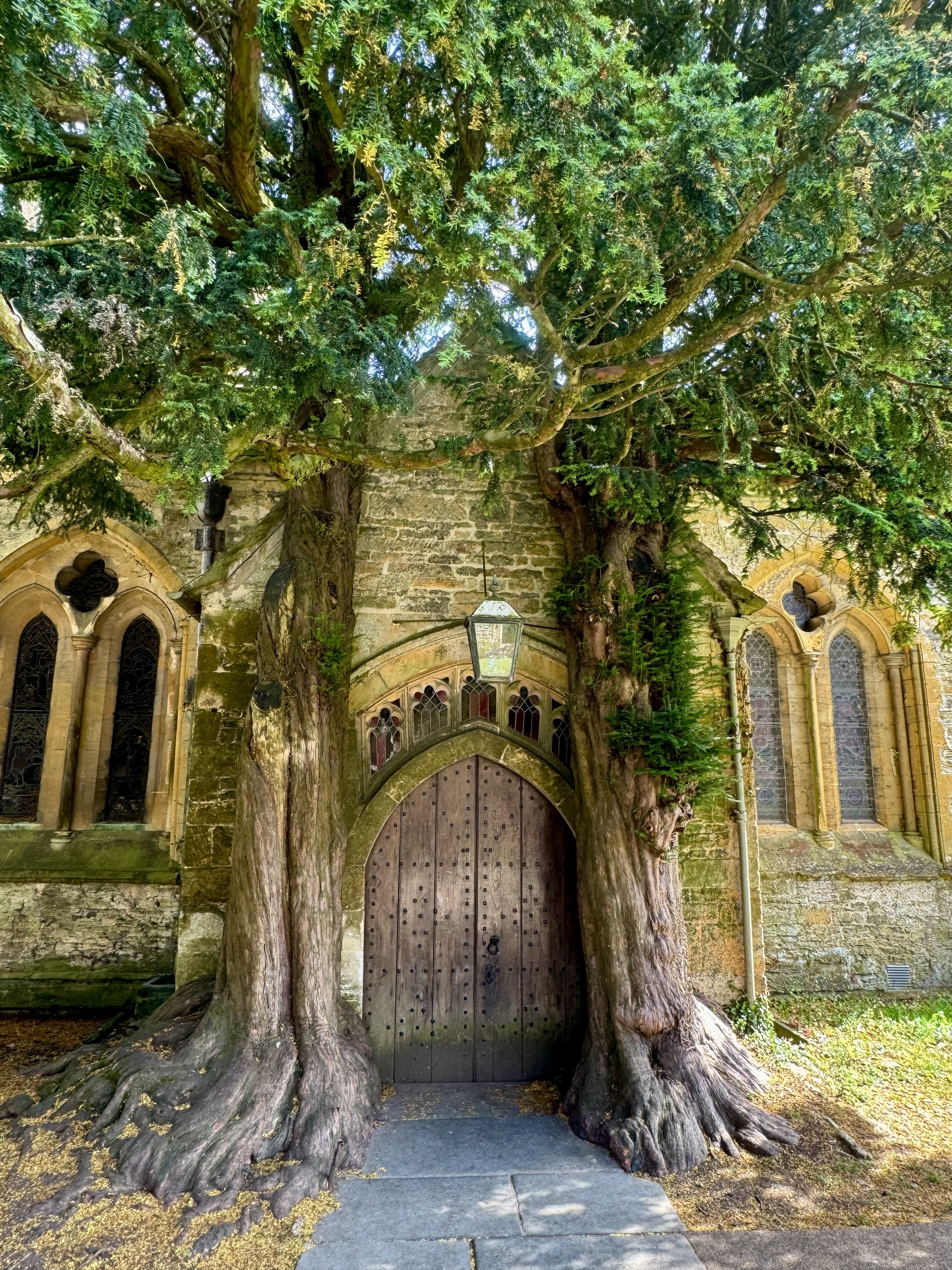
The church and grounds of St. Edward’s were well-manicured and relaxing, with a famous set of doors on the rear of the church.
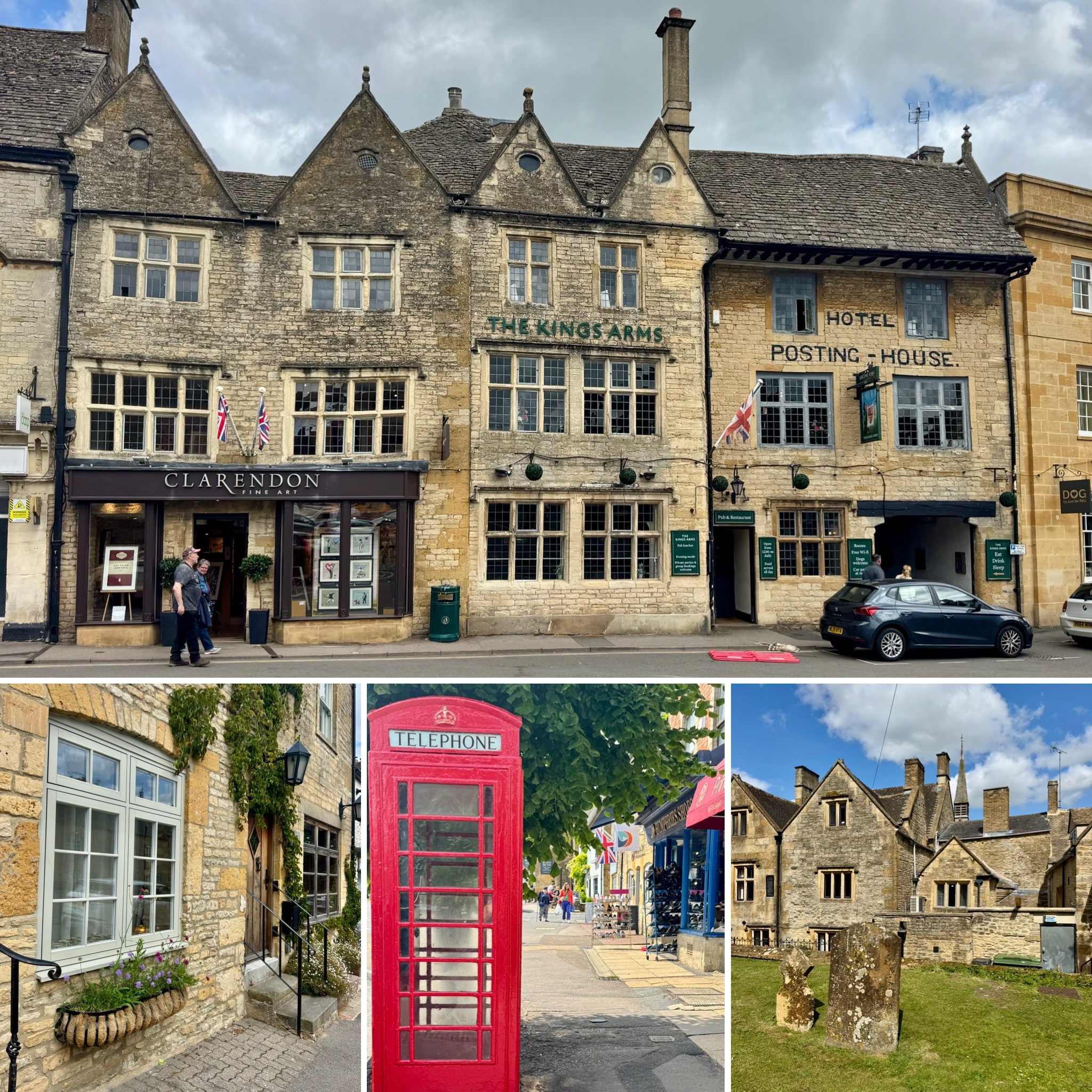
Town life revolves around the large Market Square, which is surrounded by old buildings and pubs. Since this was a Loyalist town, there are many establishments referring to royalty. We stopped for a pint at the Kings Arms pub.
From here we sauntered down the Monarch’s Way trail to another village called Lower Slaughter. It was a couple of miles through grass, pastures, and dirt paths to the small village.
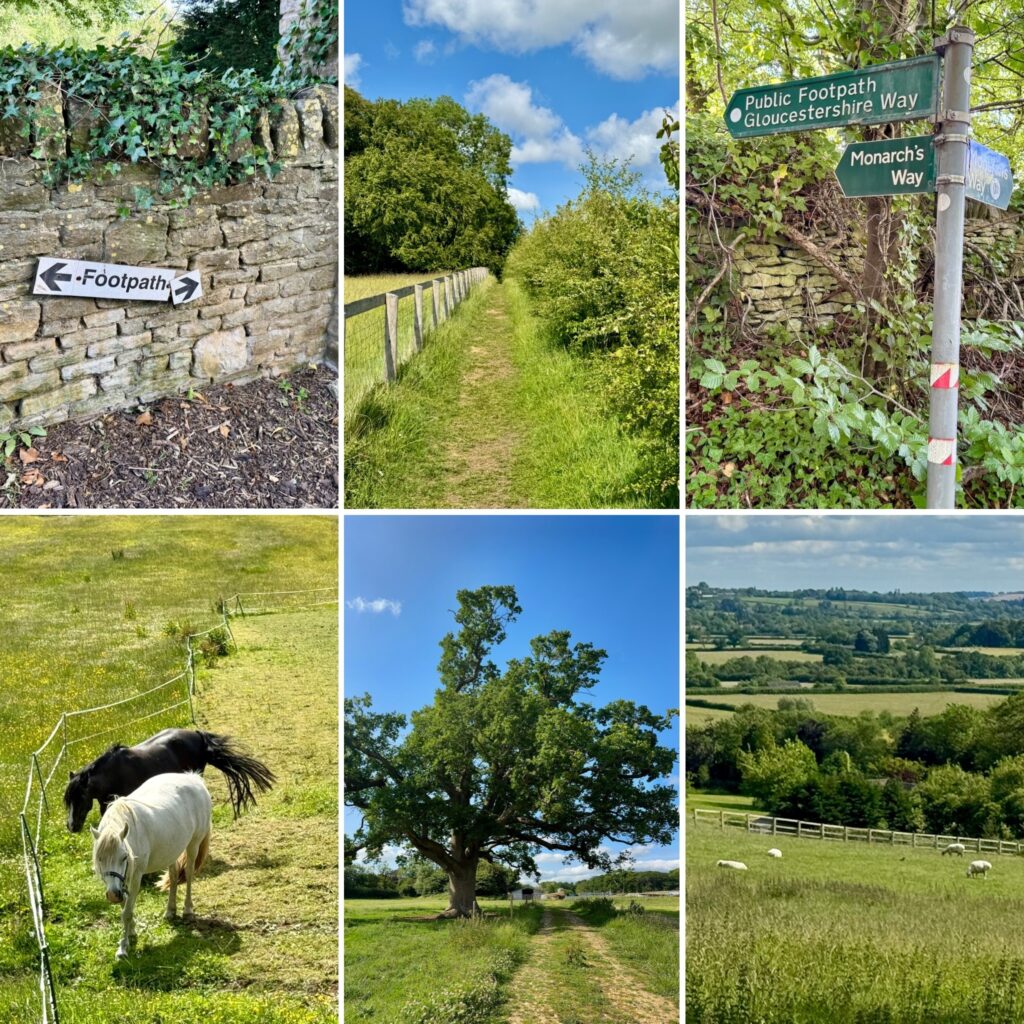
England has miles of ancient paths, many of which are rights-of-way through otherwise private land. The landowner and the local government are responsible for keeping these public paths maintained and accessible. Here’s a peek at the views from the footpath.
We arrived in Lower Slaughter to a fairytale village of stone houses and beautiful gardens. We wanted to take the path up to Upper Slaughter but found ourselves running out of time. There is limited bus service in the area and it is frustrating without a car. We had enough time to walk to a nearby stop at the entrance to Bourton-on-the-Water, but had no time to explore that village. Heading back to Witney would have been a 30-minute drive, but it took more than two hours on the bus!
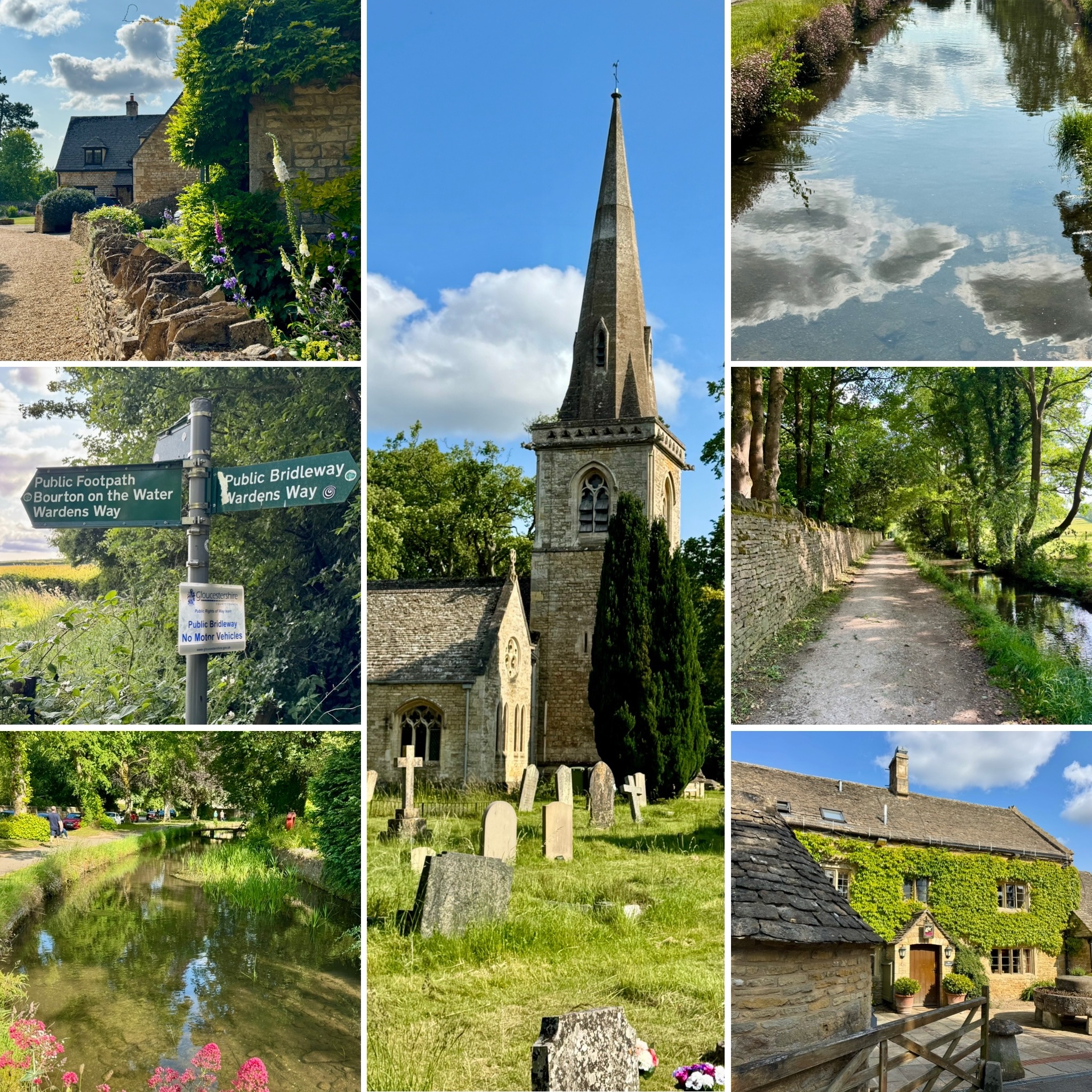
We ended up covering nine miles on foot that day. It’s a gorgeous place for walking around!
Oxford
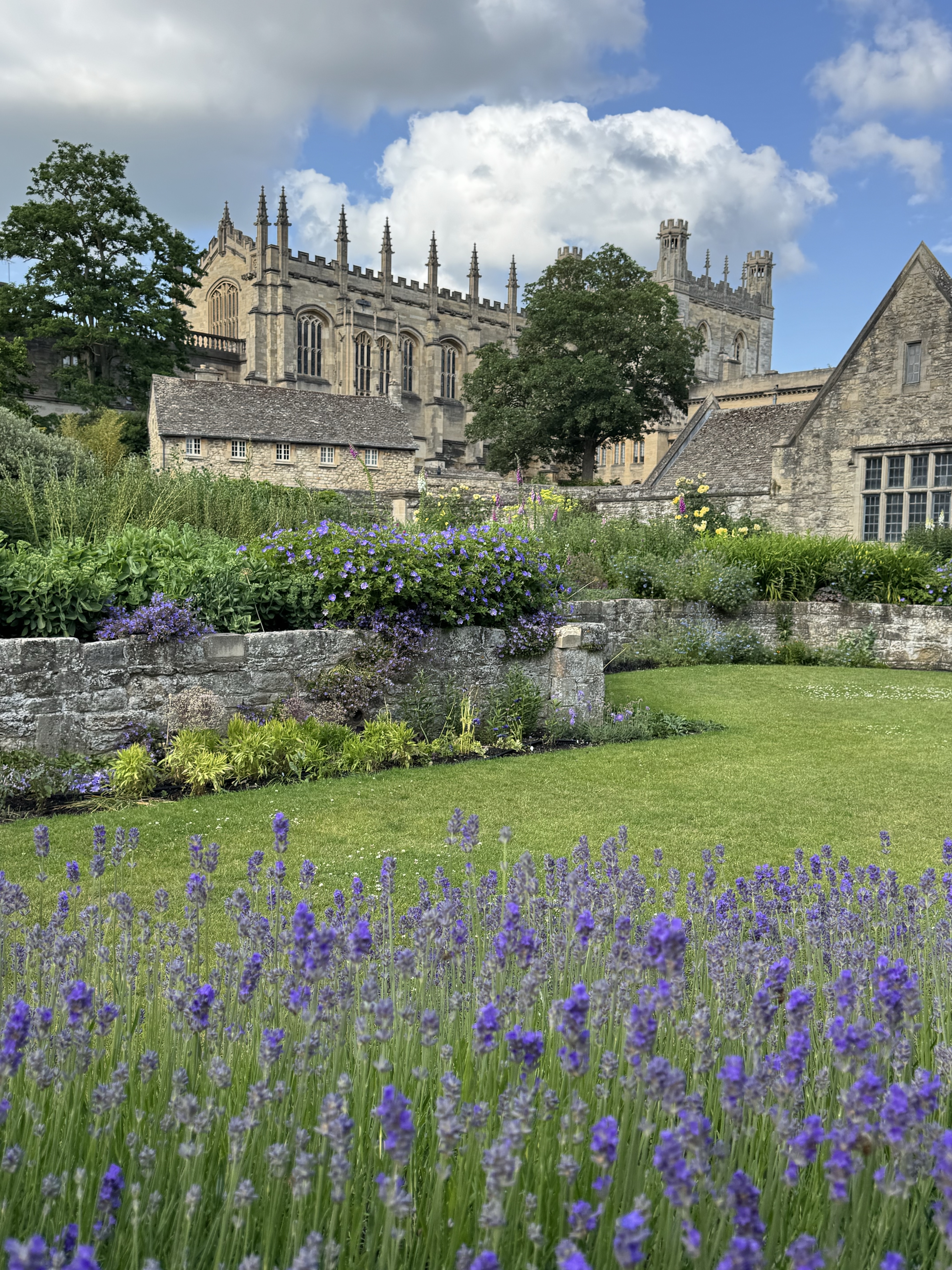
Oxford’s history stretches back over a thousand years, making it one of the most historically significant cities in England. Its name refers to the town’s early role as a crossing point over the River Thames, i.e., where the oxen can ford the river. Oxford then rose to prominence in the 12th century as the University of Oxford was being formed. There is evidence of teaching as early as 1096, making it the oldest university in the English-speaking world and the world’s second-oldest university.
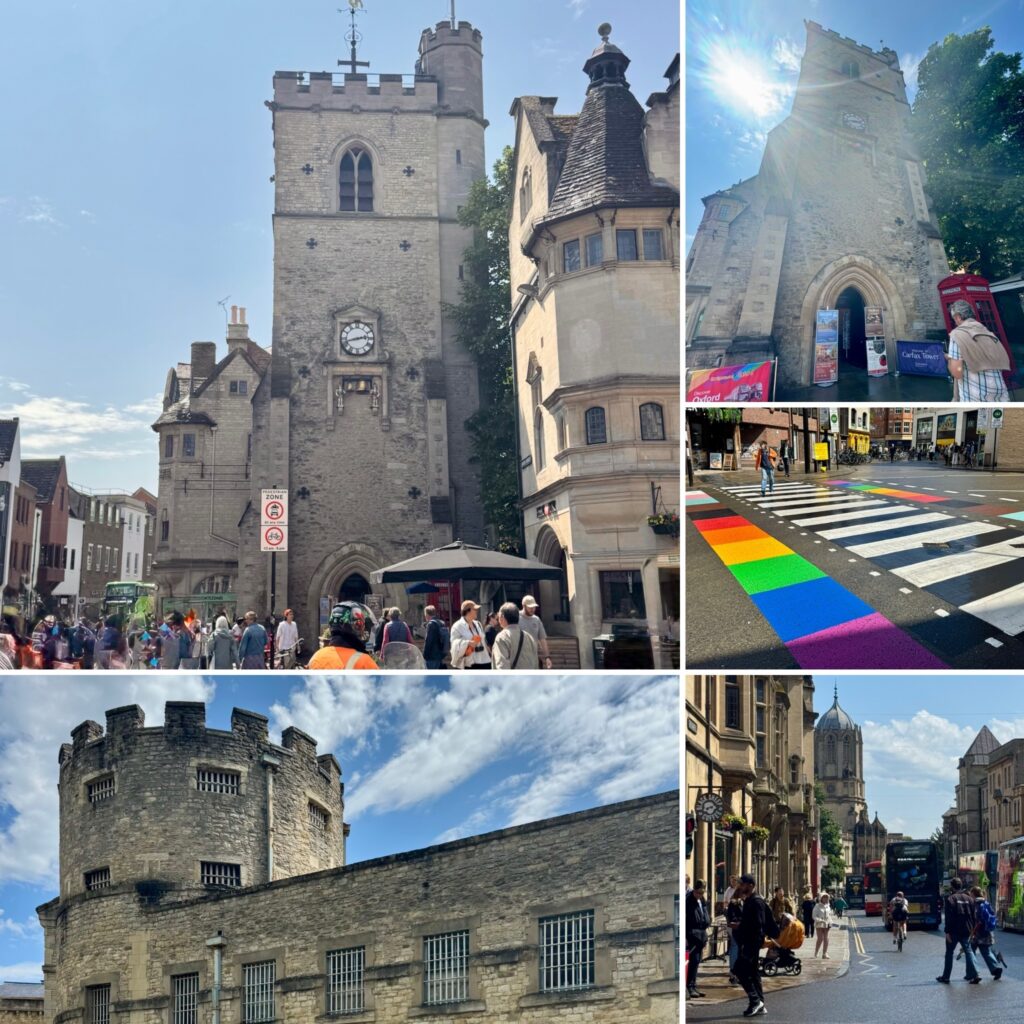
After being in small towns all week, Oxford felt busy and crowded once we stepped off the bus. Feeling a bit hungry, we luckily started our walking tour at the outdoor market in Gloucester Green (adjacent to the bus station, and open Thursday through Sunday). It was hard to choose between all the international options but we ended up devouring chicken tikka fries and a plate of pad thai.

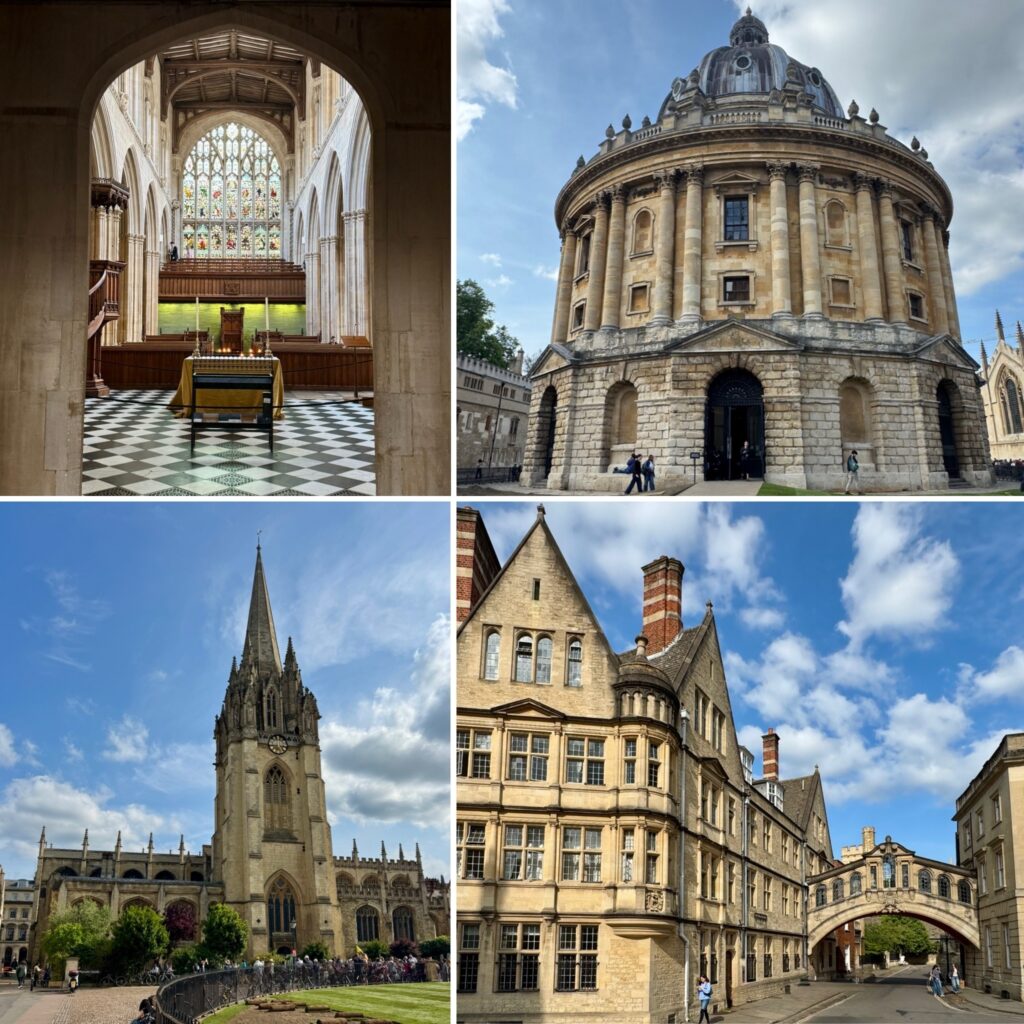
The city center is small and the major sights are all clustered closely together. So it was easy to continue our exploratory walk after eating. We started with the old stuff. The oldest building in Oxford is the tower at St Michael at the North Gate, which was built around 1024 and was also used as a jail before being incorporated into the church.
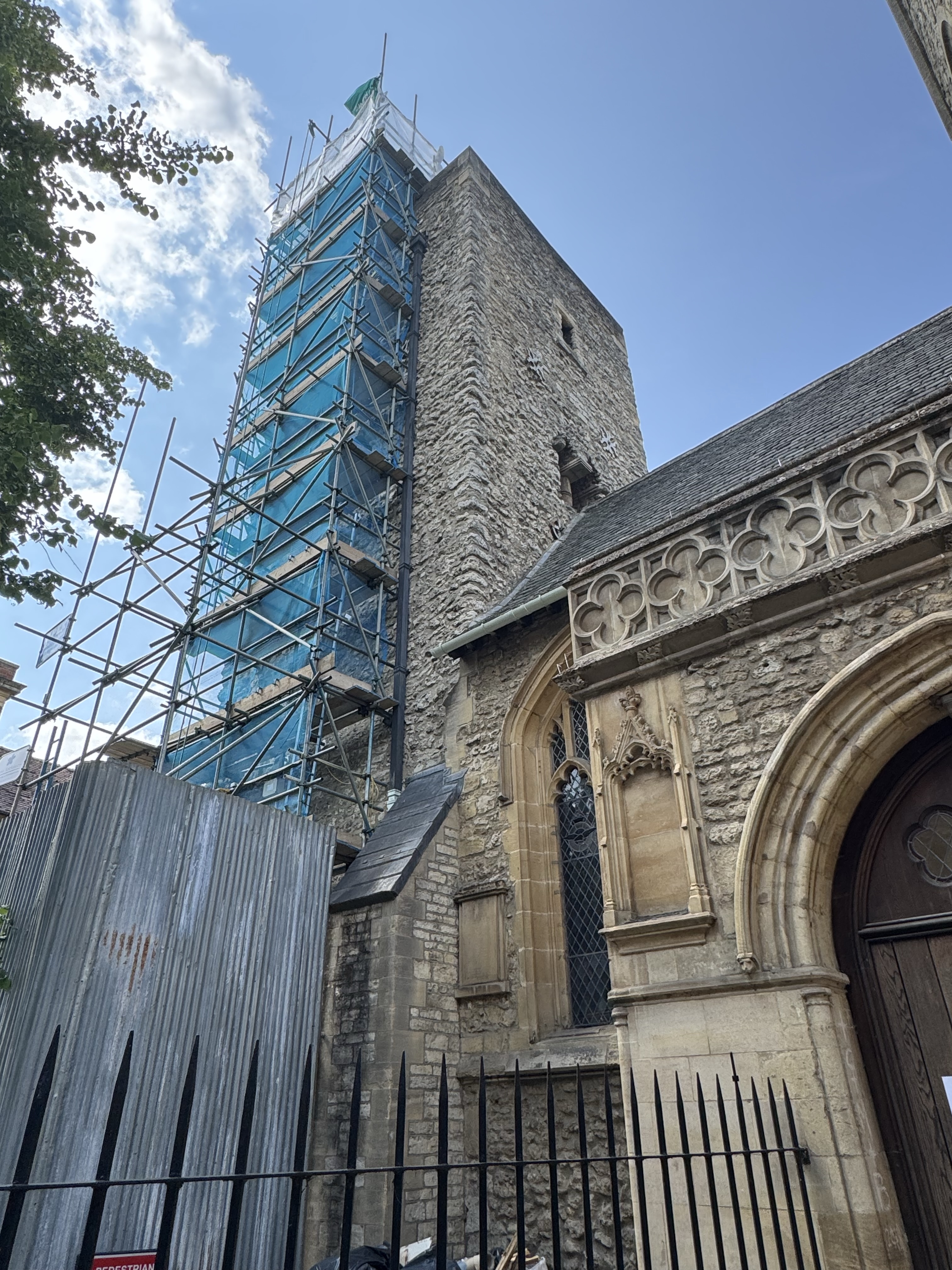
We then walked around the outside of the colleges of Oxford, enjoying the gorgeous architecture and contemplating all the great minds that also walked these path ways over time: C.S. Lewis, Tolkien, Oscar Wilde, and even Dr. Seuss!
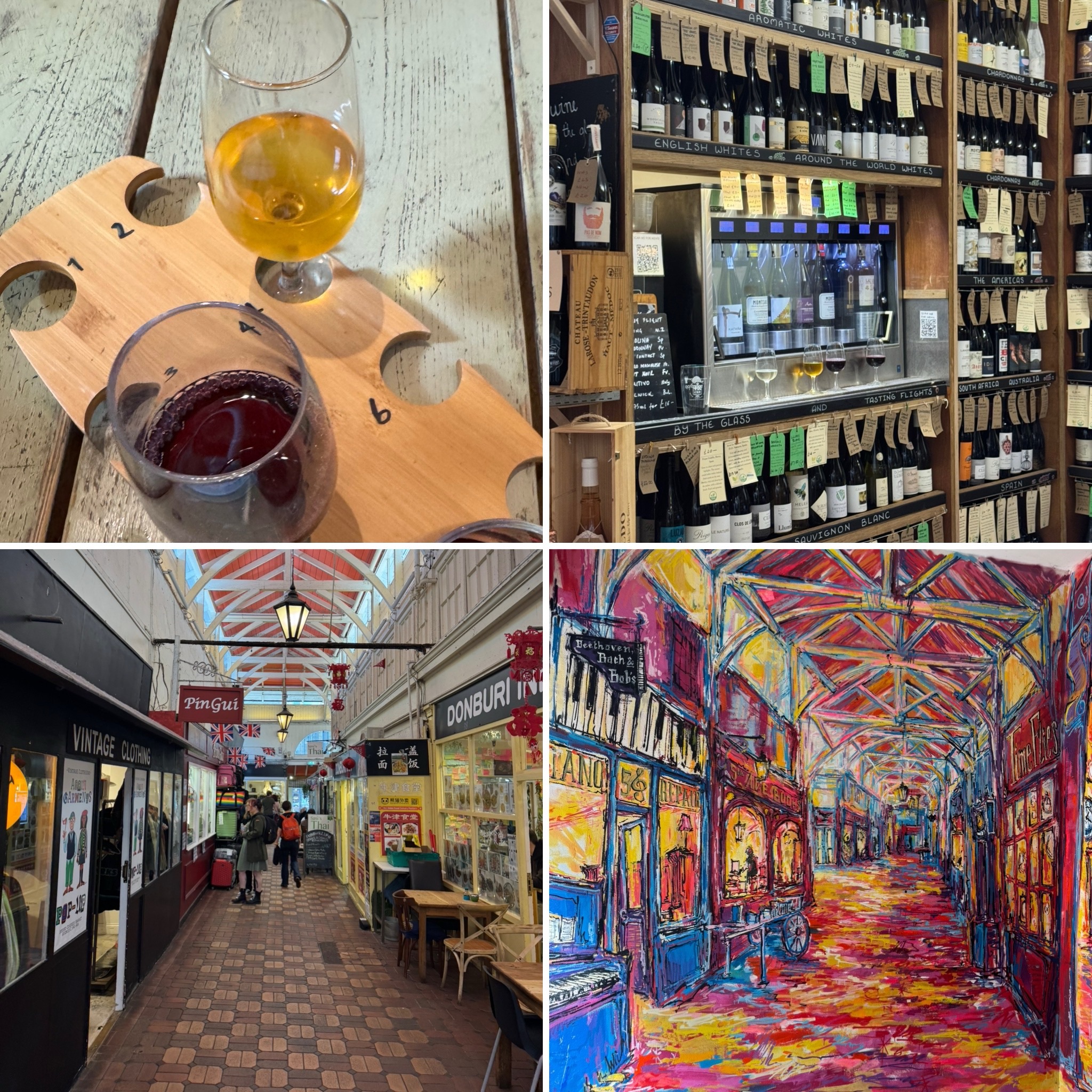
We strolled down the streets and into the Covered Market, where we enjoyed a wine sampler.
Walking back to Broad Street, we entered Blackwell’s bookstore, with its expansive basement. One of the most impressive book stores I have ever visited!
We liked Oxford so much that we went back the next day to tour the Bodleian Library.
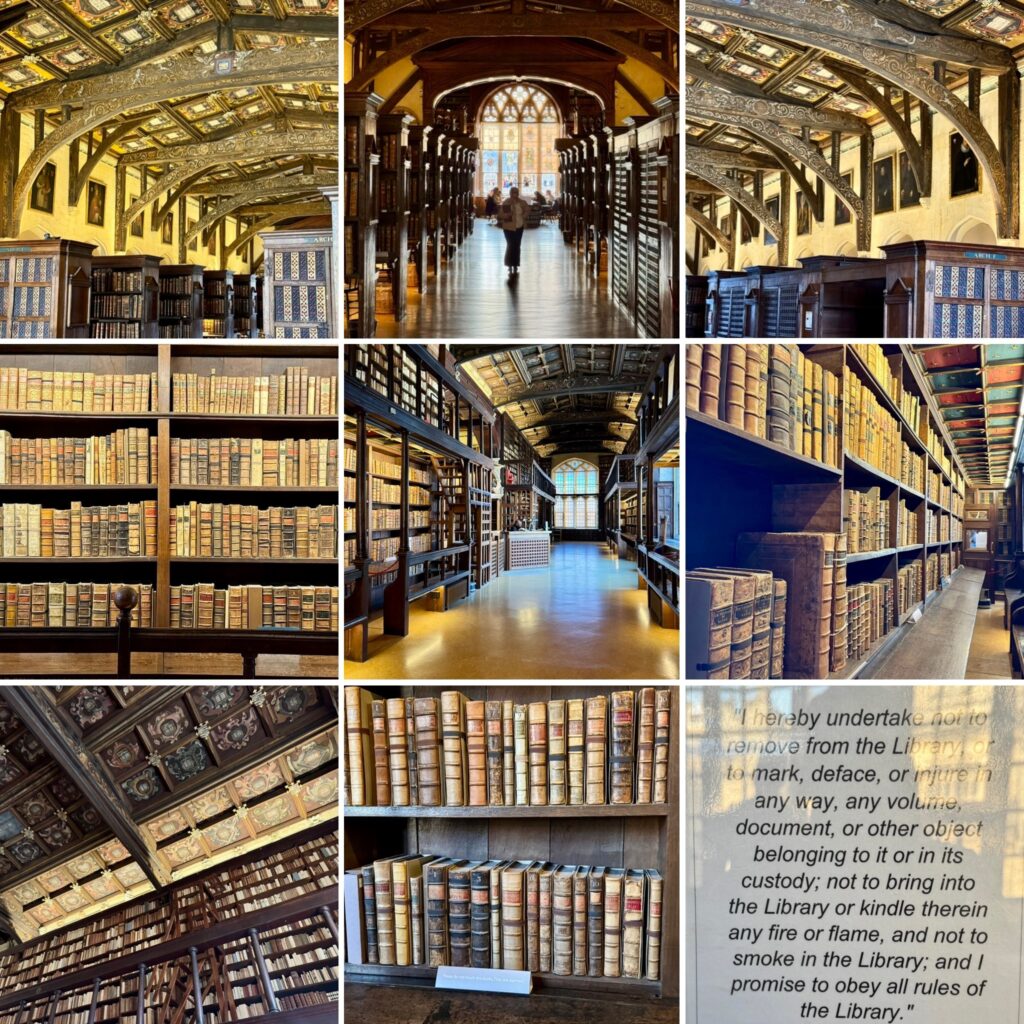
It is 400 years old and breathtaking! You have to buy a ticket to enter so we bought a guided tour of the Divinity School room and Duke Humfrey’s (medieval) Library. The tour started at the Divinity School then we were guided upstairs.
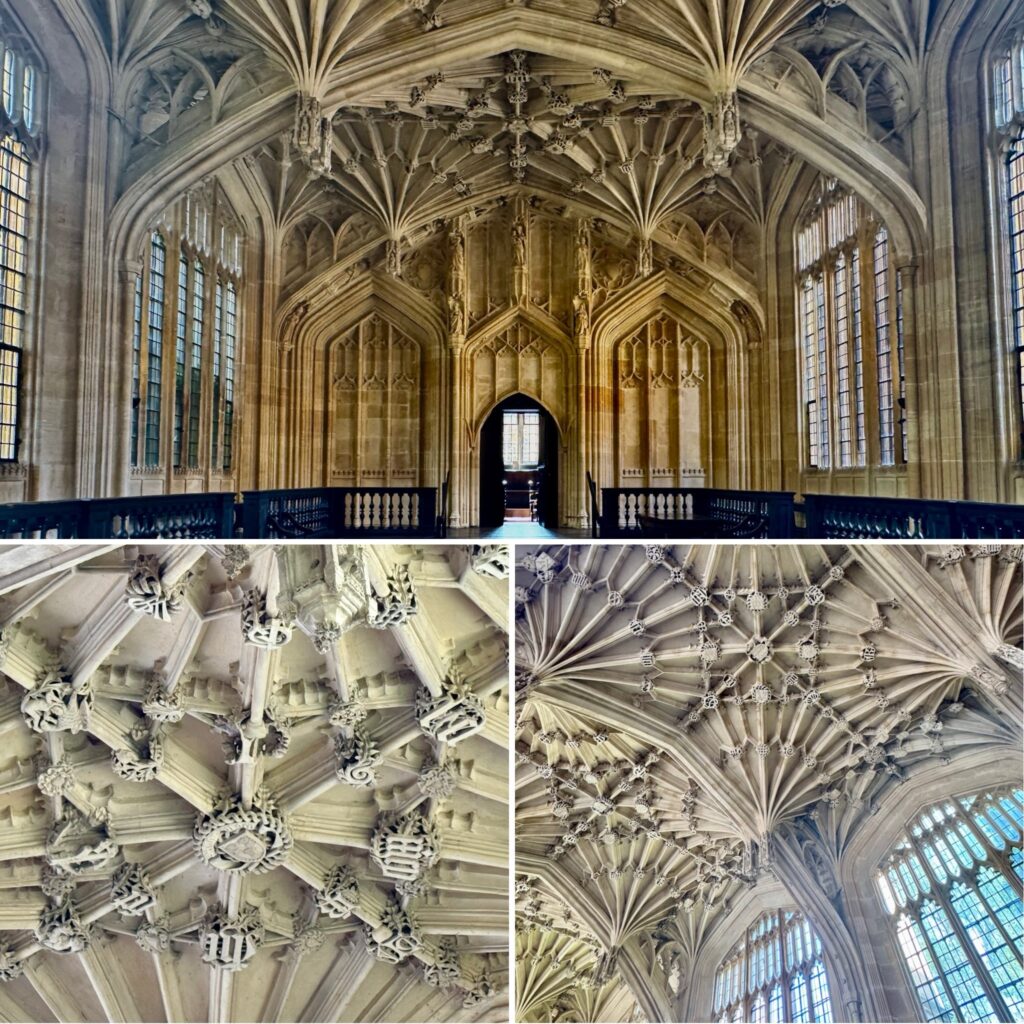
The “Bodleian Library” can refer to a single building, a set of buildings, a conglomeration of 26 university libraries, or the total collection of nearly 14 million printed works! The main medieval building contains only some of the liberal arts collection.
Much of the collection is available online, for free, at the Digital Bodleian.
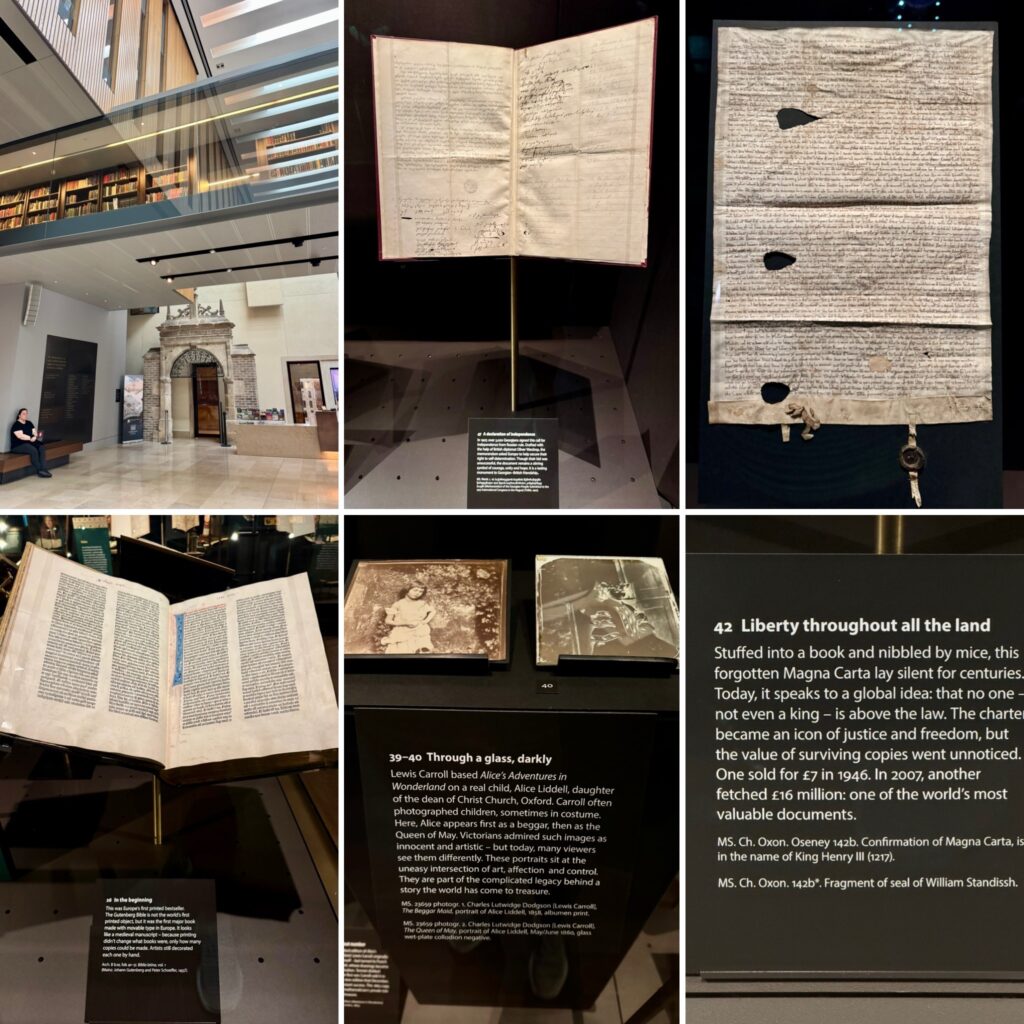
After the tour, we walked over to the Weston Library, which has temporary exhibitions and a collection of treasures, all free to enter. To quote Corey “there was so much cool shit!”
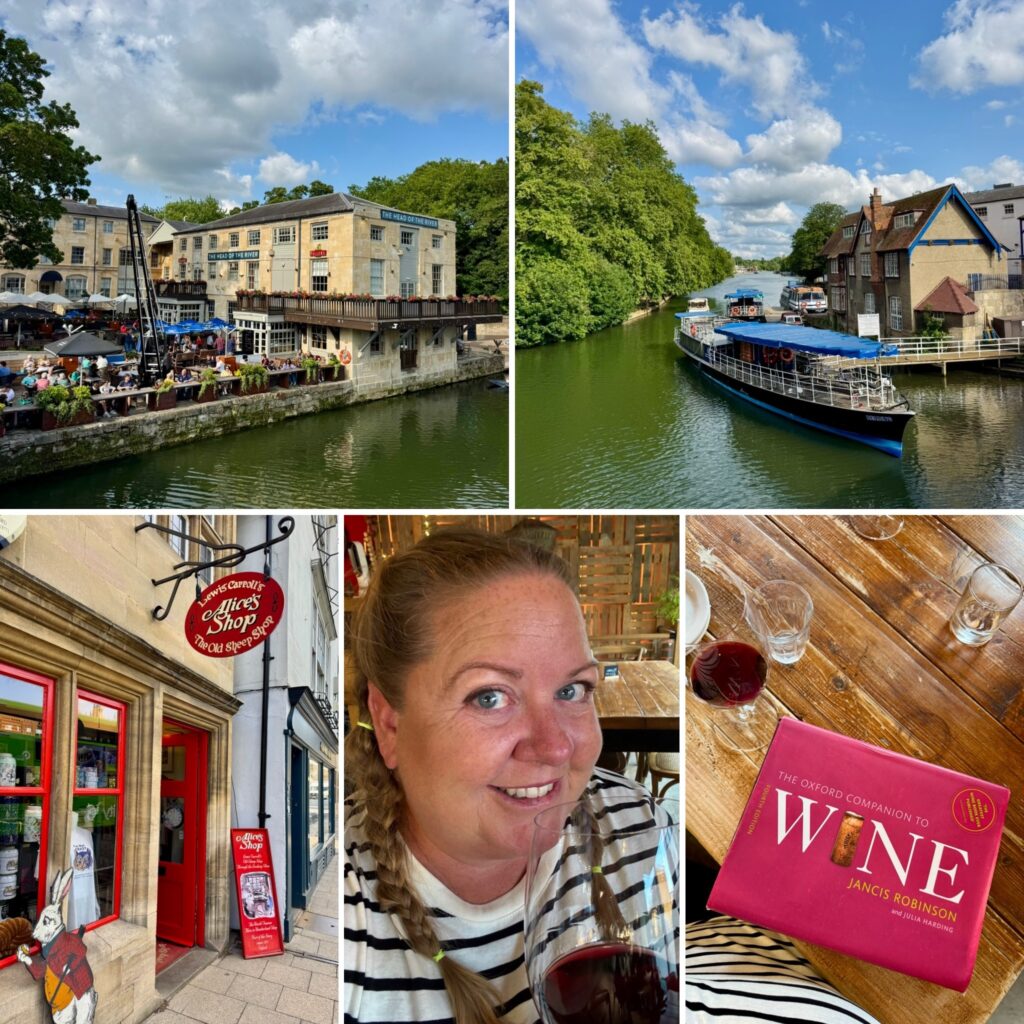
We strolled through town while the sun shone brightly, thankful for the showers to be over. We briefly checked out the Folly Bridge that crosses the Thames River. Soon enough it was time for us to enjoy evensong at the Christ Church Cathedral.
The funny thing about time. Christ Church Cathedral runs on Oxford time: a whole five minutes behind London time. Before clocks were standardized across England, each town kept its own time by the sun and Oxford still uses this practice.
Both Oxford and Cambridge are comprised of a number of autonomous colleges, with almost 40 colleges at Oxford. Each typically has beautiful grounds and buildings, as well as a chapel, and a tour of either university town is not complete without visiting the grounds of the constituent colleges.
Christ Church Cathedral is a church that is not only the main church of Oxford town, but also the chapel for Christ Church College. The complex is stunning and on most nights of the week, visitors and parishioners can attend evensong – a short choral presentation of worship in a setting made for soaring voices. (Monday nights are spoken worship, not evensong.) Evensong is held at 6:05 PM, again, five minutes after the turn of the hour for Oxford time.
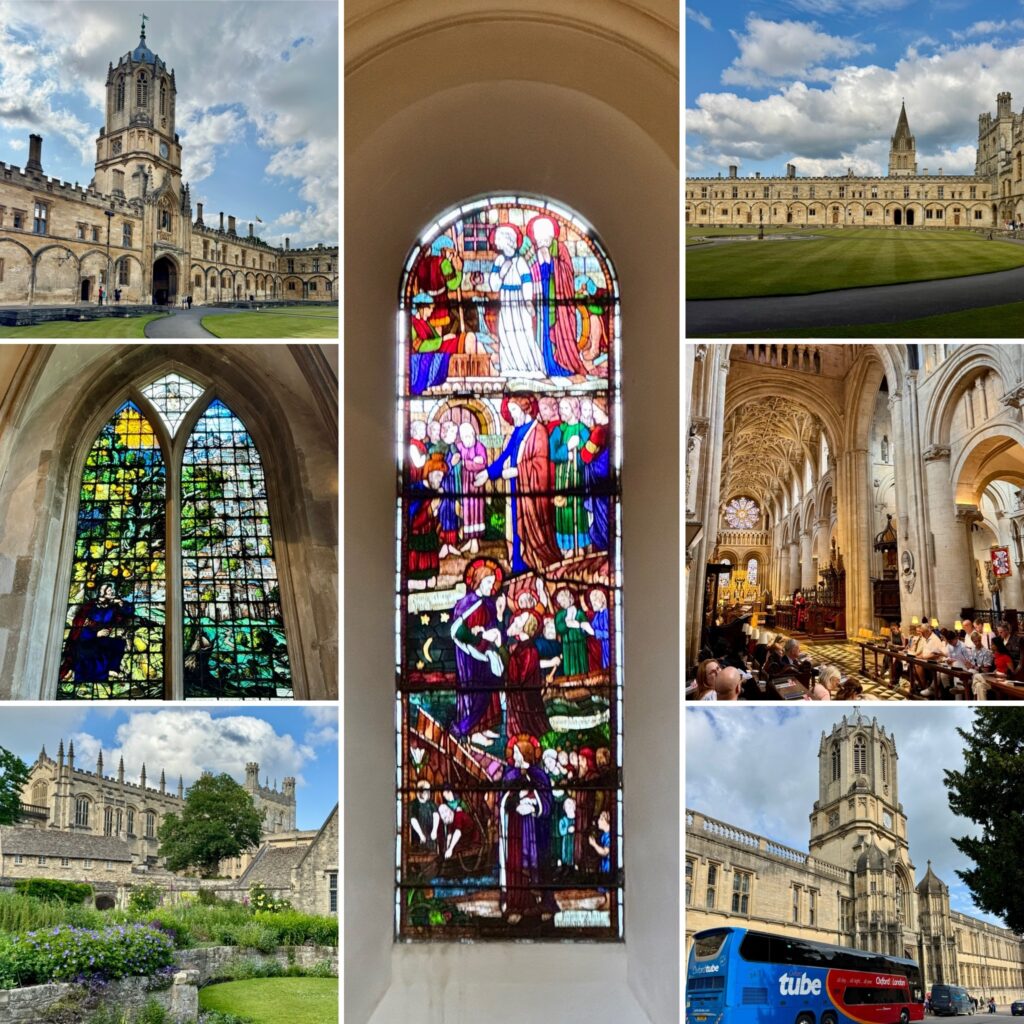
The church itself was beautiful with late afternoon light beaming through the stained glass and the choir was delightful. Neither of us knew about evensong until we listened to a podcast from Rick Steves that spoke about it. I know we’ve gushed in recent blogs how much we appreciate his app and free city walks, but the information is so helpful.
We had seen a poster for a free jazz concert at another college, but we could not find public access to the chapel there. (In retrospect, we should have used the intercom instead of just trying to find a way to sneak in.) So instead we went to a wine bar we had passed along the way. Above our table was the Oxford Companion to Wine. What a fabulous reference book! Once we have a house again, we want to buy one. We spent an hour drinking and studying obscure grapes.
Our evening ended with a special candlelight compline at Keble College Chapel. Evensong is the evening worship and compline is the worship to complete the day. A wonderful experience in an ornate chapel, followed by an invitation to the college bar for port and hot chocolate.
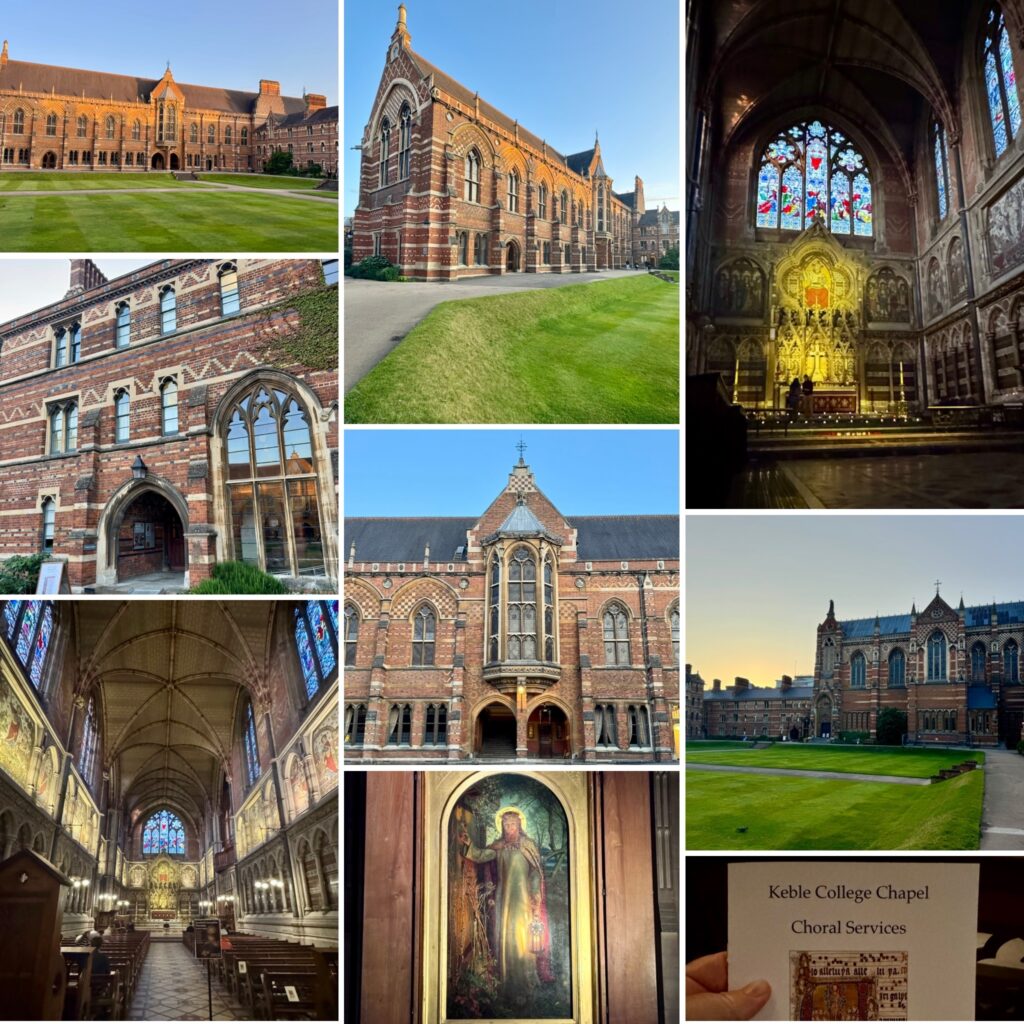
The Keble choir was all college-age (no children), and the compline service had no bible readings. It was nice to compare the two services as they were starkly different but both great.
We found worship services, especially evensong, to be a great way to get beyond the gates of the colleges for a short exploration of the grounds, gardens, and chapels. Obviously it is no substitute for a formal tour, but we were in Oxford during the June exam period, and so tours were not being offered.
We really enjoyed Oxford and the surrounding countryside. I think London is a great city, but there is so much more to see in England. The towns and the countryside are just as worthy of your time.
What’s next?
After leaving the Oxford area, we head to the Cambridge area, specifically a village just outside of town called Grantchester. Following that, a few days in the coastal town of Brighton and Hove. Then we expand beyond England with a cruise around the British Isles.