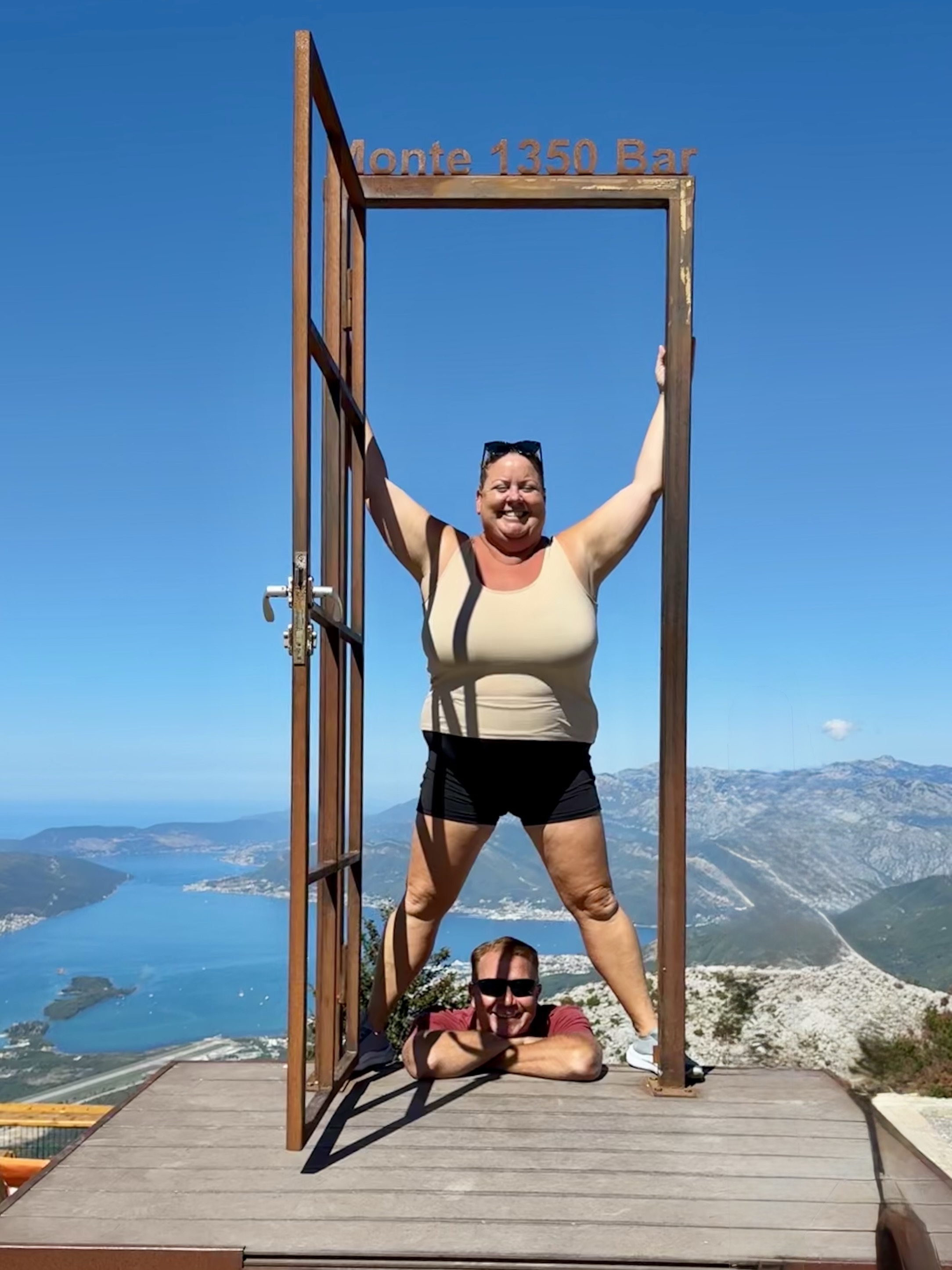
Europe has many fascinating locales tucked into mountains, nestled into the seaside, and also glorious cities that act as a beacon to seafarers (looking at you Barcelona). We decided to spend Summer 2025 in the Balkans. Montenegro fit the bill as we wanted a budget-friendly country that was out of the Schengen Zone and near the sea. It was not as cheap as we were hoping but it was reasonable and so darn pretty. Bulgaria would have been our top choice based on our summer there in 2022, but Bulgaria has now entered the Schengen Zone and the price of lodging has increased.
Apartment
I found a great apartment in a Facebook group and booked direct with the owner. We don’t usually book places this way but when possible, it is economical to skip the middleman and connect with owners directly. This is our longest nomad stay yet, just over two months. Here is a video tour of our apartment on YouTube.
We stayed in a town called Denovici (or Djenovici) which is in the Herceg Novi municipality. It is located about a 15-minute drive east of Herceg Novi proper, on the way to Kotor. We have visited Kotor twice before on cruise ship stops so we did not feel compelled to stay or visit that lovely walled city. We might have gone in for a dinner or walk around, but the public buses made that more hassle than it’s worth (more on that later).
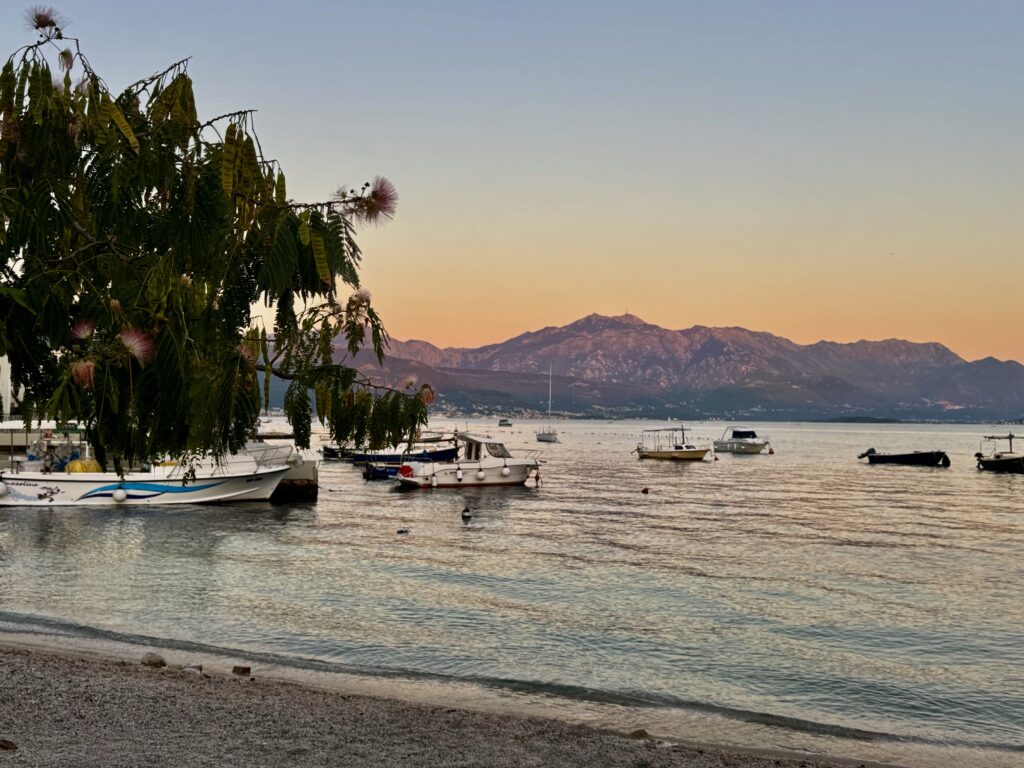
Denovici had a small beachfront road shared by cars and people, the beginning of a nearly three-mile promenade with a lineup of beach after beach. The beaches have a mix of gravel, stones, and the concrete porches common on both sides of the Adriatic. We would often just head down to the water, walk to the left, pick the first good open spot for our stuff, then plop right into the water.
We were here for rest and relaxation, so this blog will cover our activities over our entire stay. To be fair we did very little for most of it!
Herceg Novi
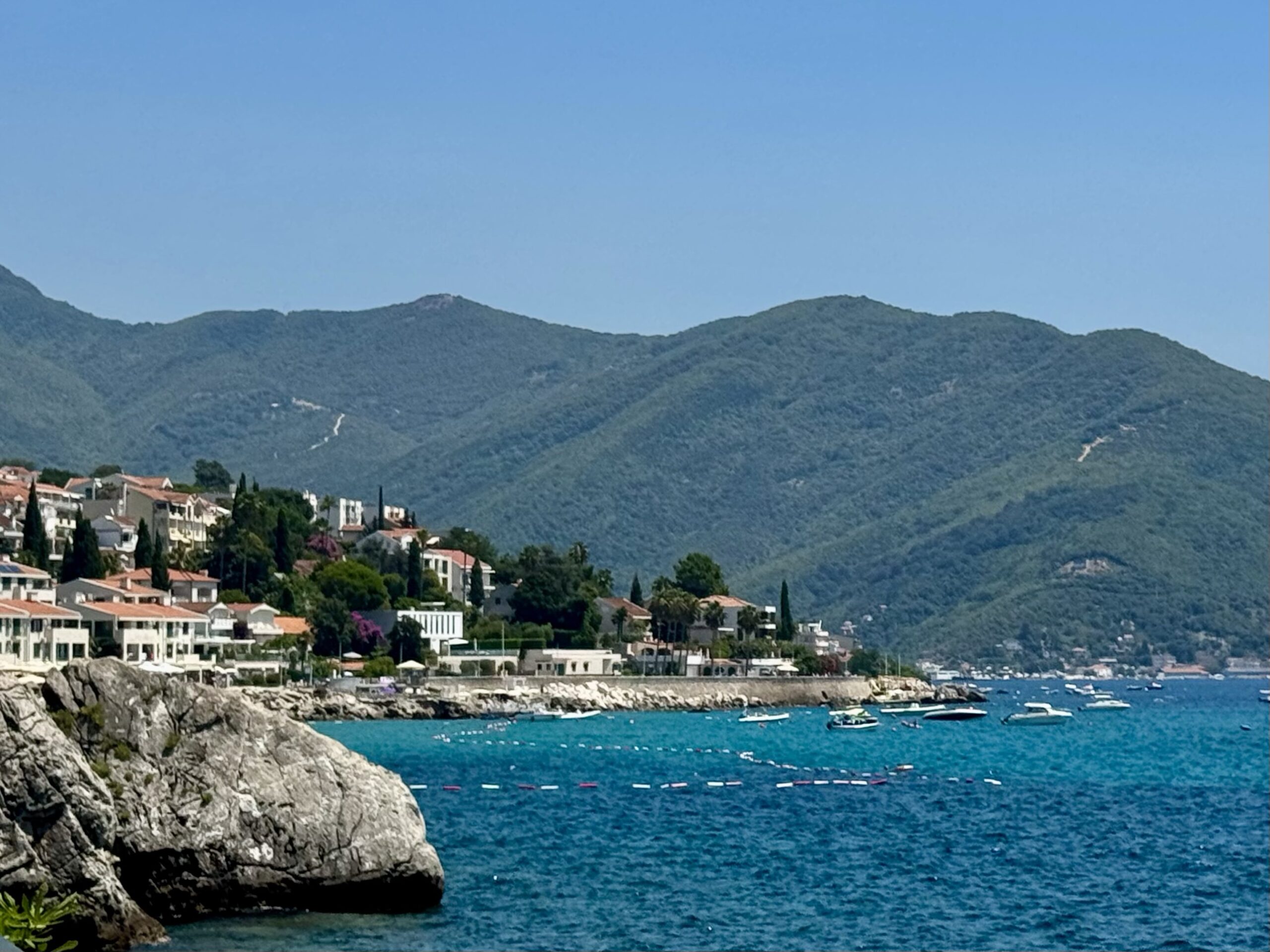
An old town that dates back to 1382 with multiple fortresses built and occupied by various empires: Spanish, Ottoman, Venetian, and others. We took the bus into Herceg Novi a few times per week to play tennis and would often swim and grocery shop afterward.
Here there is a lovely beach promenade, around three miles long, that is pedestrian only and crammed with beach bars and cafes. The promenade is on the old railway line: before World War I, the area was controlled by the Austro-Hungarian Empire, who built a network of trains in the area that later became Yugoslavia. This coastal route must have contained lovely scenery, but the trains were decomissioned in the 1960’s and 1970’s. In last year’s off-season, the promenade was renovated, and it is a great walk, including a small portion through an old railroad tunnel.
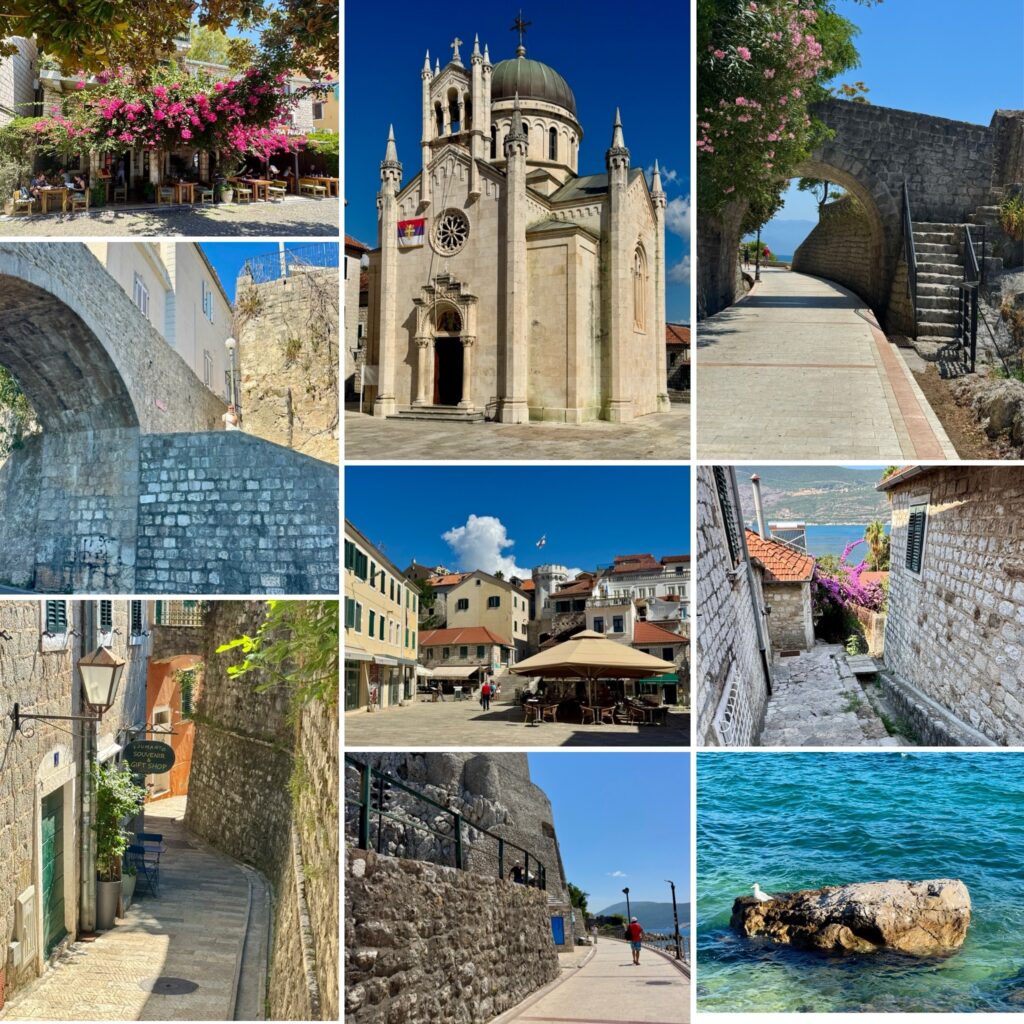
Herceg Novi is an old fortified city but smaller than nearby Kotor or Budva, and with the city walls mostly demolished. It’s also much hillier! There are three fortresses that “guard” the city – from the bottom to the top.
The narrow stone streets are fun to walk when it’s cool outside, so we avoided it in the midday heat of the summer. There are also several churches that abut small medieval squares, a historic clock tower, and plenty of little alleys.
We would not recommend a special trip to Herceg Novi, but if in the area, it makes for a nice day of exploration.
Healthy Habits
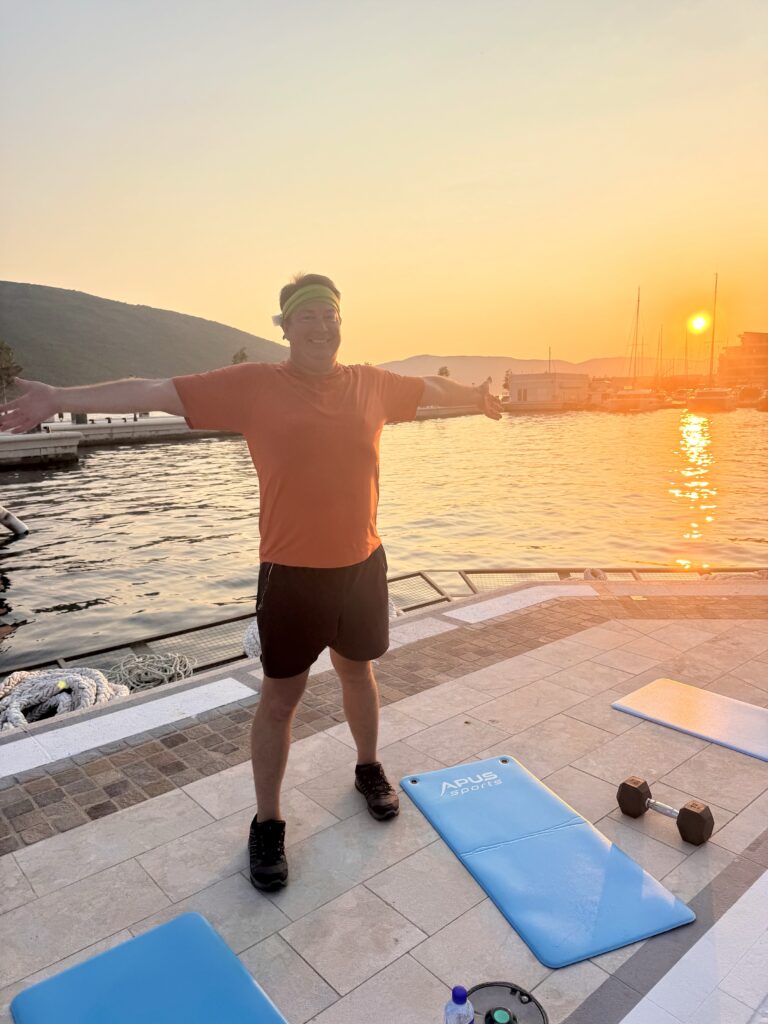
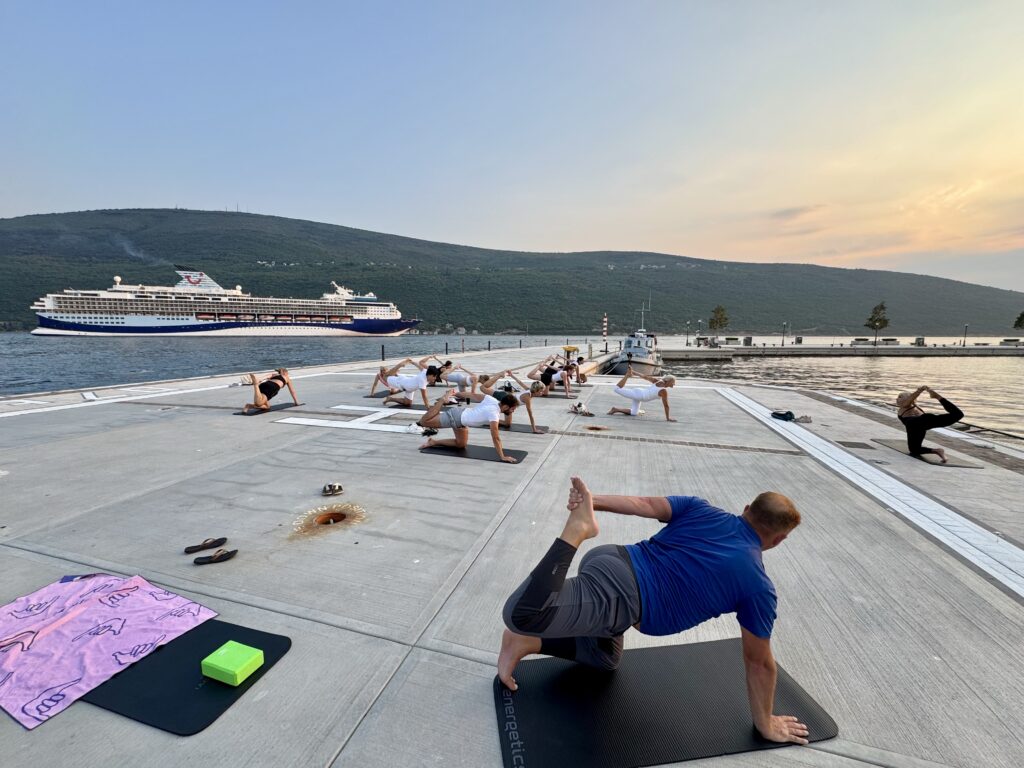
Our intentional summer slowdown included a renewed focus on healthy habits. This included sunset yoga weekly at Portonovi Marina and Resort. This is a fancy-schmansy marina complex just down the hill from our apartment (about a five minute walk). Portonovi is a redevelopment of an army barracks that was completed in 2019, and now brings in megayachts, and guests like Michelle Obama, Novak Djokovic, and other members of the rich and famous. We went down there for the 10 euro outdoor workouts, as well as to buy groceries at the “fancy” grocery store or have the occasional nice dinner or drinks.
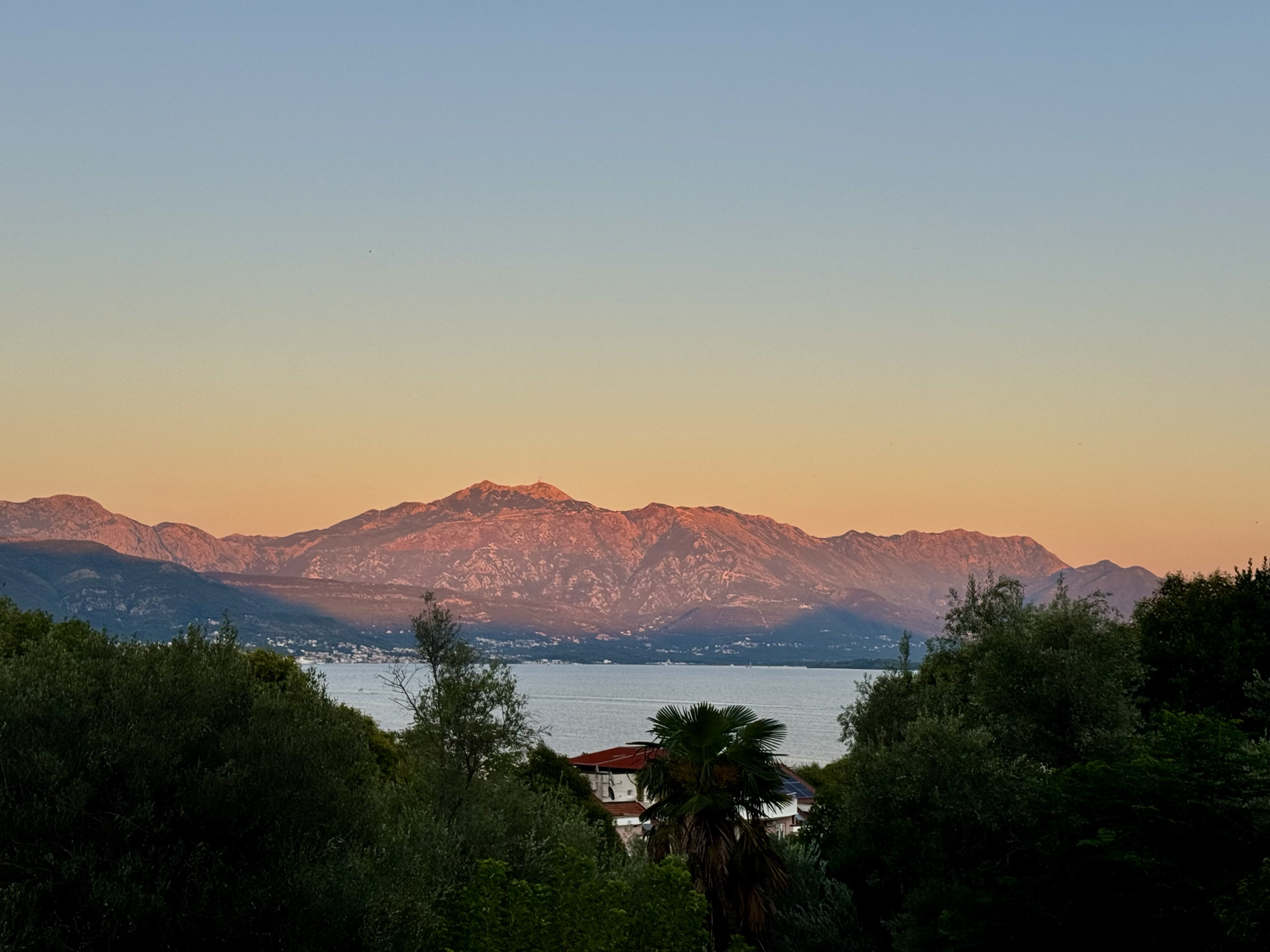
The mountains melt into the Bay of Kotor and there are villages scattered throughout the seaside. Some of the towns have promenades that link to the other villages making it a nice walk. We took plenty of seaside walks on both promenades: the Herceg Novi one that goes from Igalo to Zelenika, and the one closer to us that goes from Portonovi to Kamenari.
The Adriatic Highway, really a simple two-lane road, runs parallel to the coastline, typically halfway up the hillside from the coast itself. Buses and cars travel on this road that goes all the way around the Bay. There is generally no sidewalk and there were portions where the only place to walk is between the traffic lane and the retaining wall for the coast: not a pleasant experience.
Activities
Wine night
One of the first events we attended was a Portonovi Wine Night, at the Portonovi Marina. There were dozens of producers, each pouring a number of their selections, meaning there were literally hundreds of wines to choose from, with bottles from Serbia, Bosnia, Croatia, Slovenia, Italy and Montenegro.
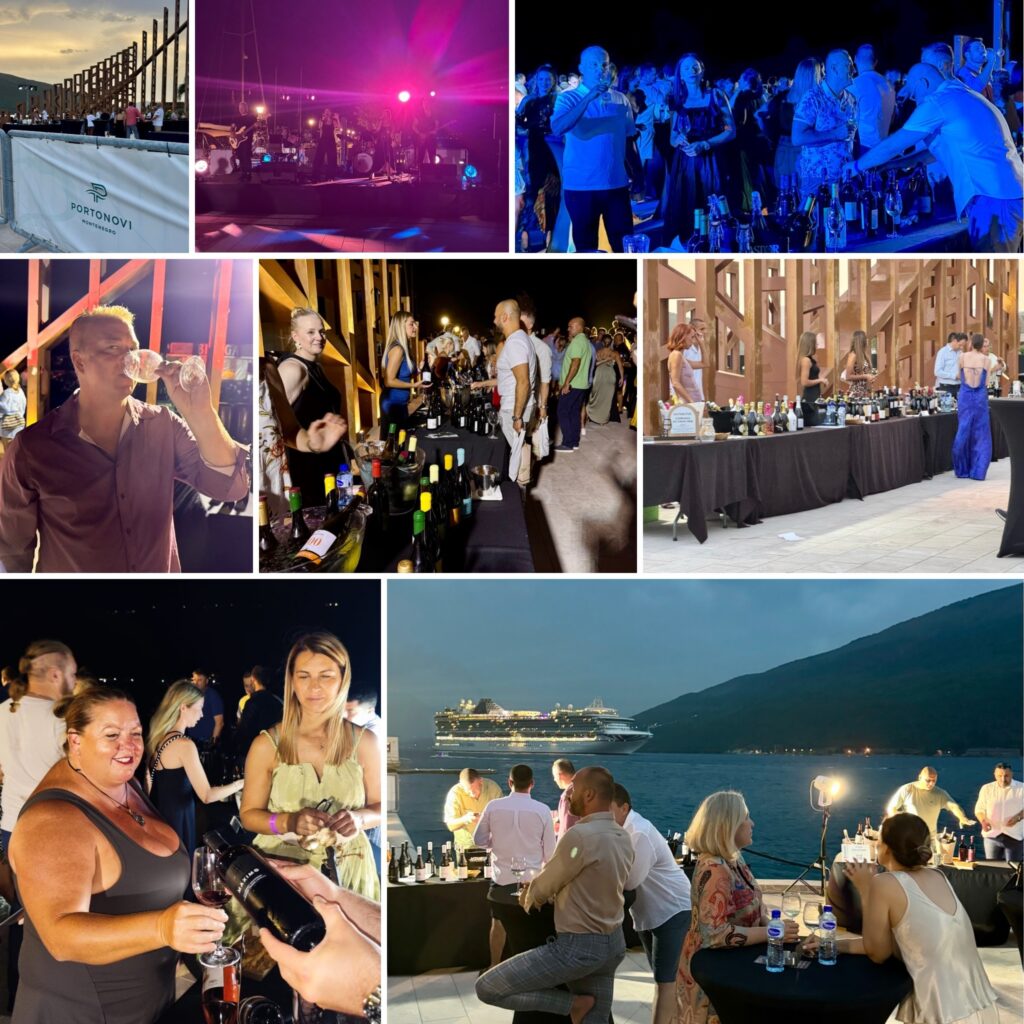
The event cost 40 euros and included unlimited pours, although the only food was some crackers. It was a really nice evening to explore Balkan wine, meet new people, and enjoy the shores of Kotor Bay at night.
Kraken Underwater Cellar
Our next adventure around the bay was another trip to meet up with nomad friends. We met Chris and PJ in 2023 in Hua Hin, Thailand, and have stayed in touch although we have not seen them in person since that time.
I had found a unique restaurant from Instagram and even though it was a little pricey, I had to try it!
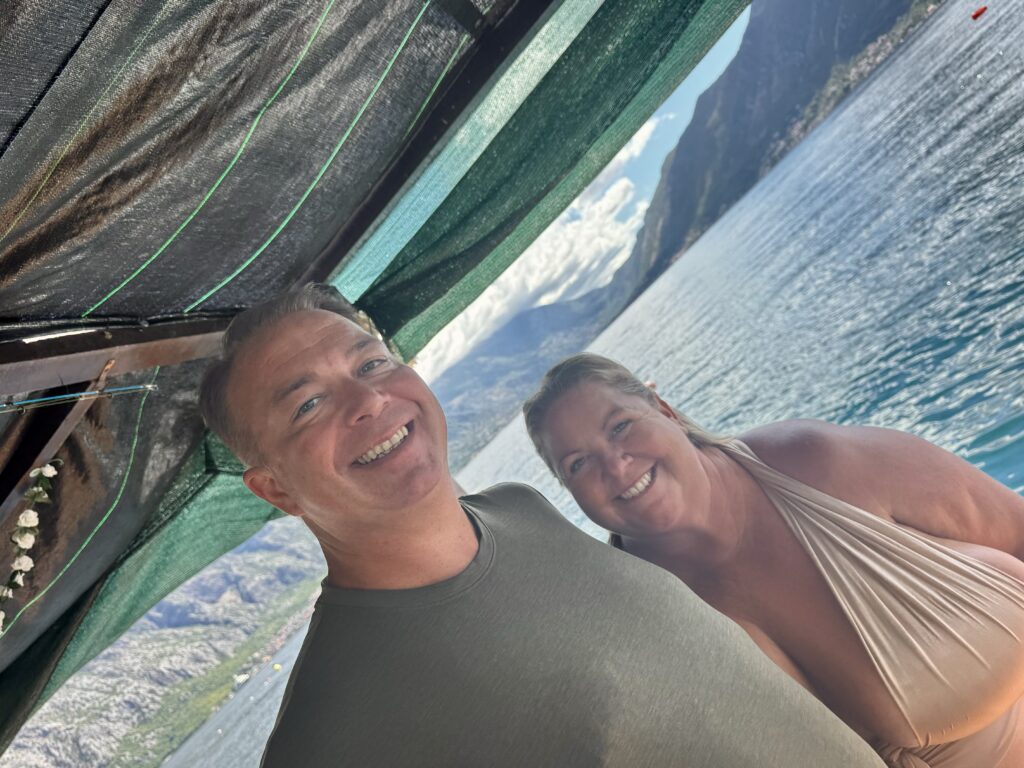
Getting public transportation to that side of the bay was again difficult, and after a morning of missed connections, we ended up taking the Blue Line to the end at Kamenari, then calling a cab and spending 30 euros for the remainder of the journey.
The restaurant was in a serene location, floating about 100 yards from the shore. Here’s a reel I made showing what it’s like to visit a floating restaurant with an underwater wine cellar. Their wine is produced at a small private vineyard, sealed with wax, then aged at the bottom of the bay. This process keeps the bottles cool and dark, and they claim that the pressure and action of the sea ages them three-times as quickly as a land-based cellar. We shared a bottle of red wine (a field blend of vranac, cabernet sauvignon, and merlot) and fresh seafood with friends. It was a superb afternoon of catching up, swimming, eating, and enjoying local wine.
Tivat
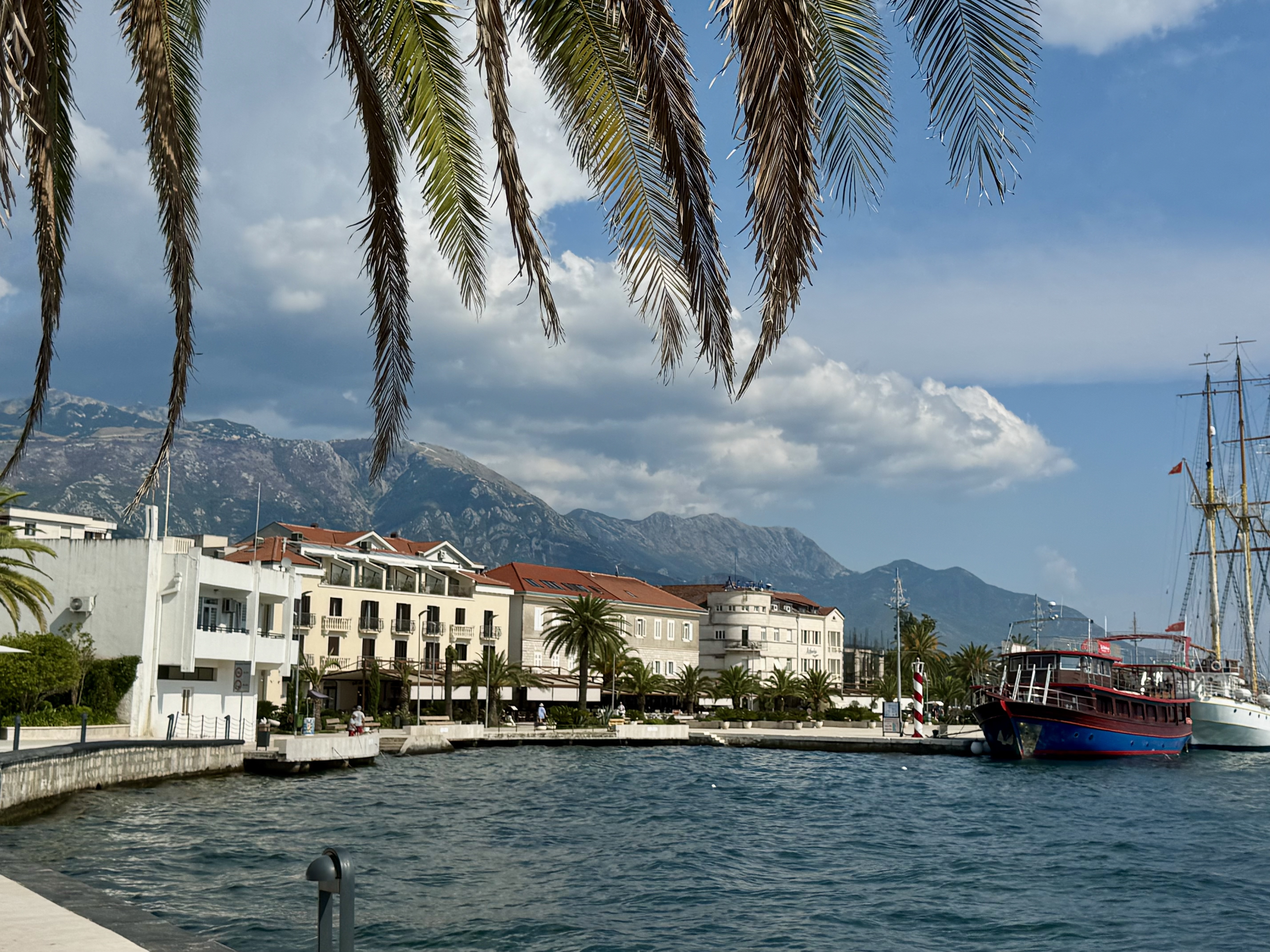
We spent an afternoon walking around the city and marina of Tivat. We reached it by taking the bus down to the Kamenari ferry. Predominately a car ferry, we were not sure how it worked for walk-ons. Basically, you just… walk on! No joke, pedestrian passengers just need to avoid getting hit by cars as you walk up the same ramp the cars are taking. Then once the boat lands at the other side, you find a spot between cars and walk off. It sounds crazy but it works.
On the other side (Lepatani) is the Blue Line bus stop to Tivat.
In Tivat, we enjoyed strolling down the boardwalk and taking in the bay views. There were big yachts and tall sailing ships. We stopped for cocktails and a swim. Then had dinner at Macaroni, a restaurant specializing in fresh pasta dishes. Pasta in the Balkans is often either overcooked or reheated (Istrian Croatia and Slovenia being an exception), but this was al dente and delicious.
It took us several hours to return home. We have enjoyed riding the Blue Line bus on the Herceg Novi side, but the Blue Line on the Kotor side is another story. (They are two different municipalities.) We waited two hours at the bus stop, with at least two “phantom” buses. We normally would have walked the 45 minutes to the ferry, but the road is narrow, lacks sidewalks, and it was getting dark. By the time the bus arrived, it was completely dark. We eventually got home, but we did not repeat this excursion because of the unpredictability of the buses on the Kotor side.
Risan
We took a day trip to another part of the bay and encountered similar public transportation options. The Herceg Novi Blue Line bus stops at Kamenari, leaving a 45-minute walk to get to the start of the Kotor Blue Line service at Kostanjica. That walk was at times stunning and other times treacherous. Here’s a video of our little walk.
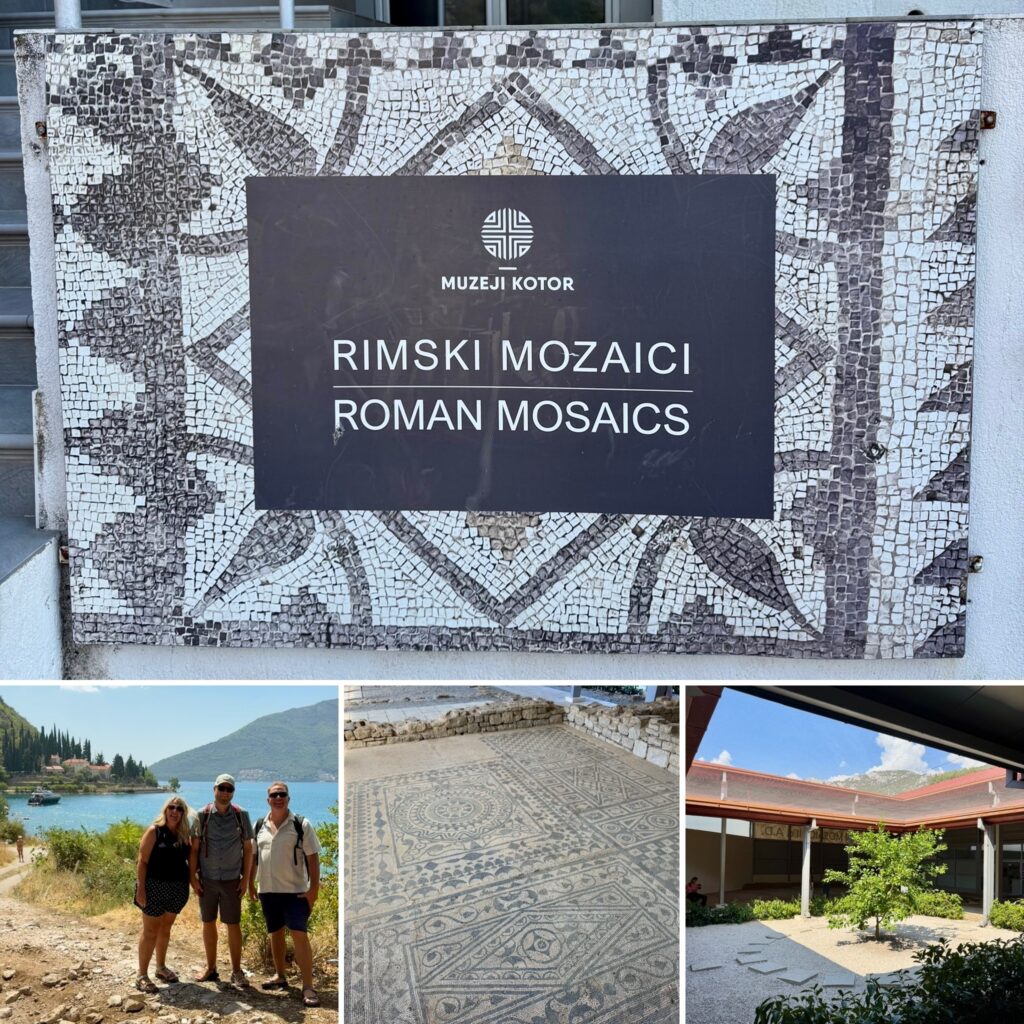
Risan is a small town based on a very old Roman settlement. We met new friends, Ashley and Ben, for coffee, then wandered over to the Roman Mosaic museum, which is what we all really wanted to see. We then checked out a small church and some of the narrow historic roads and buildings in the town. Of course there were a number of kitties lying in the street and asking for their photo to be taken.
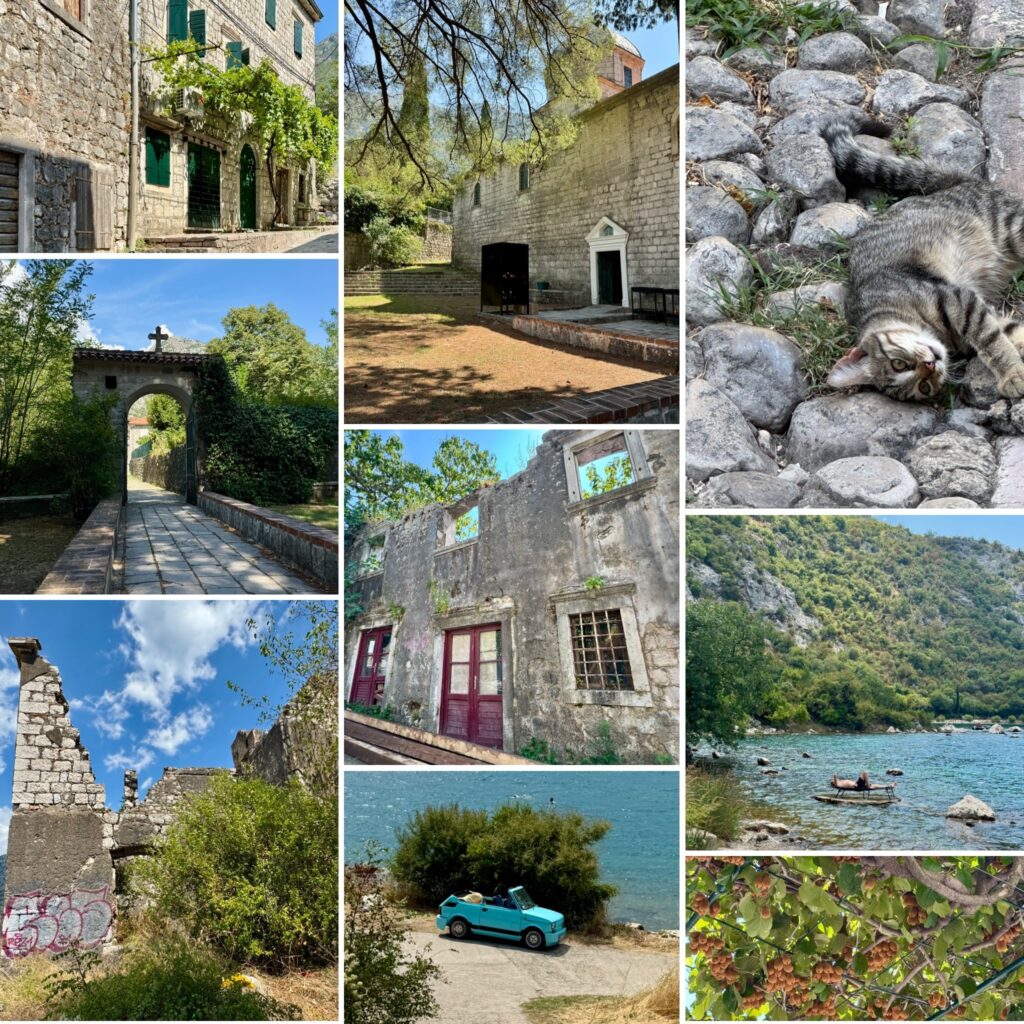
As the sun rose and the day got warmer we decided to pick up some sandwiches and snacks for a beachside picnic. So we walked out of town and found a beach to enjoy lunch. Unfortunately at midday there is not a lot of shade to be found. Instead of swimming there, we walked another 20 minutes to the cute village of Perast.
Perast
Two years ago Corey and I had wandered by a beachfront spot called Pirate Bar that was closed for the off-season. We hoped to return this summer to enjoy cold drinks and a long swim. But for 2025, Pirate Bar has been rebranded as Olivana Beach Bar: Cipriani Bellini. We were not certain whether this was an actual Cipriani establishment (it is not listed on the Cipriani website), but we were certain that it was now a bougie day club, with sunbed rental between 30-45 euro depending on the day. It seemed to be doing well with the touristy guests but was expensive for us.
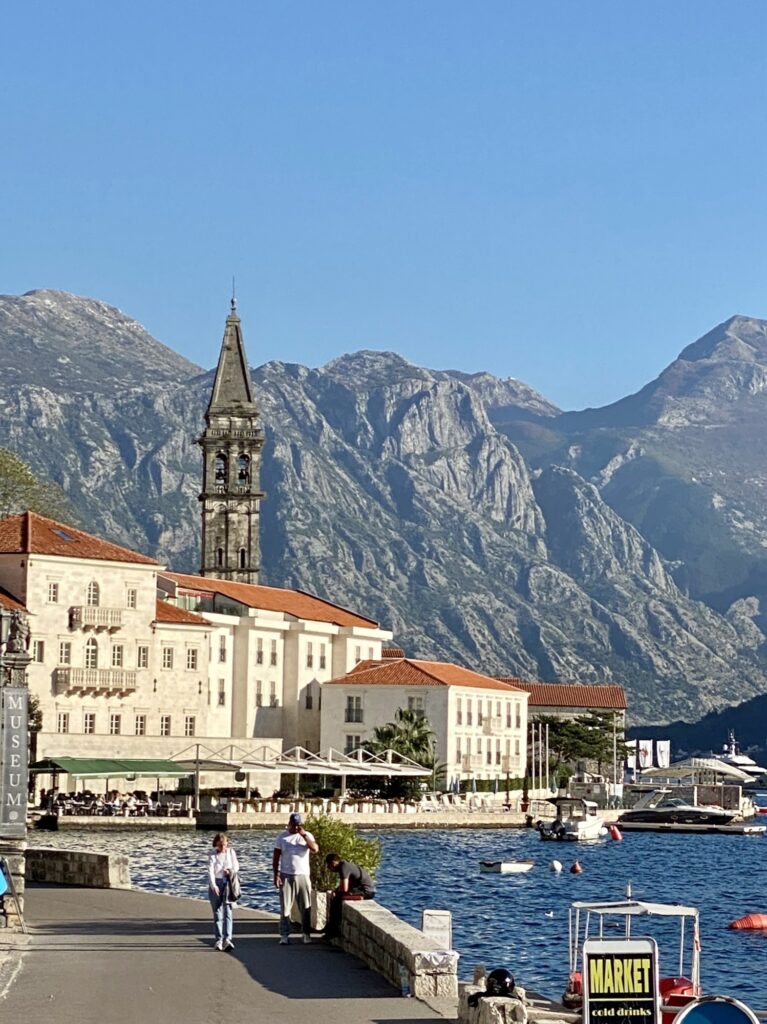
So we took our chances and walked to the public beach on the other end of town. It was a 15-minute walk that felt like an hour because of the heat. What the Europeans call a “beach” at the Adriatic might be described in America as a sidewalk. But there were stairs from the concrete into the water and we were all eager to refresh ourselves in the sparkling clear waters.
Perast remains a cute village with Venetian-inspired dwellings and churches. It is also packed with English-speaking tourists. But one can still have a Balkan experience in Perast by buying beer at the mini-market and people-watching on the promenade.
Our friends hopped on a bus back to Kotor after relaxing for a few hours. Corey and I took a chance on boating back “home” to Denovici. Ecoboats run routes to/from Perast that link up with another route, and eventually the last boats of the evening head back to Portonovi where they dock overnight in the marina. This routing worked out great for us, and the last segment across the bay felt like a romantic boat cruise, as we were the only guests onboard. The sunset was a creamy orange and red; a gorgeous finale for the day. The best part was that we only had a short walk up the hill from the marina to our apartment.
Exploring by Car
We rented a car for the week at the beginning of September. Busy season is winding down so there is less people on the road and cheaper prices for the rental. We went with Starcar because it was well rated, well priced, and they dropped the car off where we were staying!
Our first trip was to Montenegro’s cultural capital, Cetinje, with a stop along the route in Njeguši. We picked up our friends, PJ and Chris, and approached the most thrilling part of the day: the notorious serpentine road above Kotor.
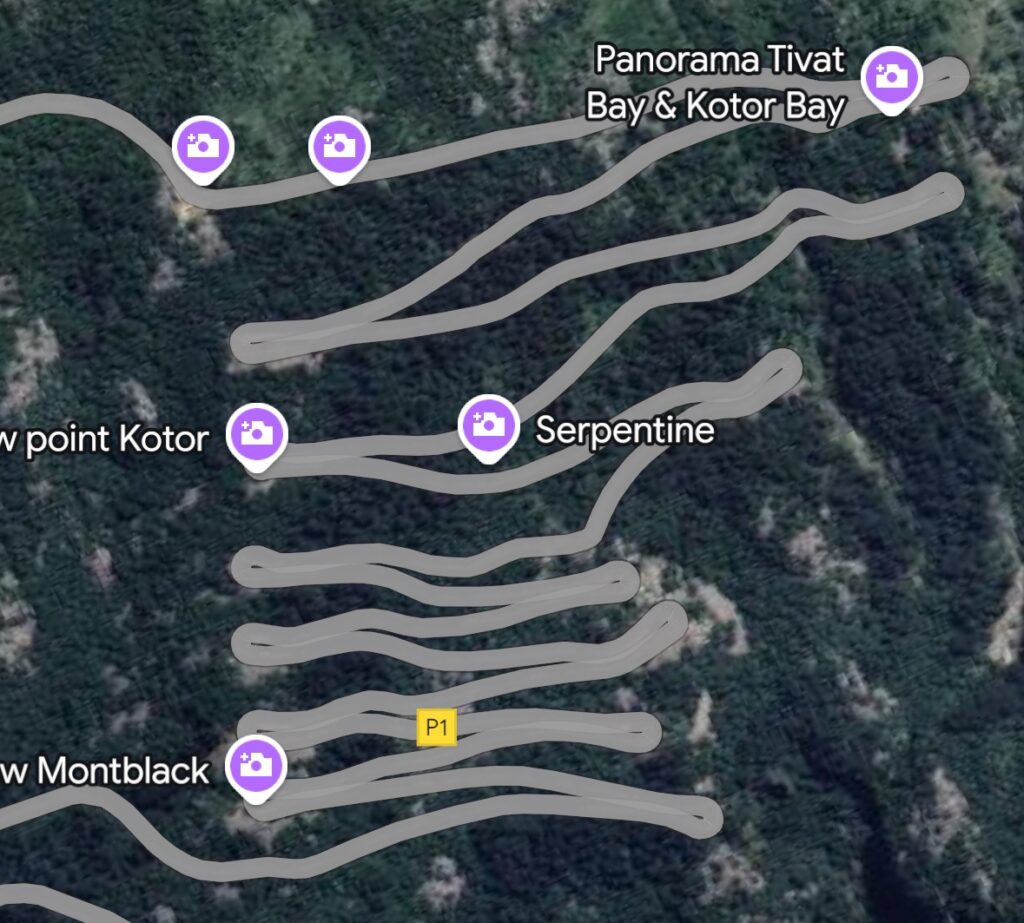
From what we have seen online, this road sits on a caravan path that goes back to the Roman era. Turned into an actual road during the time that Kotor was controlled by the Austro-Hungarian Empire, it is barely larger than a single car but allows for two-way traffic. In the eight kilometer climb up the steep incline, there are 16 hairpin turns. We got an early start to avoid traffic and our efforts were fruitful. It was still scary as shit. Everyone in the car helped us navigate, reverse, and spot space for the car to inch past other vehicles. We only got into one tricky incident. We were going up a straight incline and a large box truck was headed down. The nearest pull out was behind me, so I put the car in reverse to find space. The old Yugo behind me did not like my plan and came up on my tail, trying to push me to move ahead. I reversed more and into the center to give him room to pass me on the right. As he hastily hit the gas, we could hear the right side of his old clunker scrape against the concrete barrier wall. With cars continuing the pile up behind me and the truck urging me forward, I then navigated past the truck. With only centimeters between those truck tires and barrier walls, and the the passenger mirror gliding barely above the wall, we squeaked past without a scratch. There was a huge collective sigh of relief from the car as we continued up the mountain. This road offered beautiful views but also some heart-stopping driving!
Njeguši (lovelingly referred to as Hamtown by us)
This little town is famous for their smoked meats and cheeses, especially the famous Njeguški pršut. It is made in a similar fashion to Italian proscuitto, but with the addition of a beechwood smoke.
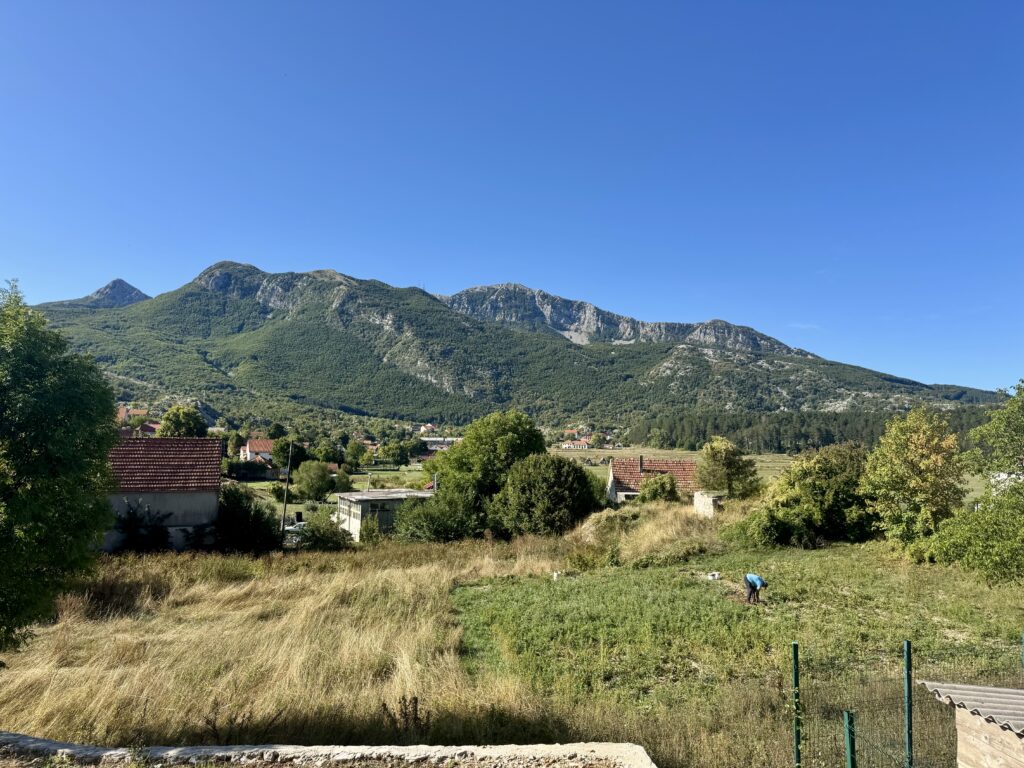
Corey loves smoked meat and cheese, so this village was top of our tourist list! After climbing from sea level, the serpentine highway eventually descends a little into a lovely valley with elevation at 3,500 feet. The lovely A-frame cabins and stone houses give it an alpine feel. We stopped at a market and two different smokehouses to pick up local products. We arrived in the morning and it seemed stores were just opening, or maybe they just opened up because they heard our car passing through the one street of the town.
There are a number of signs for kiosks or restaurants selling pršut. But the production facilities are generally unmarked and the smokehouses are hidden in plain sight! We toured a small and large production facility which was a fascinating comparison. Here is a short video seeing the variety.
The small producer was Milorad Popovic. It is marked on Google Maps, and they have a kiosk streetside that is basically their garage. We asked to tour their smokehouse, and they took us inside a small building that is on the main road but completely unmarked. Inside was the small beech fire and a few dozen hanging hams and other meats.
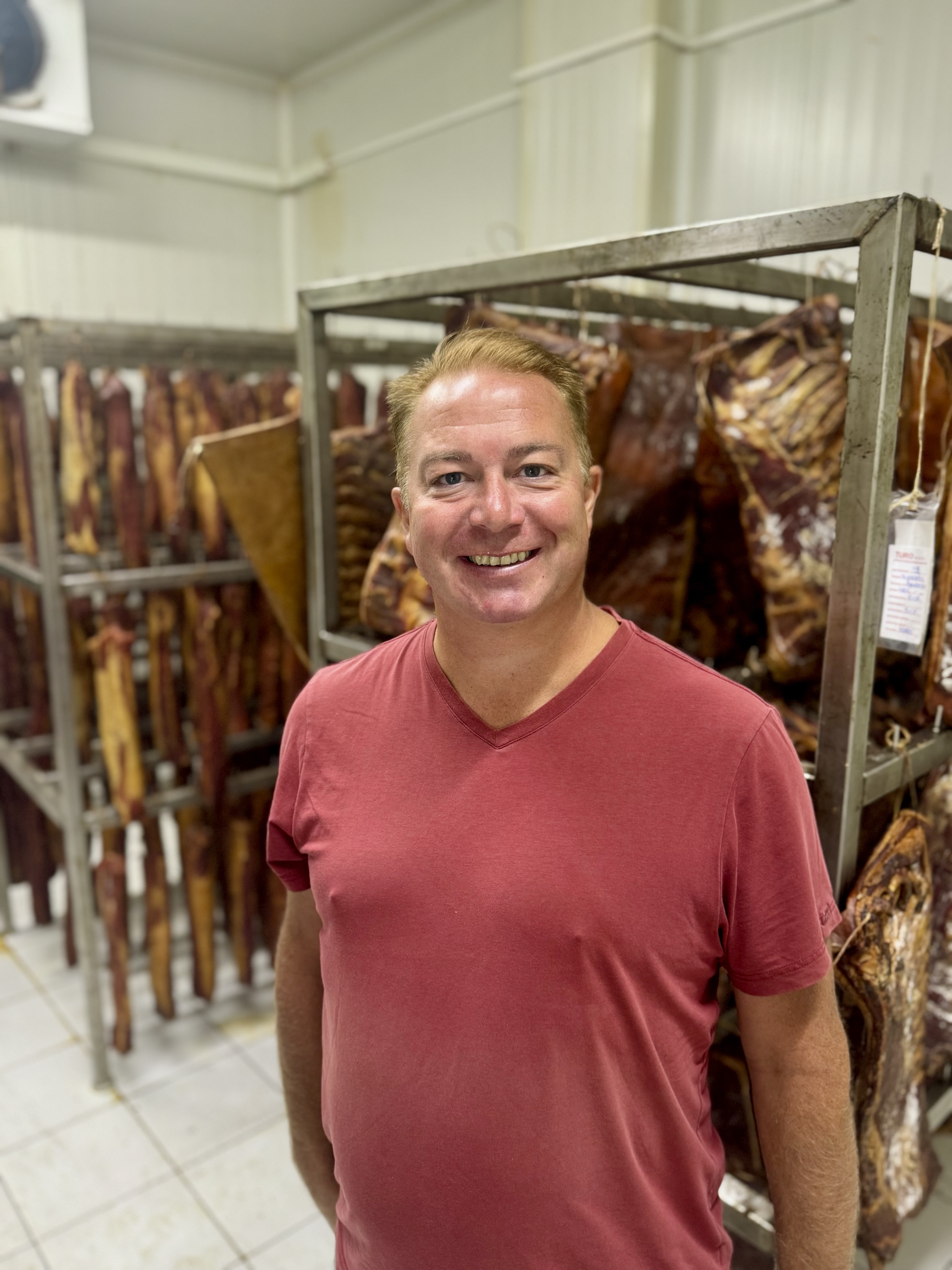
The large producer was Turo. We had tried their aged, smoked sheep cheese before and wanted to try their pršut. Like Popovic, the facility is attached to a home, and the driveway did not look like it led to a smokehouse. The location is on Google Maps but many of the photos are of an unrelated shop at the street. Instead, we went down the unmarked driveway, ignored the barking dog, and sheepishly asked if we could buy some ham. Glad we did! While they did not have the smoked cheese for sale, they did offer a truffle cheese, which was my favorite.
Between these three places, we filled the cooler with pršut, cheese (sheep and cow), govedi pršut (made from beef, like bresaola), and pecenica (smoked pork loin).
Rijeka Crnojevica
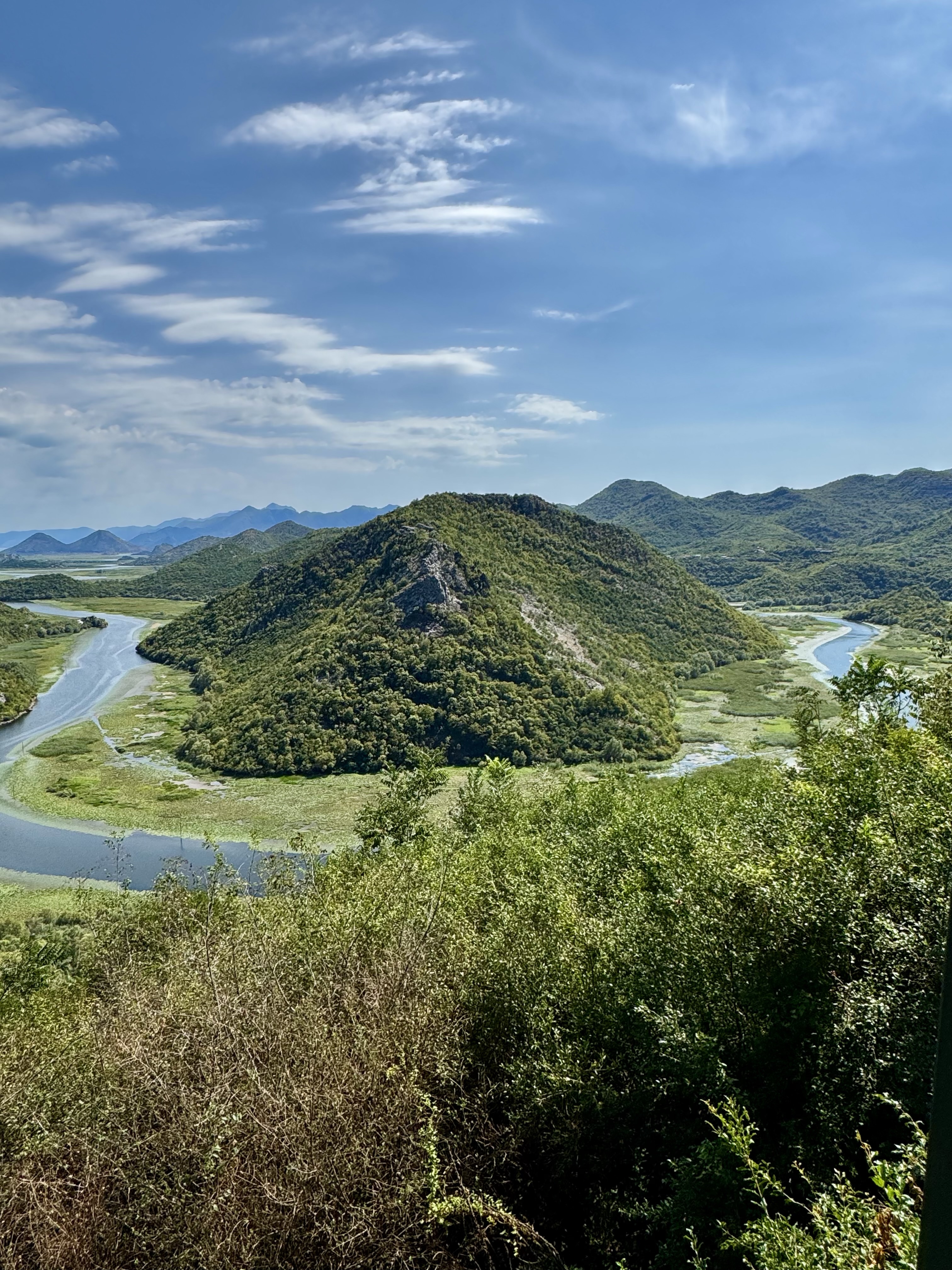
We drove about an hour to reach a quaint village on the outer river/lake finger of Skadar Lake. We lunched on the terrace of Stari Most with views of the pretty little area, including the old bridge also knwon as Stari Most. It seems many of the old stone houses in the village are derelict which was disappointing. There were more touts for boat tours than residents of the village, as the popular thing to do is take a scenic boat ride around the area. We declined and decided to admire a nice viewpoint down the road and continue on to more cities.
Cetinje
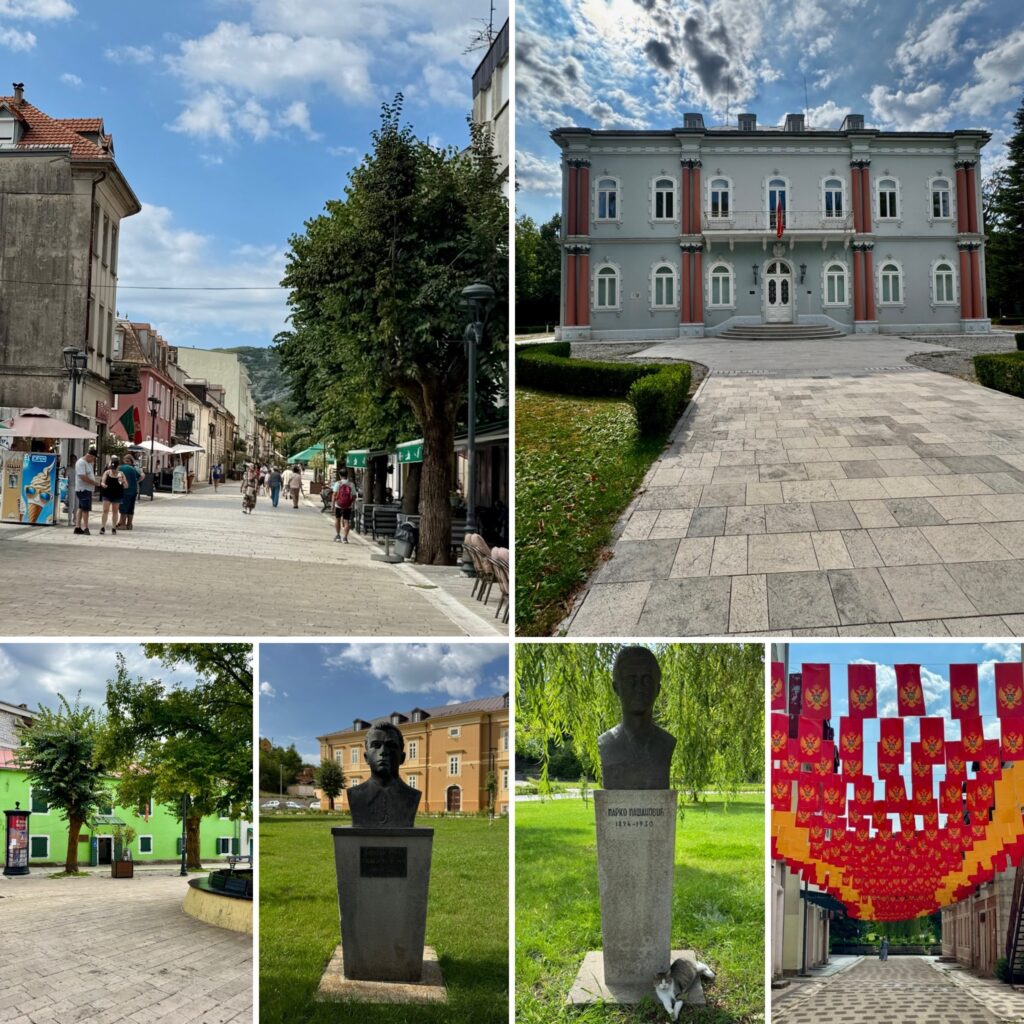
Our next stop was a brief walking tour down the pedestrian corridor in what is known as the cultural capital of Montenegro. We went in without expectations and were all impressed with the cute buildings and charming vibes. We walked by the Blue Palace, the official (ceremonial) residence of the President of Montenegro, and a few other buildings in town. A number of buildings were constructed as embassies in the 1800’s during the time that this was the actual capital city of independent Montenegro. There are several museums in town and if were were staying for a night or two we would have visited them. (Note that the National Museum is closed for renovations for the next several years.)
Budva
By late afternoon we drove down to the coast via a different highway: one with multiple lanes and less switchbacks. We arrived in the old walled city of Budva and met one of PJ’s friends. It was more of a quick meet-up as we only had a short time before we had to head north back to the Bay of Kotor.
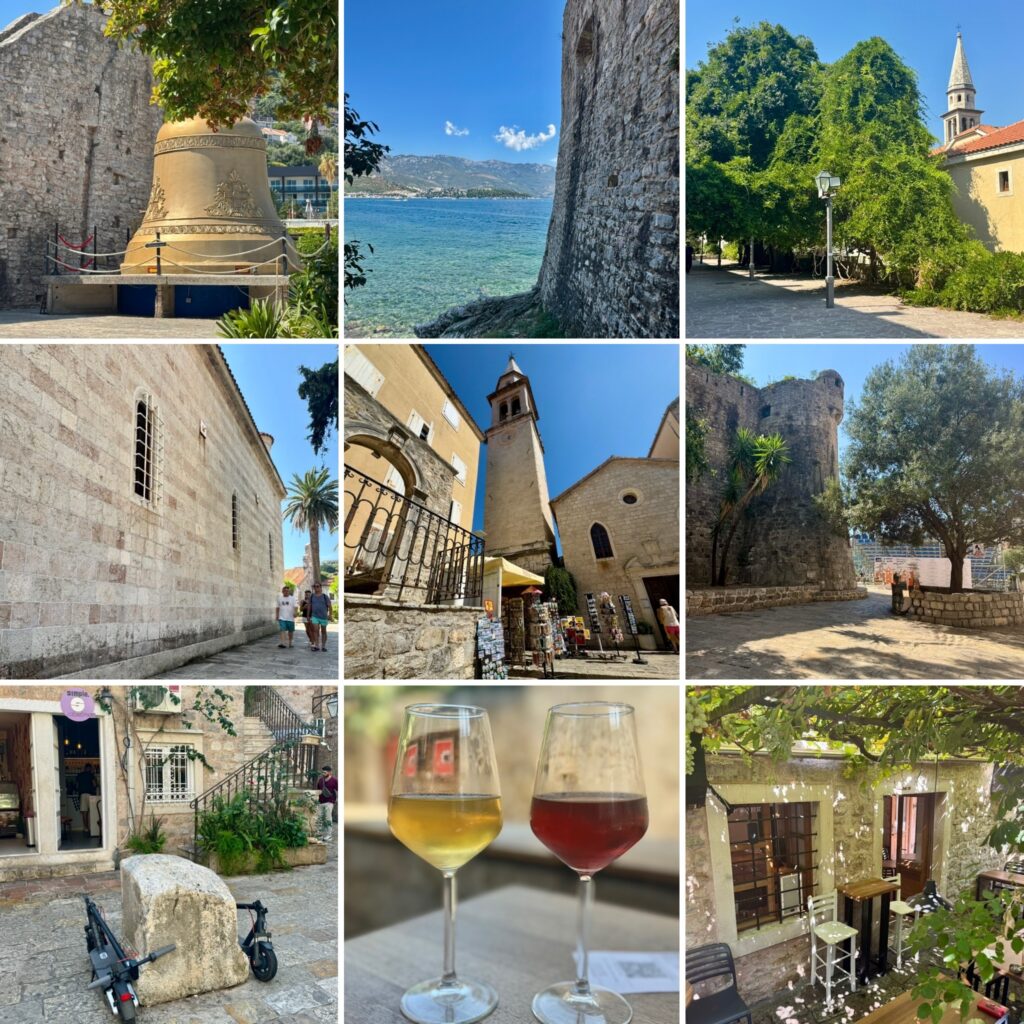
On another day’s coastal drive, Corey and I stopped in Budva again, spending an hour or two picnicking, walking down the narrow medieval lanes and admiring the old churches. Speaking of that coastal drive…
Adriatic Highway
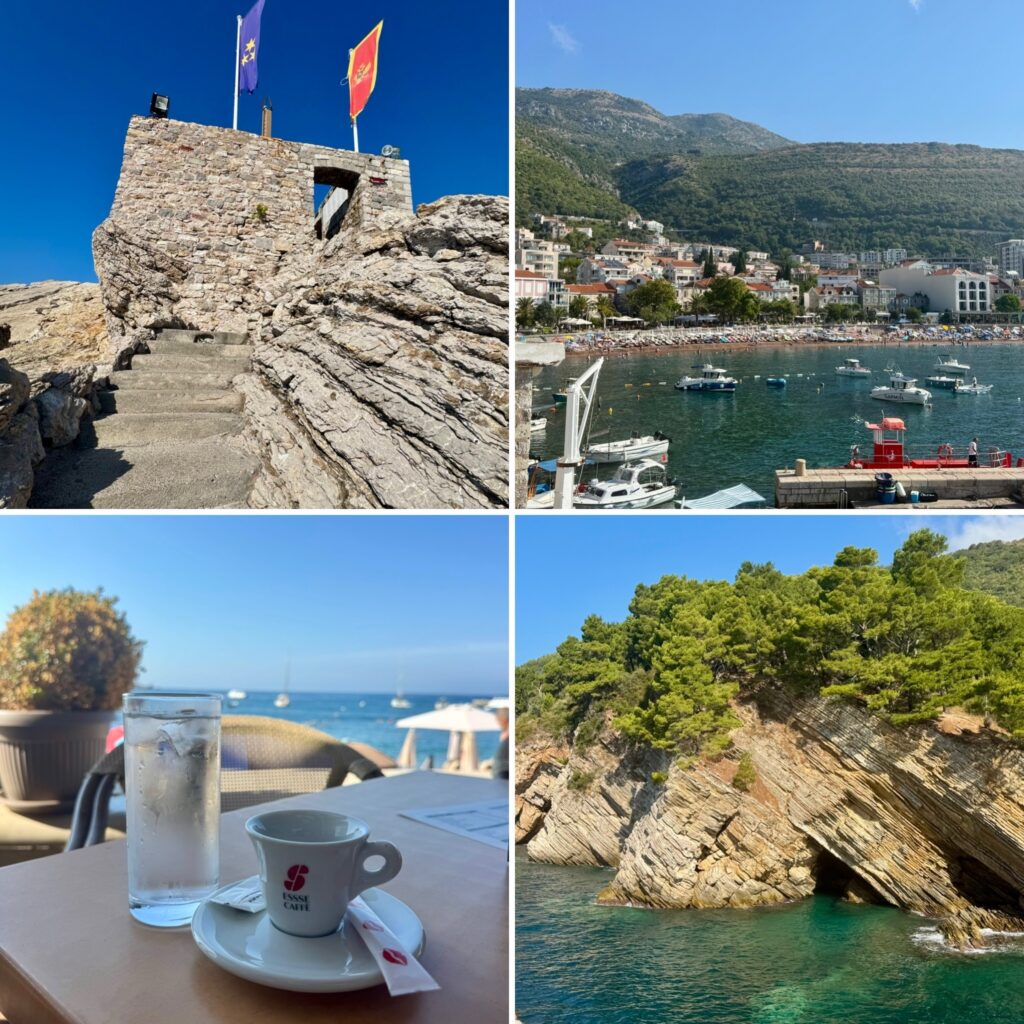
With great September weather, we spent one day driving the Adriatic Highway and enjoying the coastal cities that are also quite popular with holiday makers. We left early in the morning and made our way down to Petrovac then worked our way back north. It was a charming yet bustling beach town with a crowded beach and old Venetian fortress.
We made a stop at the Rezevici Monastery which has two churches from the 1200’s and 1300’s. There are beautiful historic frescos inside the churches, and great views from the outside.
We drove past Sveti Stefan but did not stop in the area. With more time we would have done a coastal walk.
We stopped at another monastery, Podmaine, above Budva. This church is famous for its contemporary fresco featuring Tito in Hell. So that’s something different.
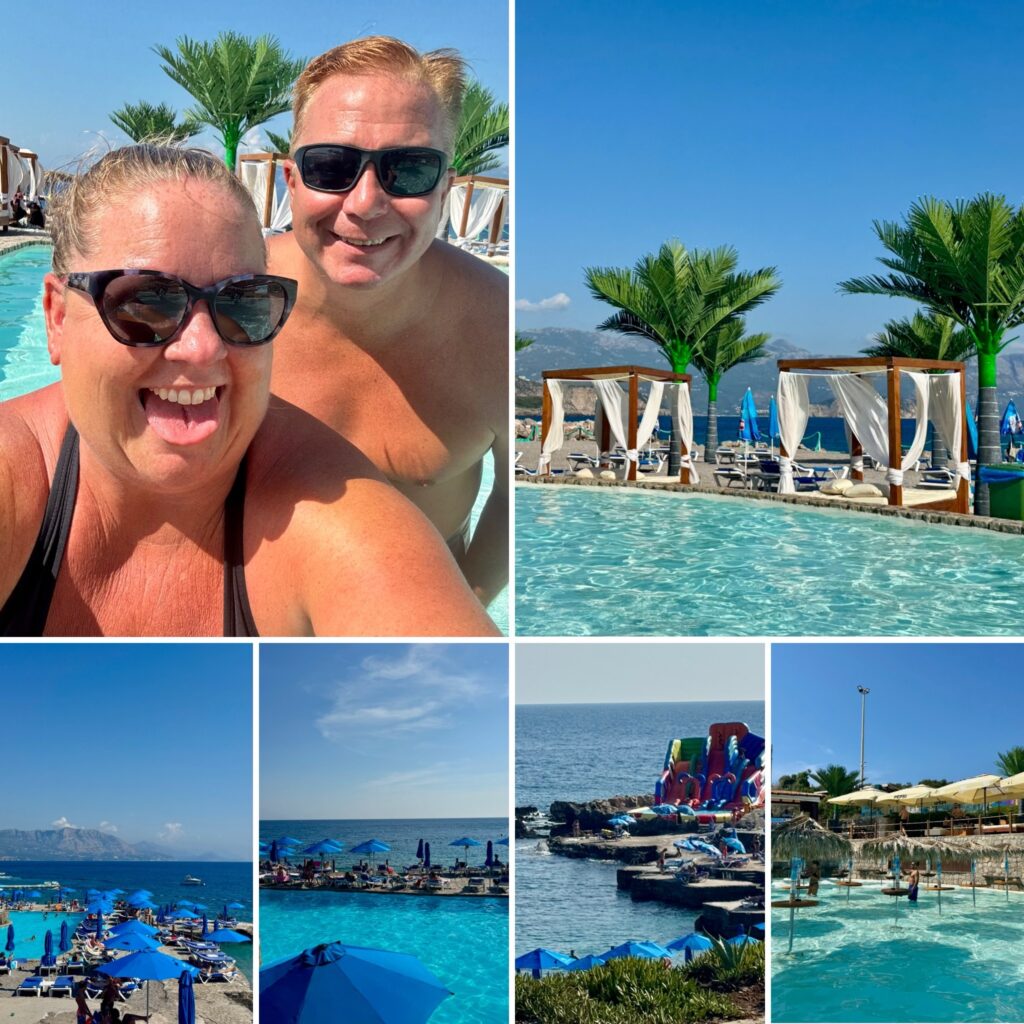
Having wheels provided us with greater mobility. So instead of walking to a beach in Budva, we drove out for about 15 minutes to the nearby Ploče Beach, a large beach club facility with multiple pools. Parking is free, entrance is free, and the pricing for food and drinks were slightly elevated but overall reasonable. Oh and the staff were fun and personable. We had so much fun! The DJ was playing my hits and we basked in the sun while grooving to the beats. Wish we could have stayed longer!
Lustica Peninsula
One of our road trip days we stayed closer to home, well as the crow flies. We still got up early, took the car across on the ferry and drove to the Lustica Peninsula, an old rustic area covered in olive trees. We overlook this peninsula from Denovici, so from Lustica we were able to look back over the bay and have great views of our neighborhood.
The western part of the peninsula is the Adriatic coast line and the beaches looked different on that side.
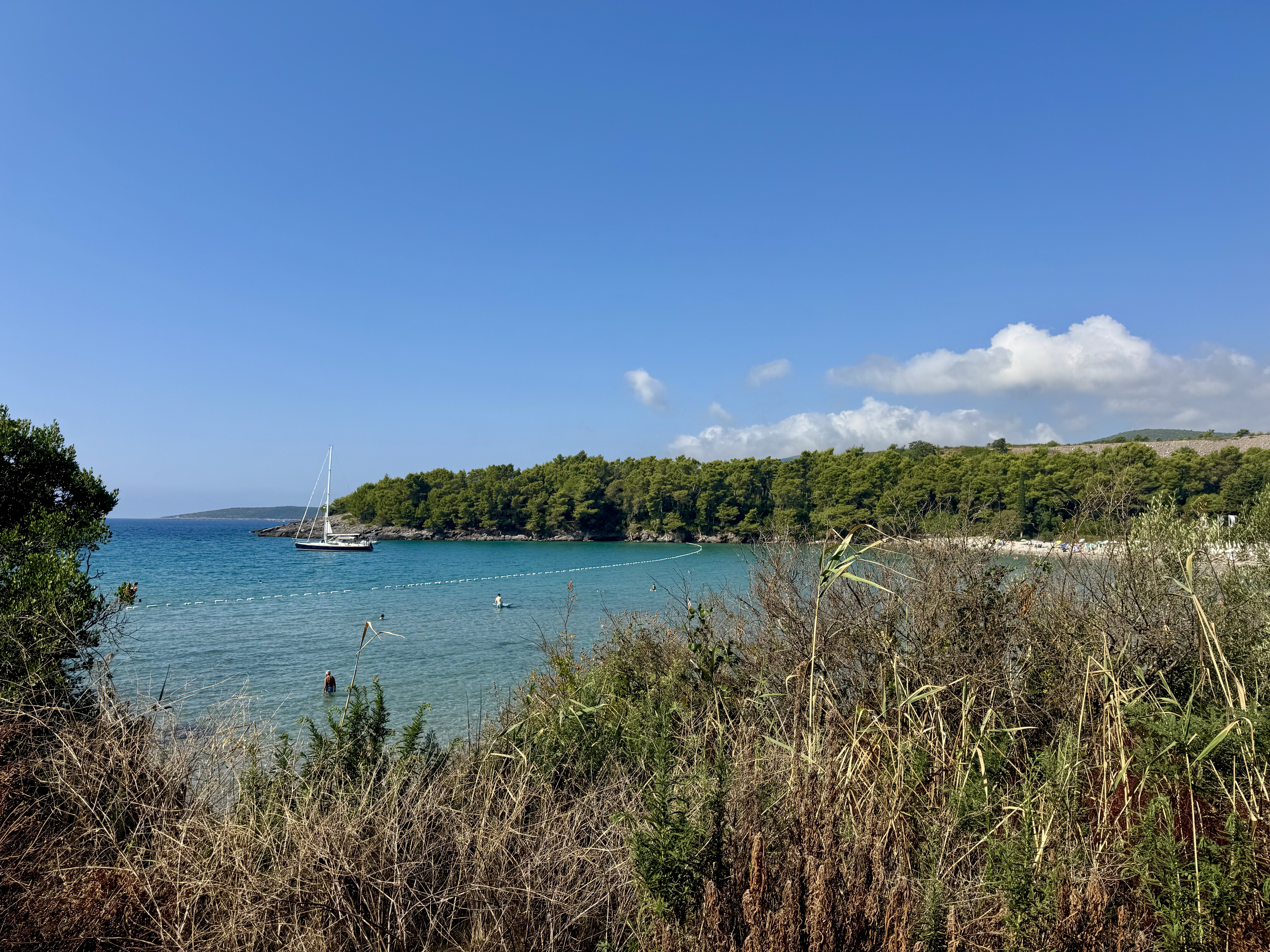
We visited Plavi Horizonti, a wide sand beach with calm clear water. Unfortunately the sand was littered with garbage and cigarette butts. What a shame!
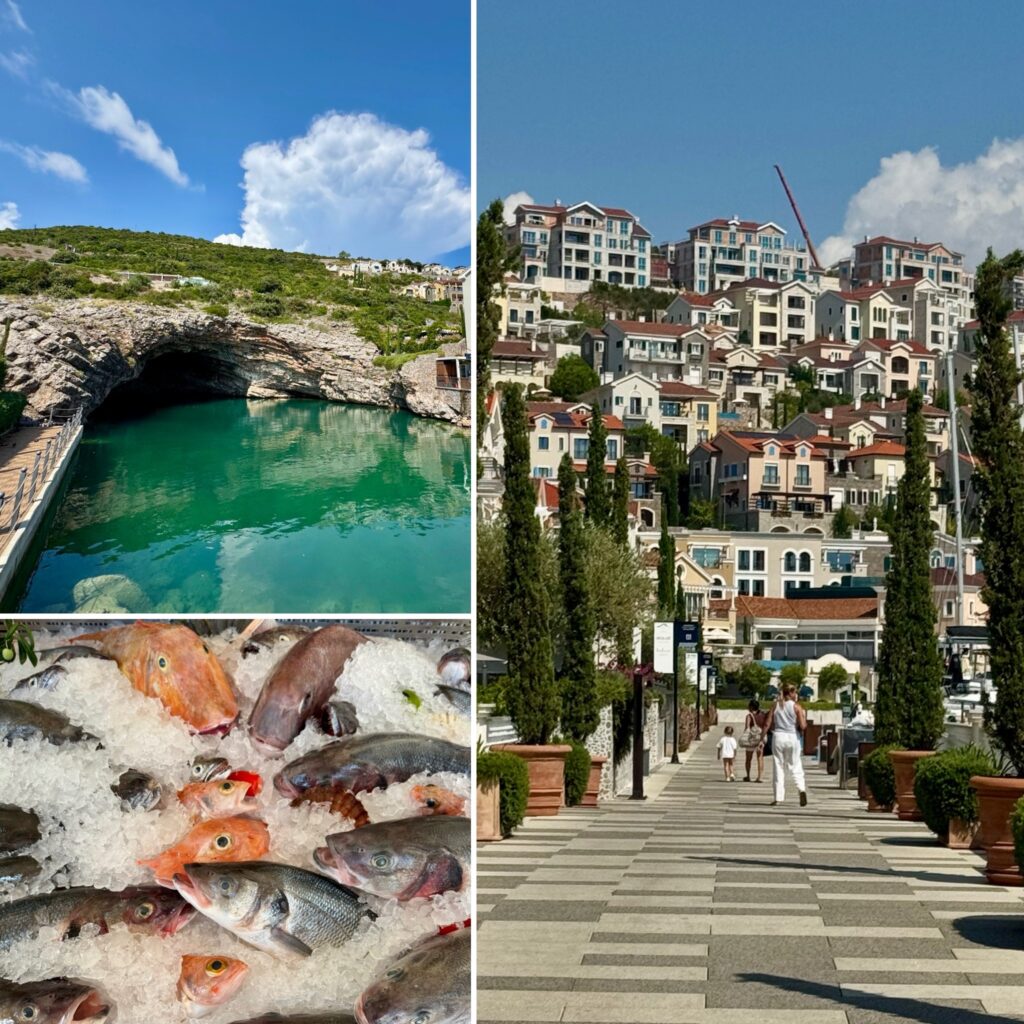
After that was a brief stop at Lustica Bay, a development just as posh as Portonovi. We continued west on the scenic route and visited another beach called Zanjice. Many boat tours come here while touring the nearby blue cave. The beach was beautiful and we got free parking by having a round of beverages at a waterfront cafe.
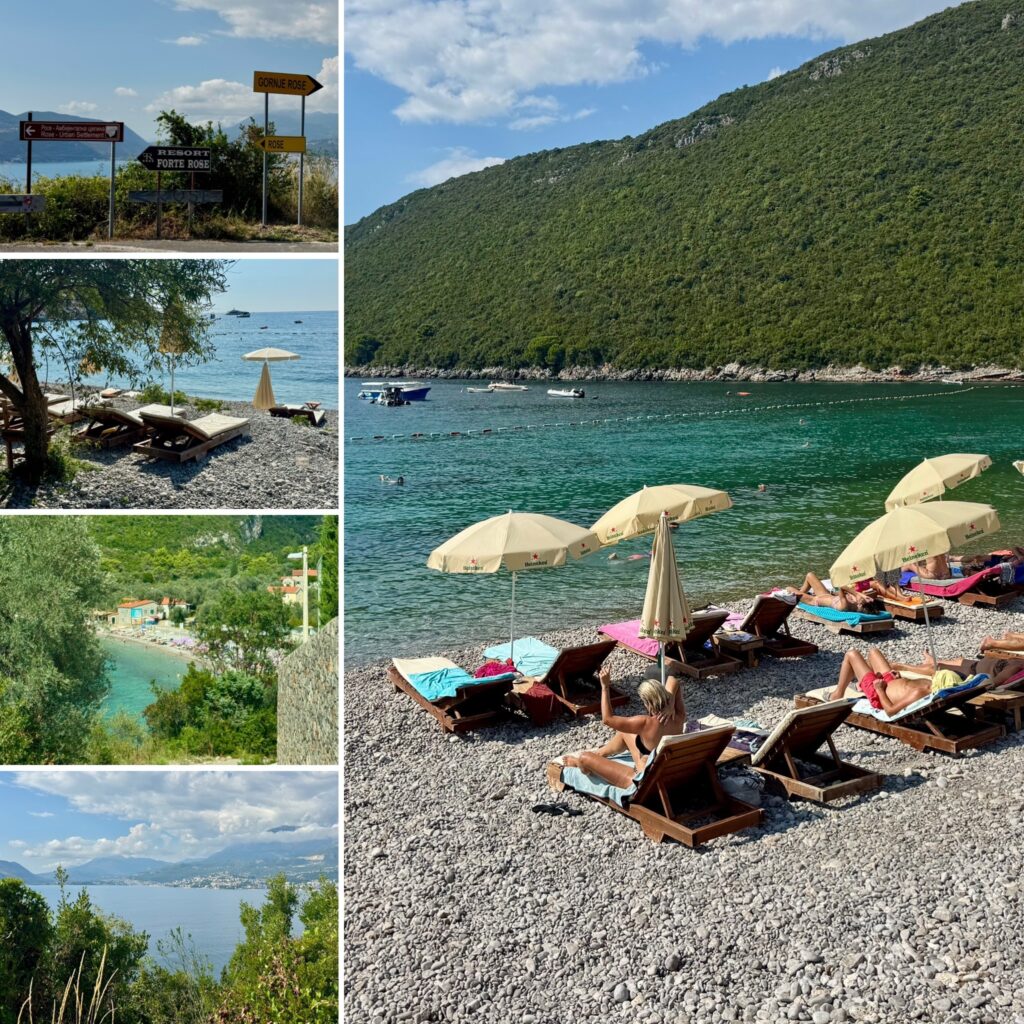
The rest of the day we toured around the west and north sides of the peninsula, seeing smaller villages like Rose. This part of the bay was more rustic and laid back. I really liked it! The beaches had more pines and reminded me of the islands near Split.
Trebinje, Bosnia
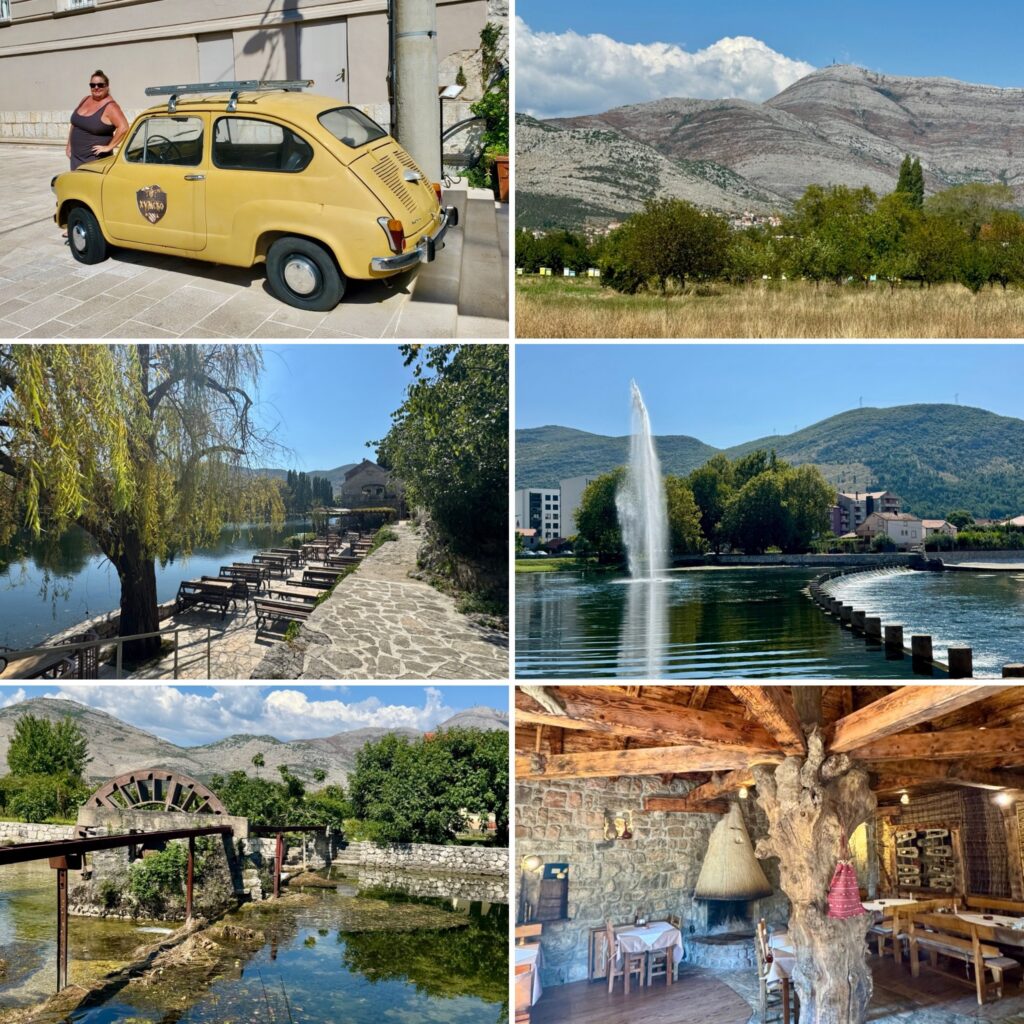
Just over the mountains behind Herceg Novi lies the border to Bosnia and Herzegovina. Trebinje is a charming old walled town only about 45 minutes drive from us. We considered staying overnight but glad we opted for just the day trip. The city is small and cute but we’ve seen a lot of cute towns in Europe so this was a little less appealing to us. We loved the river and the old waterwheels, but we would have been bored overnight.
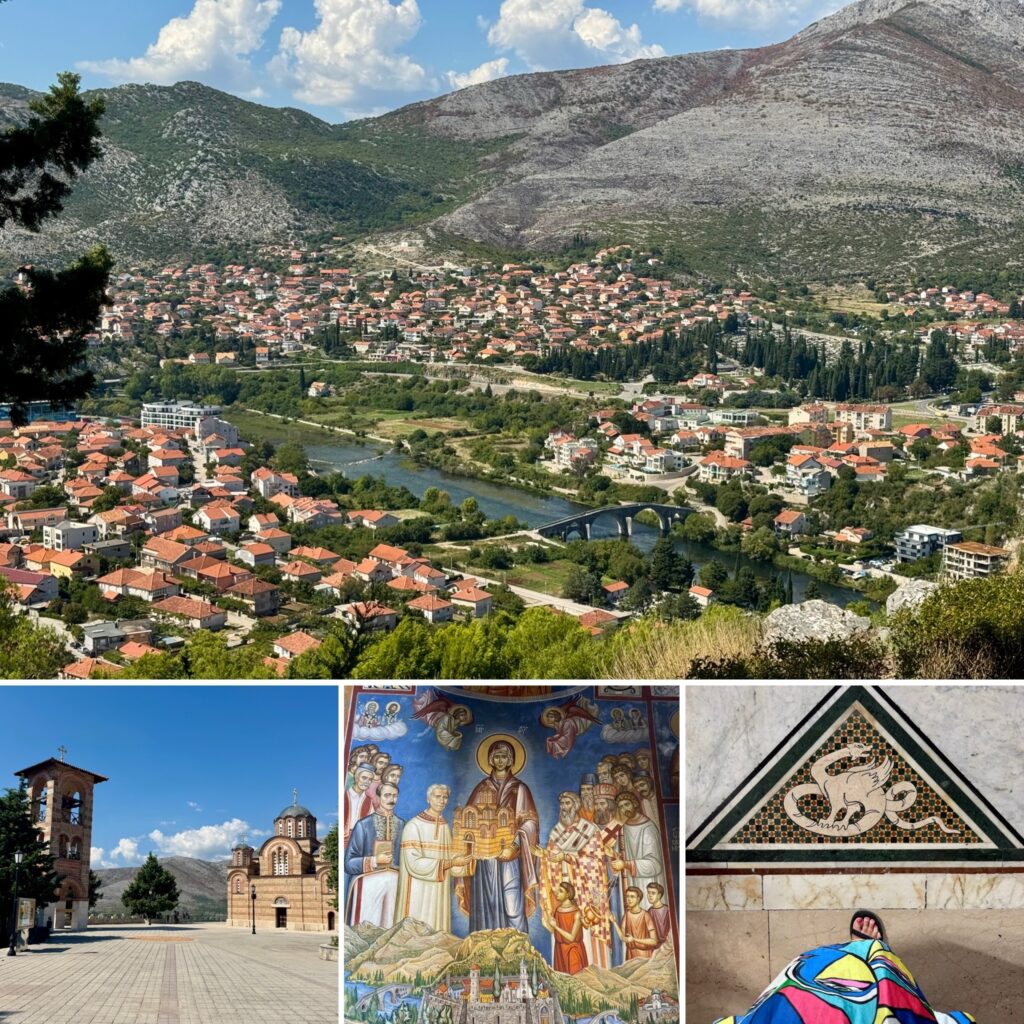
We enjoyed some sights just outside of downtown too. At the Tvrdos Monastery, we had a picnic on the grounds and then picked up some fantastic wine and olive oil from their store. Monks really do know how to make great wine! We looked for a tasting room but it was either closed or we really misunderstood the directions.
Did you know that Bosnia had such great wine production? We stopped at Petijevic, a winery near a river where the owners spoke no English but were generous with their pours. We tasted their whites and reds and left with a couple of bottles, each retailing at 7.50 euros (or 15 Bosnian marks).
We also enjoyed the outstanding panorama at the Hercegovačka Gračanica Monastery, which was constructed in the 2000’s based on a monastery in Kosovo that dates to the 1300’s. It stands on a hill high above the city and offers views from every side.
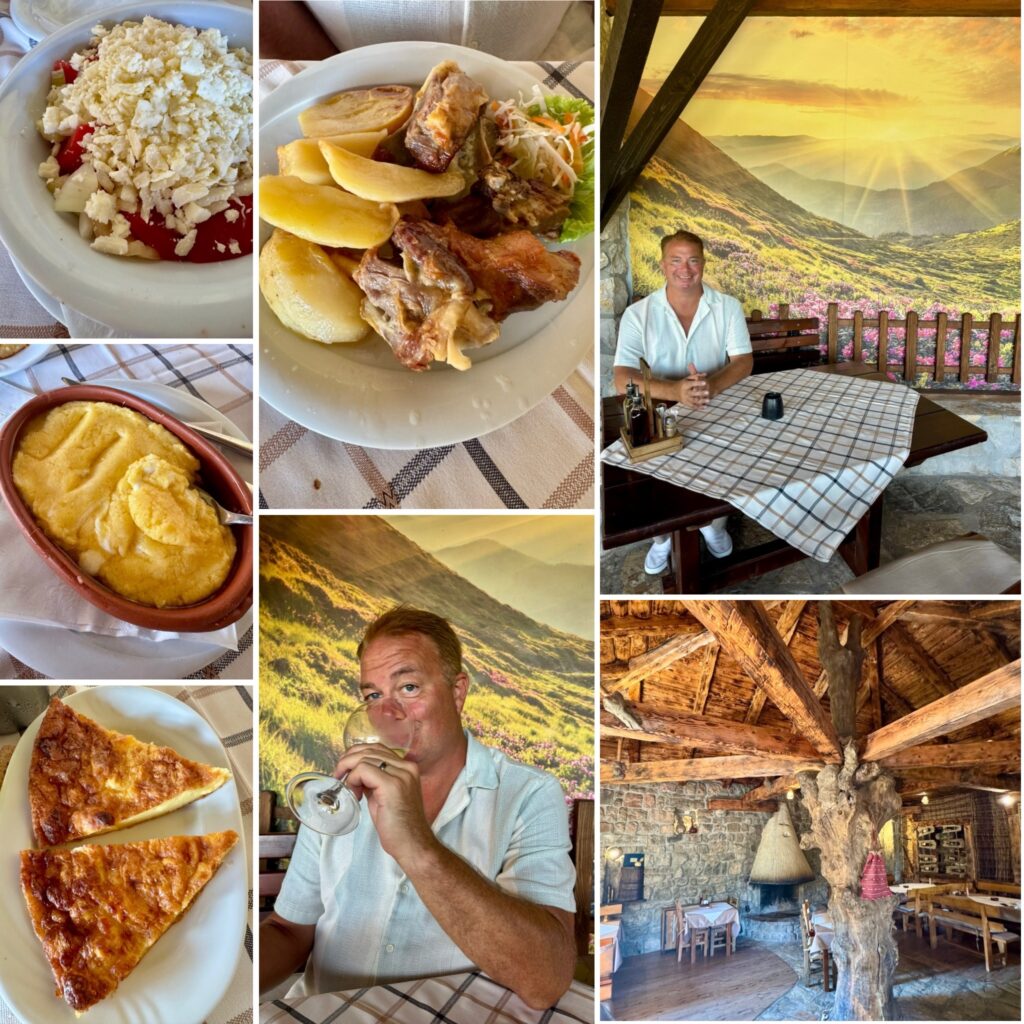
Oh, and we had an amazing Bosnian feast:
Ostrog Monastery
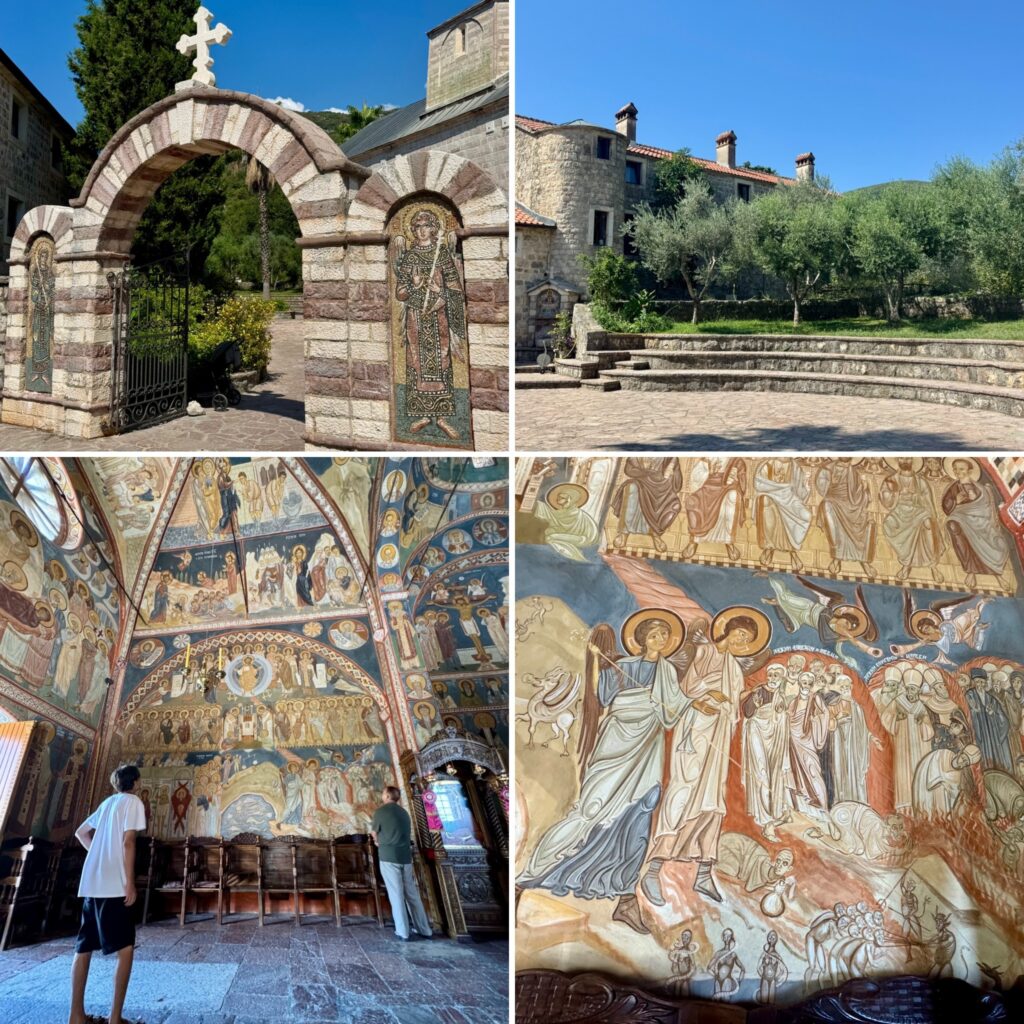
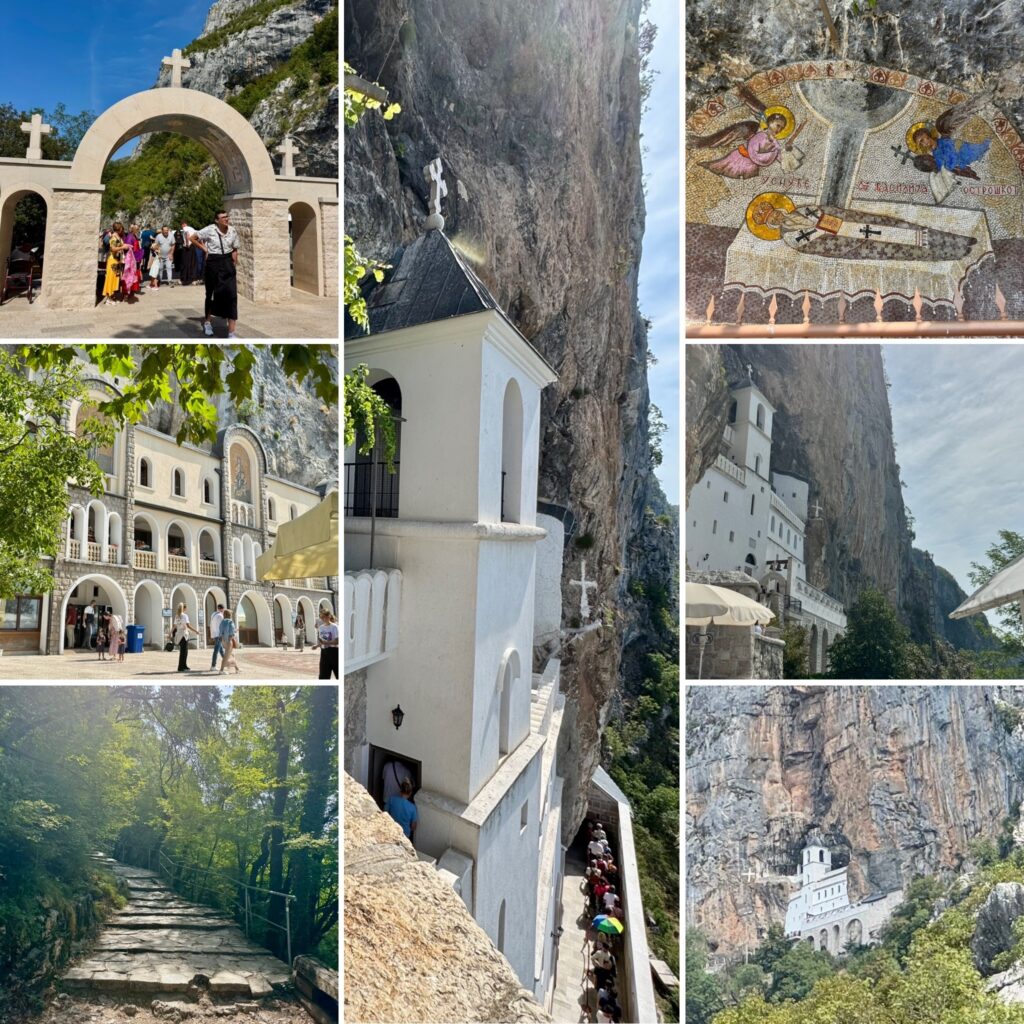
On our way to Podgorica we stopped at one of the most famous sites in all of Montenegro. While there are numerous monasteries in Montenegro, nothing is as elaborate or interesting as Ostrog, carved into a rock high on the mountainside. The frescoes painted onto the cave walls were quite interesting. A lot of pilgrims will park at the bottom of the hill and take the long trek up the stairs without shoes. Thankfully we parked toward the top and only had to climb 15 flights of stairs to reach the sacred upper monastery. It was getting busy (and hot!) when we left so I’m glad we visited in late morning.
Podgorica
Podgorica is the current capital of Montenegro, and by far the biggest city in Montenegro. That is not saying much! Known as Titograd during the time of Yugoslavia, the population of 200,000 is not even in the top-10 of former-Yugoslav cities. The city was substantially destroyed by the Allies in World War II. Virtually all construction in the city stems from the Communist and contemporary periods, so the construction is a mix between Brutalist apartment blocks and modern mixed-use developments. This leaves an interesting mix of ground-floor retail, some of which is well-hidden in courtyards.
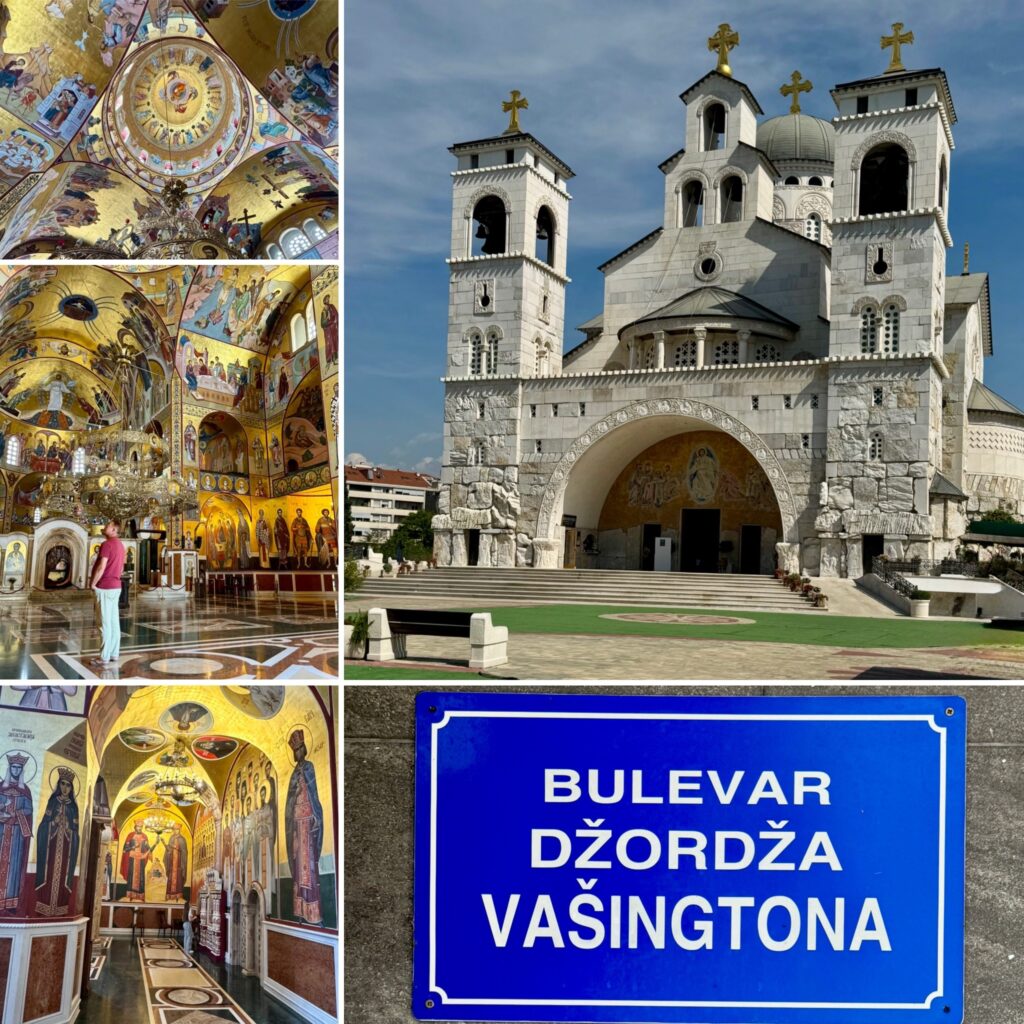
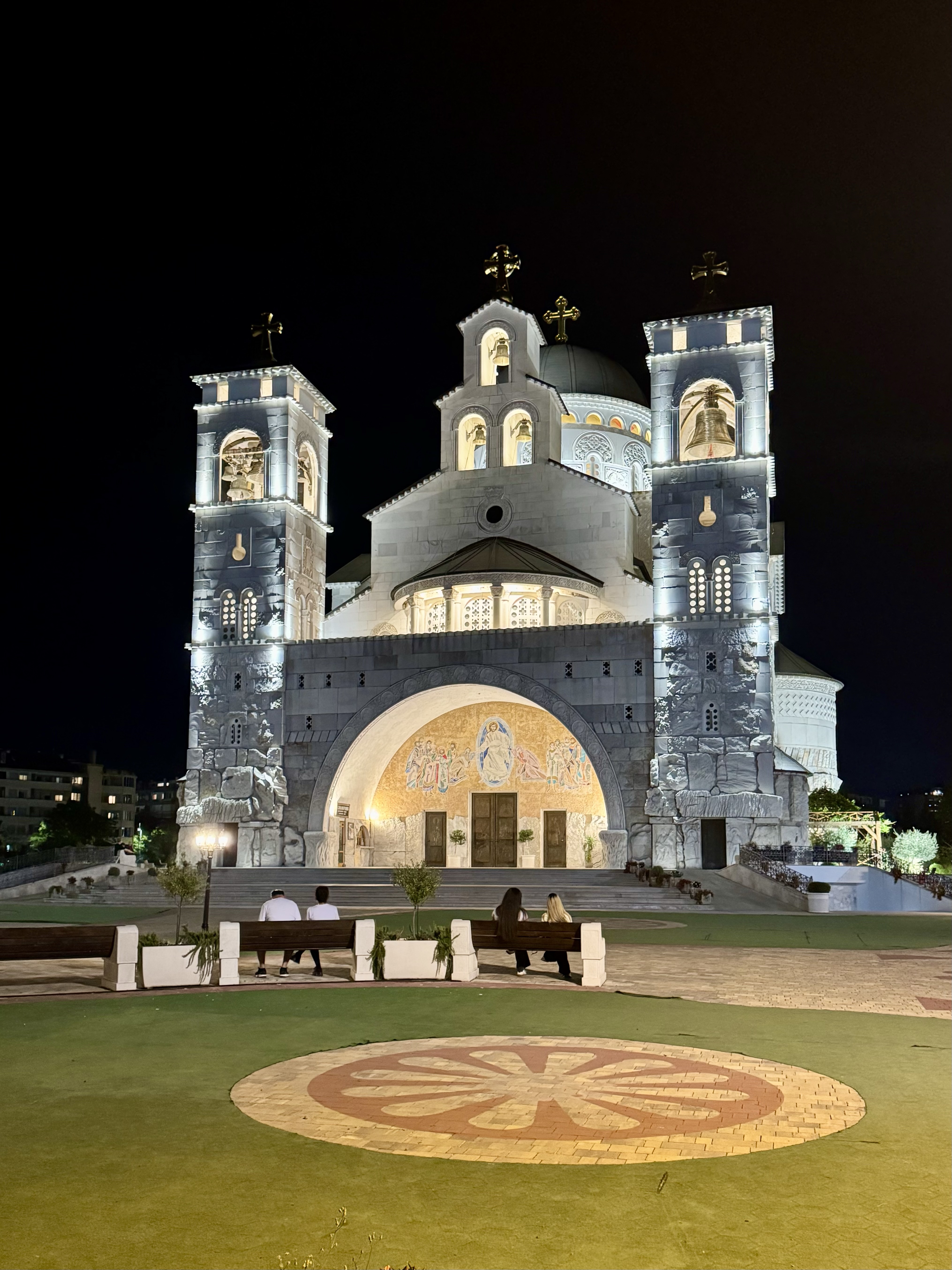
One of the biggest highlight was a large Orthodox church called the Cathedral of the Resurrection of Christ, right in the middle of the city. Funny enough it’s on George Washington Boulevard, or as the signs state, Bulevar Džordža Vašingtona. It only opened in 2013 but is filled with inlaid-stone floors and walls, mosaics, frescos, and glitzy gold-backed icons.
We got drinks!! There were craft cocktails at an affordable price at bars like Street Bar. Craft beers were available at beer bars like Nora as well as Akademija Brewery. We haven’t seen prices this low since we were in Bulgaria.
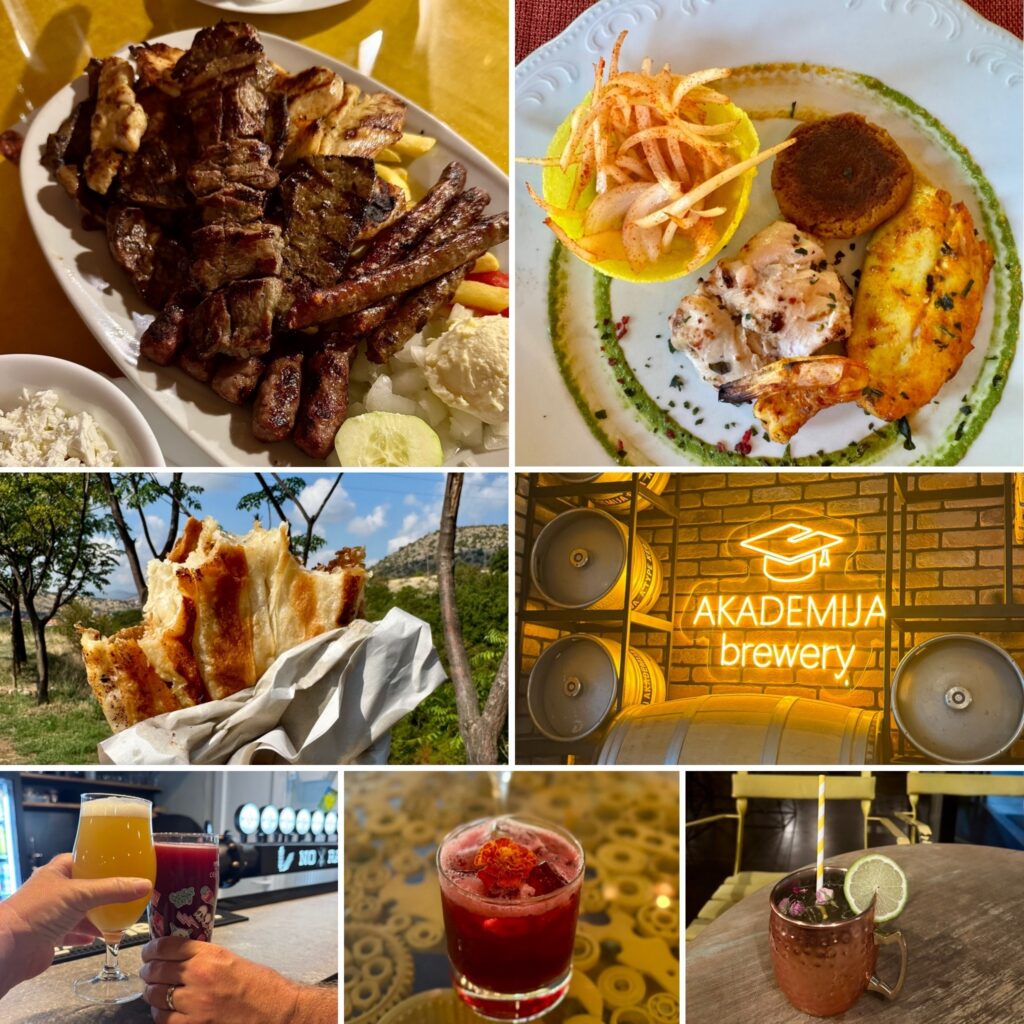
We ate really well in the “big city”. The first night we had an Indian feast at Masala Art. The food was flavorful and the courses just kept coming!
The second night we had a Bosnian meat feast at Bascarsija. Two pounds of meat piled high on a bed of french fries. Maybe it’s the beef, but we think Bosnians put together the best BBQ plates. We also got to try urnebes, which was a slightly spicy pepper-cheese spread. Perfect for dipping bread and fries into.
The next day we drove a few minutes outside the city to the ruins of Doclea (or Duklja), an old Illyrian city that dates from pre-Romanization of the Balkans. While not a large town, it is an opportunity to walk (and drive!) around Roman ruins without anyone around. We were the only tourists around and could freely explore the forum, basilica, and other areas typical of a Roman settlement.
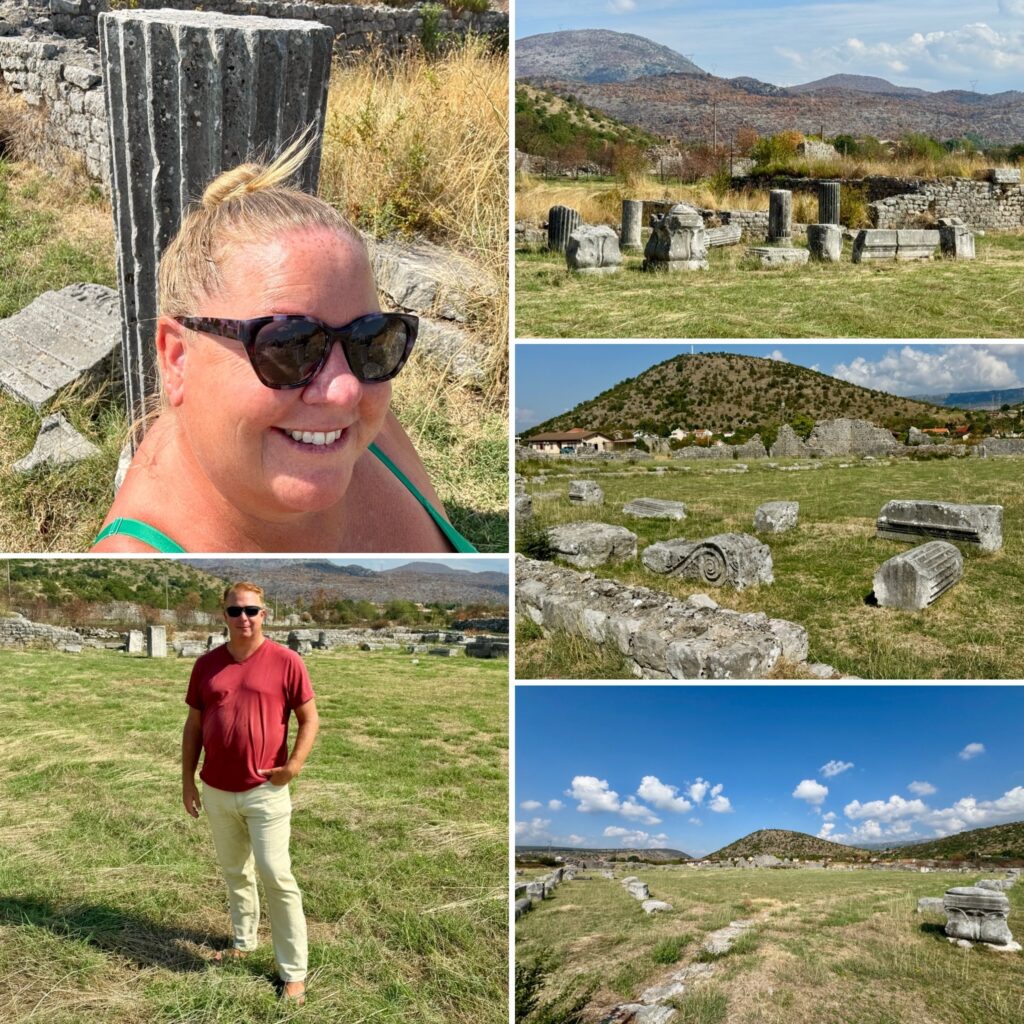
We followed up the cultural sightseeing with viticultural tourist activities. We drove past Vinarija Vučiniča winery and stopped in to buy a bottle of wine. But we left with three! Since it was September the vines were heavy with fruit ready to be plucked, macerated, and fermented. The owner walked us past their through their facility, which was a cave! I was amazed how they constructed this house to fit seamlessly with the mountain, with the chilled air of the cave creating the right environment for the wine-aging barrels. Currently branding their wine as Zenta, it turns out we selected an old family-run wine making company that has made wine on that properties for hundreds of years. It also turns out that they were at the Portonovi wine event, so we likely tasted them previously!
The afternoon and evening we spent driving and walking the city. The “old town” is a bit of a misnomer: because of the bombing, there is an old clock tower but not much else to see. The streets are still narrow but if there is anything interesting it is behind tall walls.
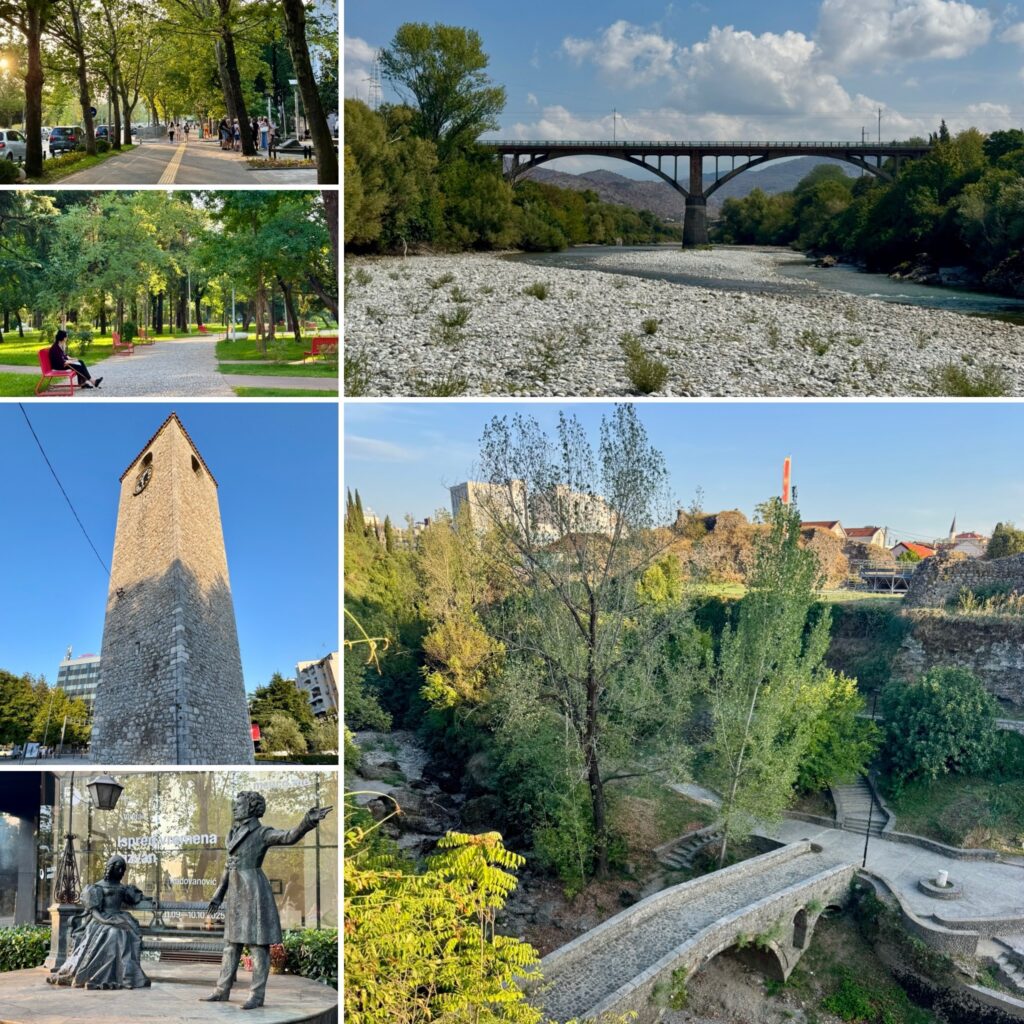
There were multiple streets that were pedestrian-only, with many cafes and bars offering outdoor seating and music. The city seems to come alive at night when temperatures are moderate. There are so many restaurants and eateries to choose from! Podgorica is commonly called the “most boring capital city in Europe” but we liked it. Maybe we’re boring people! I’d even consider Podgorica as a base for long-term living as long as my abode had a pool. The river that runs through town is cold mountain water so I would not want to rely just on that. Montenegro is small, so the capital is both near mountains and only 24 miles from the sea as the crow flies.
Closing thoughts
As always, our time in Montenegro went by too quickly! We made a handful of local friends at the tennis club and it was nice to engage with folks from here. You may not catch a lot of smiles in the Balkans but they are really friendly people… when they’re not driving.
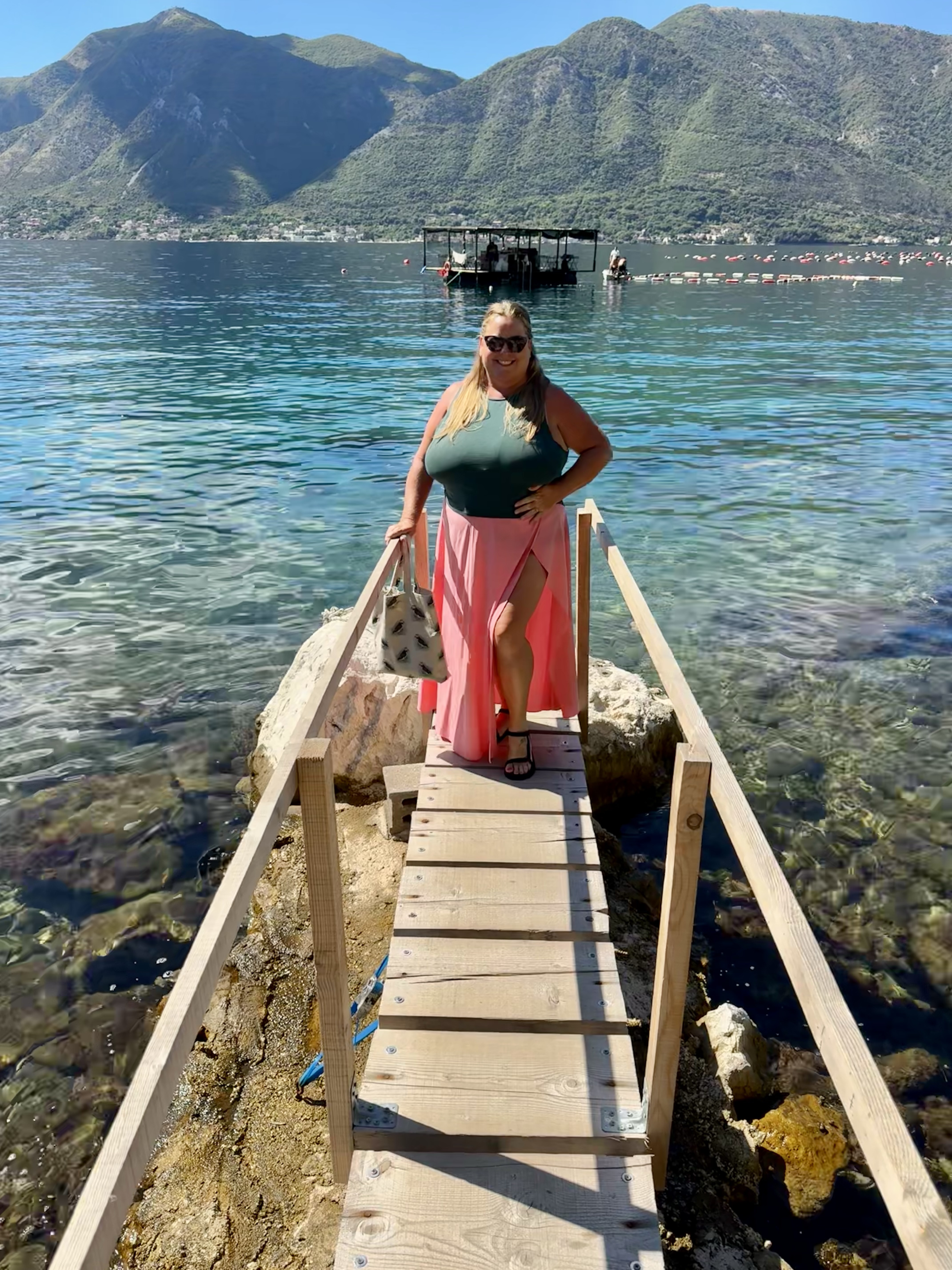
Montenegro has jaw dropping scenery and every day we were spoiled with vibrant sunsets and dazzling beaches. The few rainy days entertained with enormous thunderstorms so even that was not so bad.
The restaurants around here are boring though. Most places serve the same food (Balkan barbecue, burgers, pizza, pasta) and the prices are overly inflated. Groceries were hit and miss, especially with produce. When we went to the store, we never knew what would be available or fresh. It took me weeks to find basil! Some days there would be mint. At least we could always count on getting sweet peppers (usually a white bell pepper) which came with a very-low price tag of around 20 cents each! Local wine was also affordable and delicious, with the ubiquitous Plantaze vranac at 3.50 euros for a liter bottle.
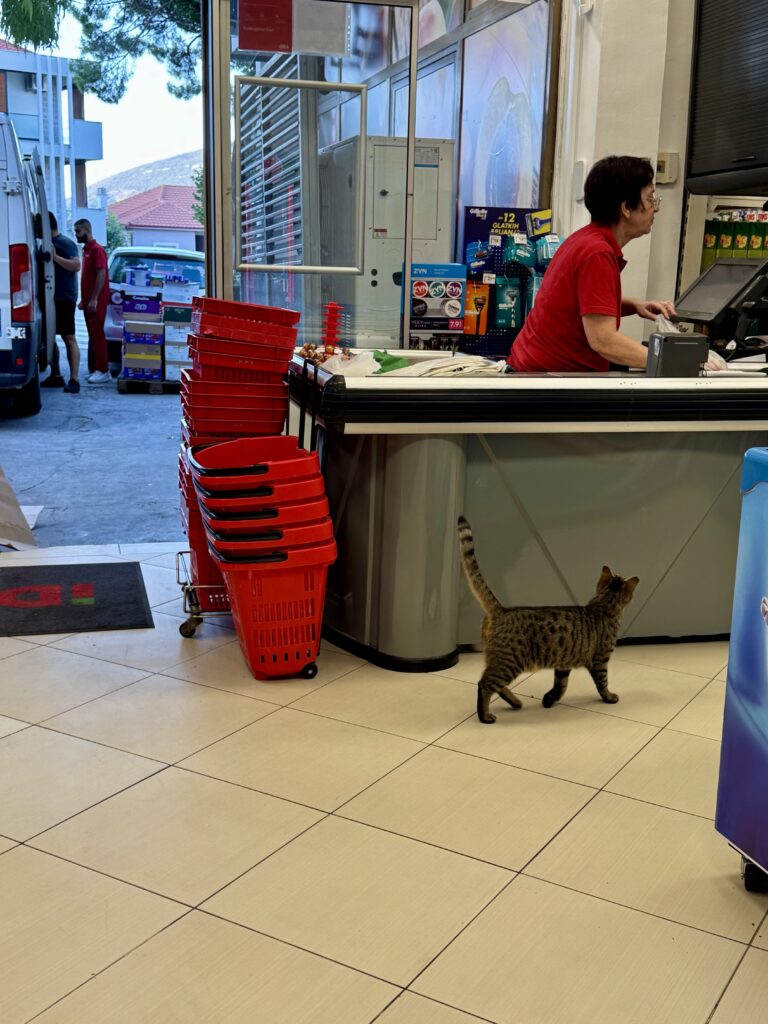
So we had a good time, but if we had to choose a place in the Balkans to return to, Bulgaria would be our first choice.
We found a few sites extremely helpful for our time in Montenegro, moreso than the usual guidebooks. Most travelers focus on Kotor and Perast, but there are many other areas and sights in this small country.
- adriacom.me – this is an immigration and accounting service but their guides were comprehensive
- monteguide.com – especially for some off-the-beaten-path ideas
- kateinmontenegro.com – local living
Next for us is Portugal and Galicia, Spain; then Rome, then spending 51 days on the Celebrity Constellation where we head back to the United States.